
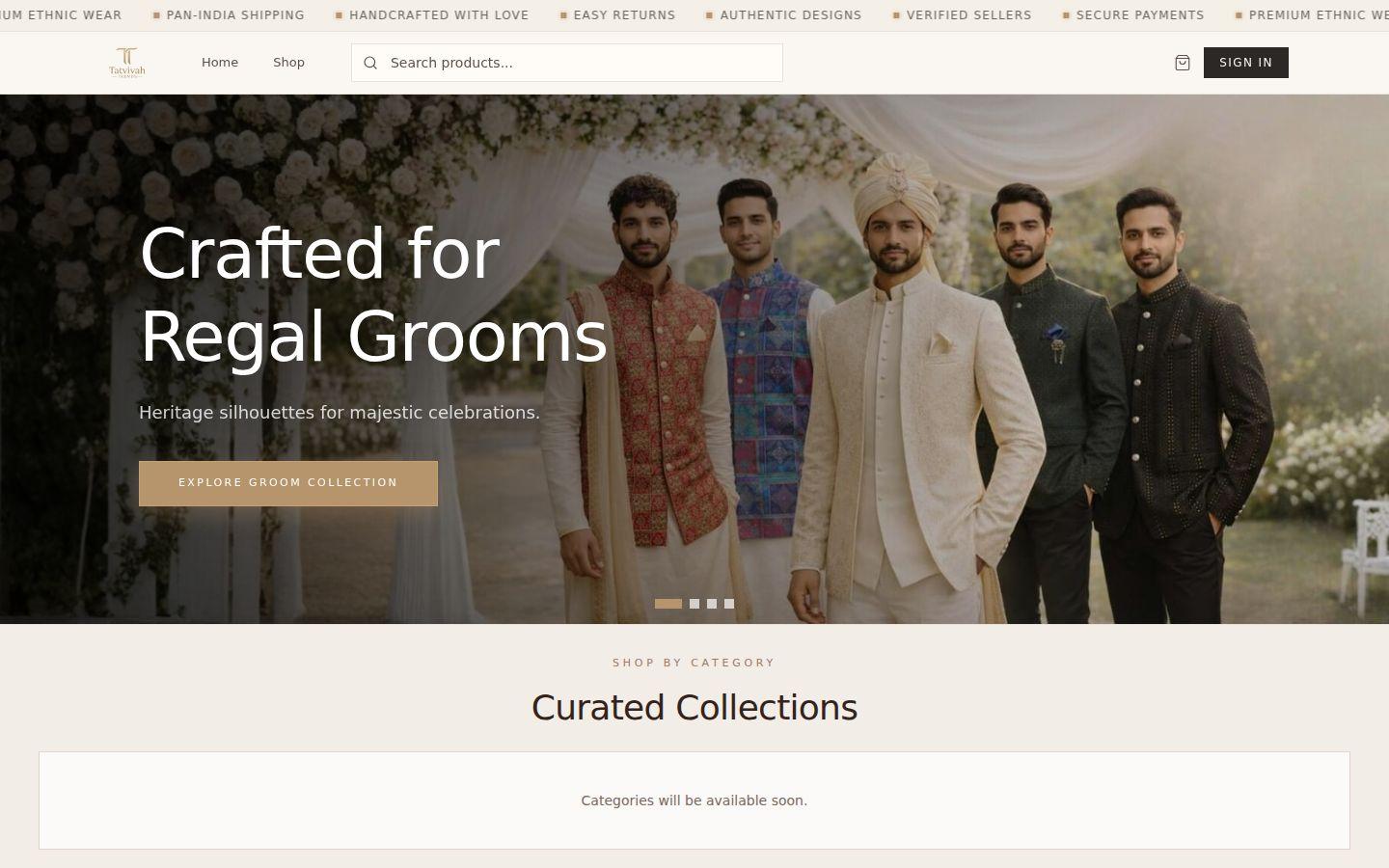
The brief: a marketplace, not another ethnic wear shop
Wedding wear in India is sold by many small workshops and brands, most of whom already sell through WhatsApp and Instagram. Tatvivah brings them onto one platform where a groom and his family could shop for every event of the wedding, and where each seller could list, sell and get paid without running a website of their own.
That rules out an off-the-shelf store. A marketplace needs seller accounts and approval, a way to price and take a margin on someone else's product, orders that split across sellers, payouts, refunds and invoices with GST. We chose a custom build so each of those could work the way Tatvivah's business works, rather than the way a plugin assumes.
Laying the marketplace foundations
The first months went into the parts shoppers never see. Between late January and mid-February 2026 we added, one migration at a time, the cart and order domain, product images, notifications, reviews, a product approval workflow and the pricing model. On 16 February alone the schema gained GST fields, invoice fields, a refund ledger, a seller commission engine and the foundation of a coupon engine.
Sellers do not publish straight to the shop. Every new product goes through admin approval first, which is how the platform keeps its "every seller is personally vetted" promise in the trust bar honest.
- Jan 2026: cart, orders, product images, notifications
- Feb 2026: reviews, product approval, three-price system, search, wishlist, cancellations, GST and invoices, refund ledger, commissions, coupons
- Mar 2026: occasions, delivery pincodes, video appointments with seller availability
The hardest decision: what a product costs, and to whom
In a marketplace the price a seller asks for is not the price the shopper sees. We built a three-price model: the seller's own price, the admin listing price shown in the shop, and a snapshot of the margin taken at the moment each order is placed.
The snapshot is the part that took the most thought. Margins and commissions change over time. If an order only stored today's prices, every change would quietly rewrite the history of past orders, and settlements and refunds would stop adding up. Freezing the numbers on the order keeps every payout and refund traceable to what was agreed when the customer paid.
Occasion shopping, and a variant system we rebuilt
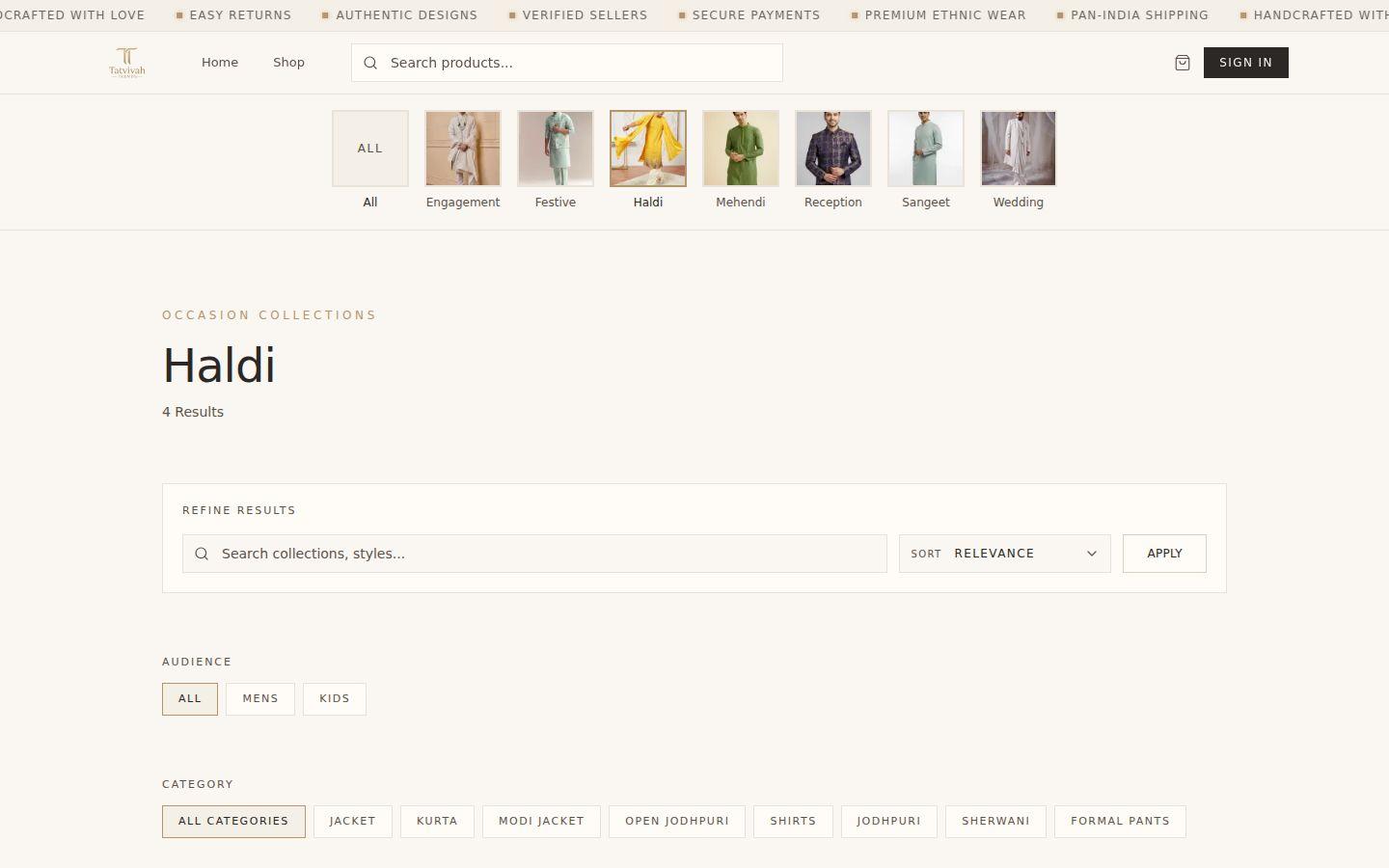
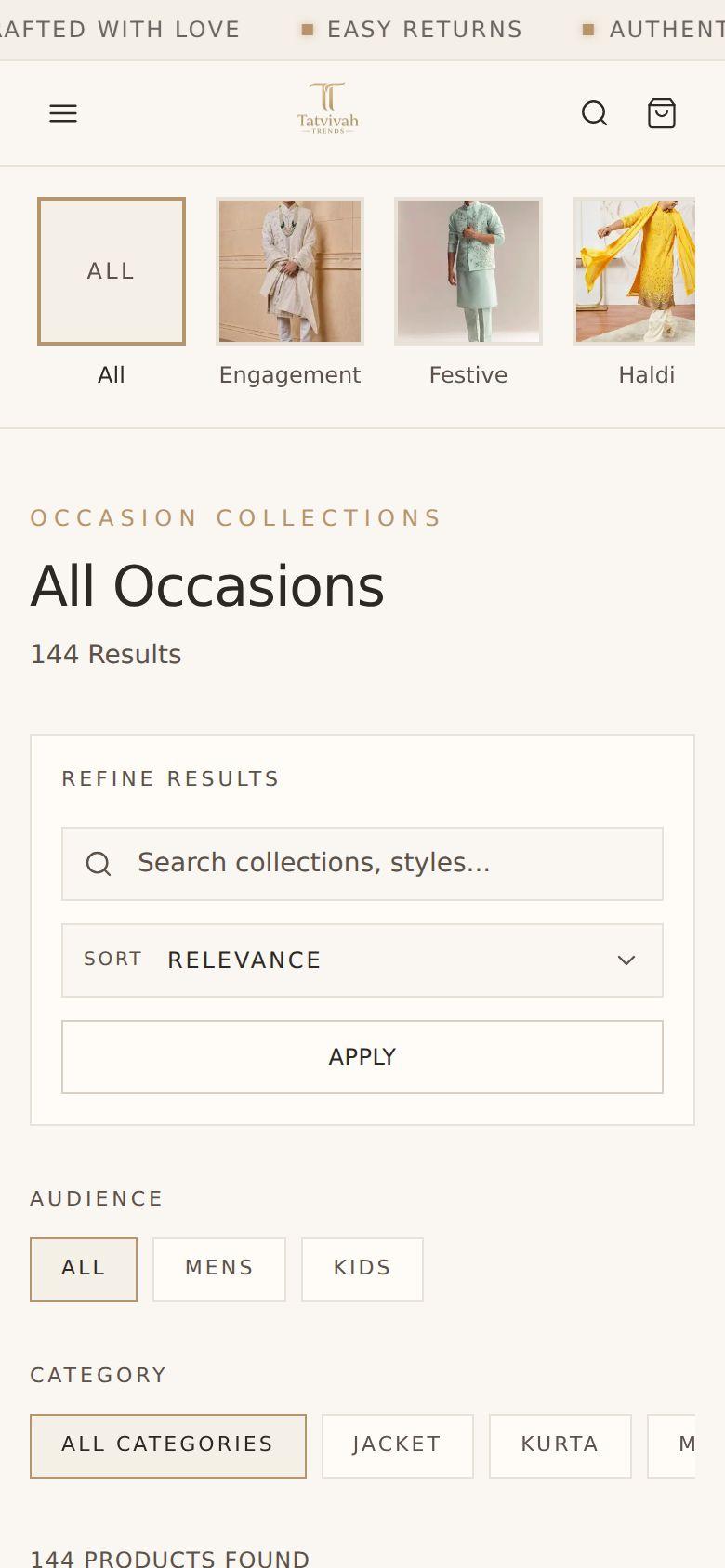
Men shopping for an Indian wedding think in events, not garment types, so in March we added occasions to the data model. The live Shop page opens with picture tiles for Engagement, Festive, Haldi, Mehendi, Reception, Sangeet and Wedding, and they combine with audience (men or kids, added in May with a backfill of existing listings) and category filters.
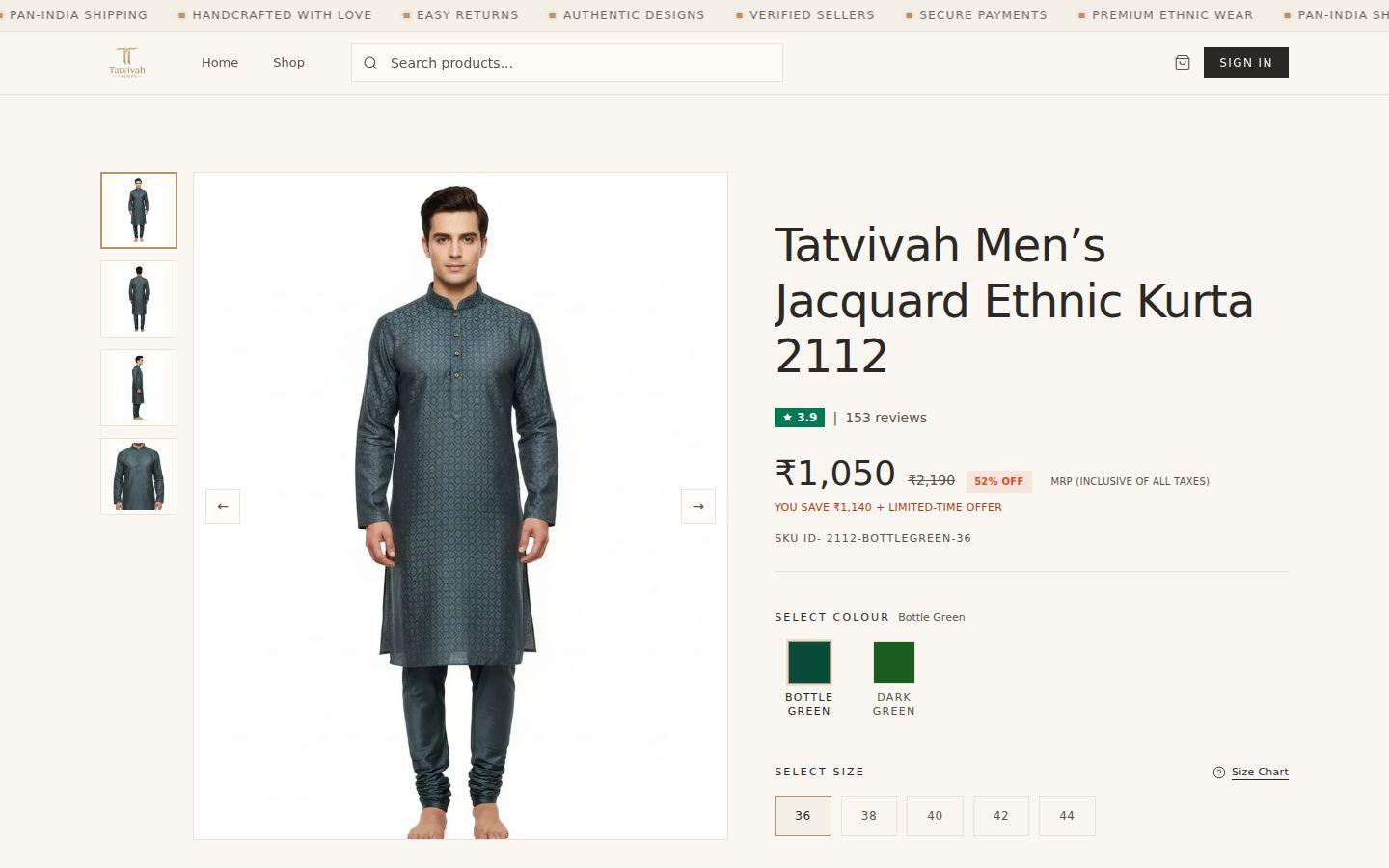
Variants were the part we had to redo. Wedding wear is sold by colour and chest size, and each colour needs its own photos. In April 2026 we added colour images to product variants, made each variant unique by colour and SKU, removed the legacy SKU uniqueness rules that clashed with that, and then overhauled variant pricing. In August we added a colour hex for exact swatches. On the live product page each variant now has its own SKU, colour swatches and chest sizes from 36 to 44, with a size chart beside them.
Bringing the trial room online with video appointments
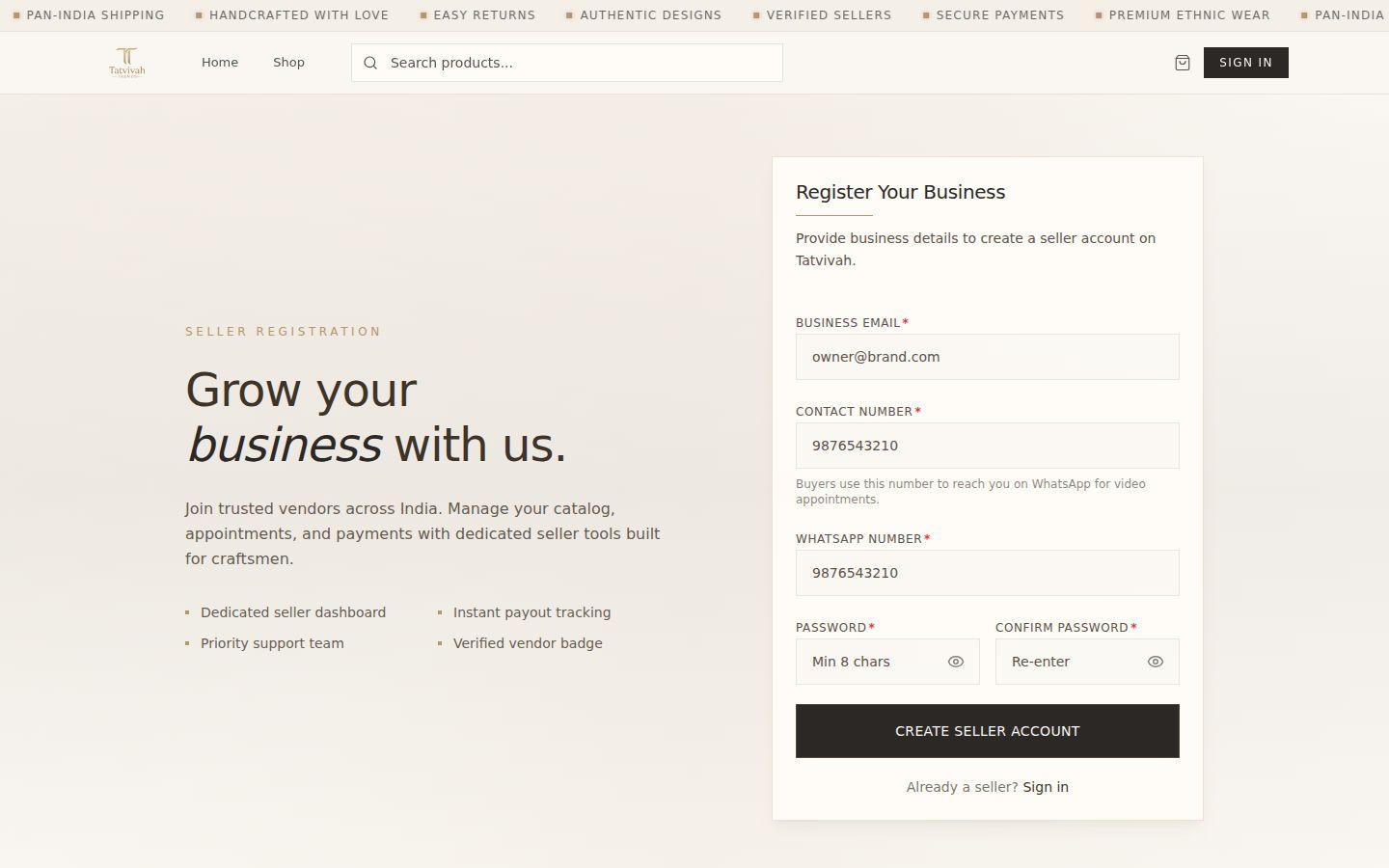
A shopper spending on a wedding outfit wants to see the fabric move. In March we added appointments with seller availability, and the product page has a Book Video Call button. Sellers register a WhatsApp number for it, and the registration form tells them why: buyers use it to reach the seller for video appointments. The feature fits the way these sellers already sell instead of asking them to change.
Payments and shipping: five routes and a courier
Payments started with Razorpay, with webhook signature verification so an order is only marked paid when Razorpay confirms it. Indian shoppers expect choice, so in July 2026 we added support for PhonePe, cash on delivery and GoKwik as payment providers, and in August an integration with Fastrr checkout, including its own API client, validation and error handling. Each new provider had to fit the same order and refund ledger, which is why the ledger was built early.
For shipping we added delivery pincodes to orders in March and Shiprocket catalogue fields in August. On the live product page a pincode checker shows an estimated delivery date before the shopper commits.
Hunting down a ten-second seller dashboard
In August sellers' first page loads were slow, so we measured before changing anything. Our audit on 4 August 2026 timed the backend endpoints cold and warm: bestsellers took 10.0 seconds cold against 0.33 warm, reels 5.3 against 0.41 and search 2.1 against 0.47.
The cause was not the code. The database paused itself after five minutes idle, and because sellers log in only a few times a day, almost every seller session started cold. On top of that, the database and API ran in a US region while sellers are in India, which put about 350 milliseconds under every request. The audit also found the seller dashboard firing five separate requests with nothing rendered on the server, and the reels page loading a seller's whole catalogue just to fill a dropdown. We wrote down one finding as wrong after checking the code properly, rather than fixing a problem that did not exist. The fixes that followed included a backend warm-up setting and cache invalidation scoped by audience for the bestsellers list.
The app, and what is live today
The same backend powers an Expo React Native app for buyers. Its later work included quick-buy sheets that open with the shopper's colour already selected, one button pattern for add to cart and buy now, and session checks before checkout; the repository's latest app build is version 3.3.
On the web, Tatvivah runs today with occasion shopping, seller registration and approval, video appointments, pincode delivery estimates and a full set of marketplace policies, including a vendor agreement. On 24 November 2026 Google PageSpeed scored the homepage 89 on mobile and 95 on desktop.
Frequently asked questions
How is a multi-vendor marketplace different from a normal online store?
A store sells one business's products. A marketplace lets many sellers register and list products, while the platform handles approval, discovery, checkout, commissions, payouts and refunds. That is why Tatvivah needed a custom backend.
Why store a margin snapshot on each order?
Because commissions and listing prices change. Saving the margin at the moment of purchase keeps settlements and refunds for past orders correct when prices change later.
Can buyers see a garment on video before buying?
On Tatvivah, yes. Product pages have a Book Video Call button, and sellers register a WhatsApp number that buyers use for video appointments.
Which payment options is the marketplace built for?
The platform has integrations for Razorpay, PhonePe, GoKwik, Fastrr checkout and cash on delivery, all recorded against the same order and refund ledger.
Should an ethnic wear marketplace be built on Shopify or custom code?
Shopify suits a single brand. Seller approval, commissions, split orders and payouts usually need a custom build. Our store vs marketplace guide covers the trade-offs.