
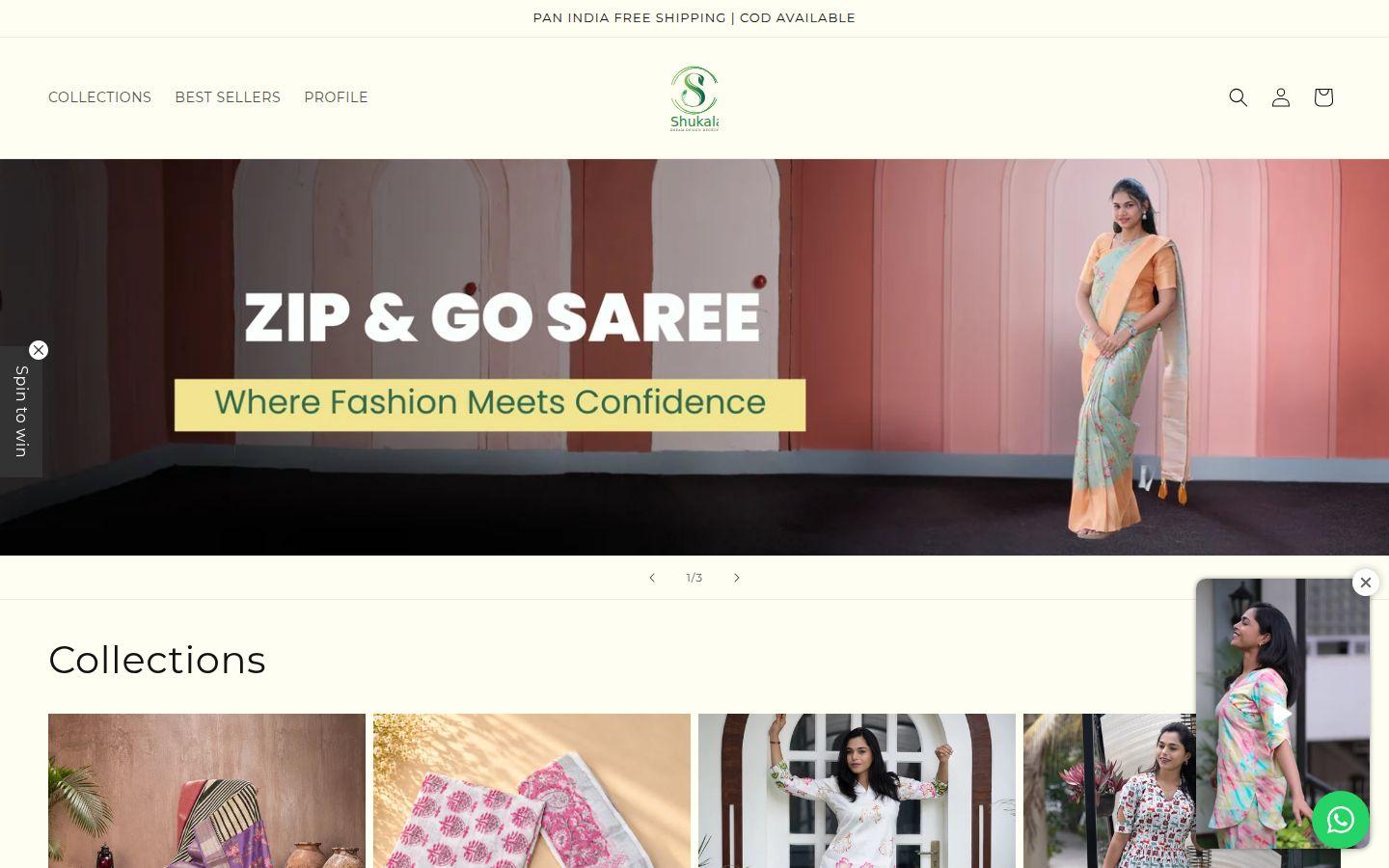
Why selling sarees online is harder than it looks
A saree is bought on fabric, drape, colour and occasion, which are things shoppers normally judge by touch in a shop. Online, the same shopper is usually on a phone, comparing several tabs, and often unsure whether to trust a label they found on Instagram. Three questions decide most saree purchases in India: will the colour look like the photo, can I pay on delivery, and what happens if it does not suit me.
Shukala's range adds a second problem. It mixes unstitched products, such as sarees with blouse fabric and salwar materials sold by colourway, with stitched ones, such as co-ords and kurtis, that need sizes. A store set up for only one of those makes the other awkward to buy.
Answering COD and delivery before the shopper asks
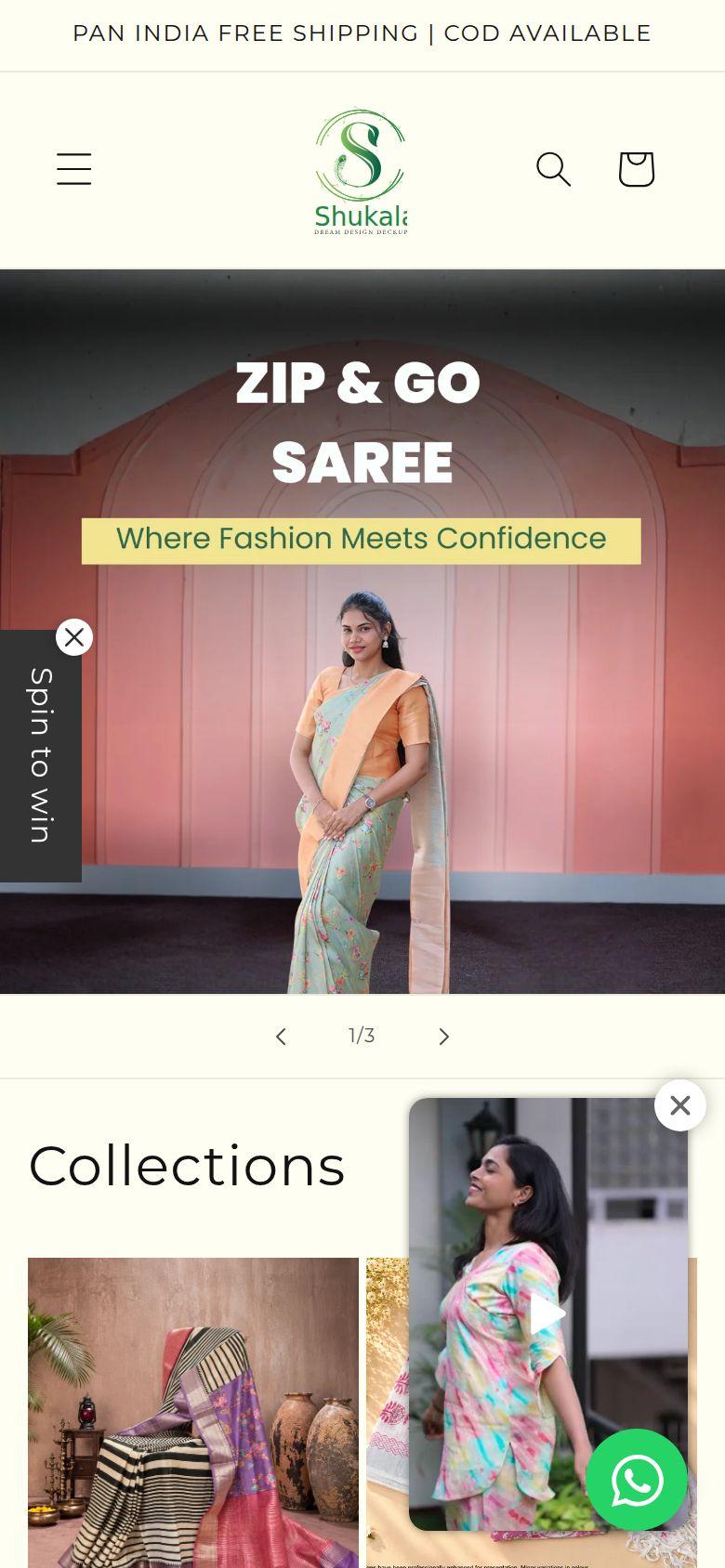
The first line on every page is a slim announcement bar: pan-India free shipping and cash on delivery available. For a first-time buyer from a small label, COD removes the risk of paying for something that may never arrive, and free shipping removes the surprise charge that makes people abandon a cart at the last step. Putting both in the bar means they stay visible on collection and product pages, not just on the homepage.
The homepage then shows customer testimonials about the boutique's tailoring and embroidery work. They are the label's existing word-of-mouth, and they carry it online for shoppers who have never been to the store. A floating WhatsApp button sits on every page, because many Indian shoppers want to ask a quick question about fabric or delivery before they pay, and WhatsApp is where they already talk to local shops.
A catalogue split the way ethnic wear is actually bought
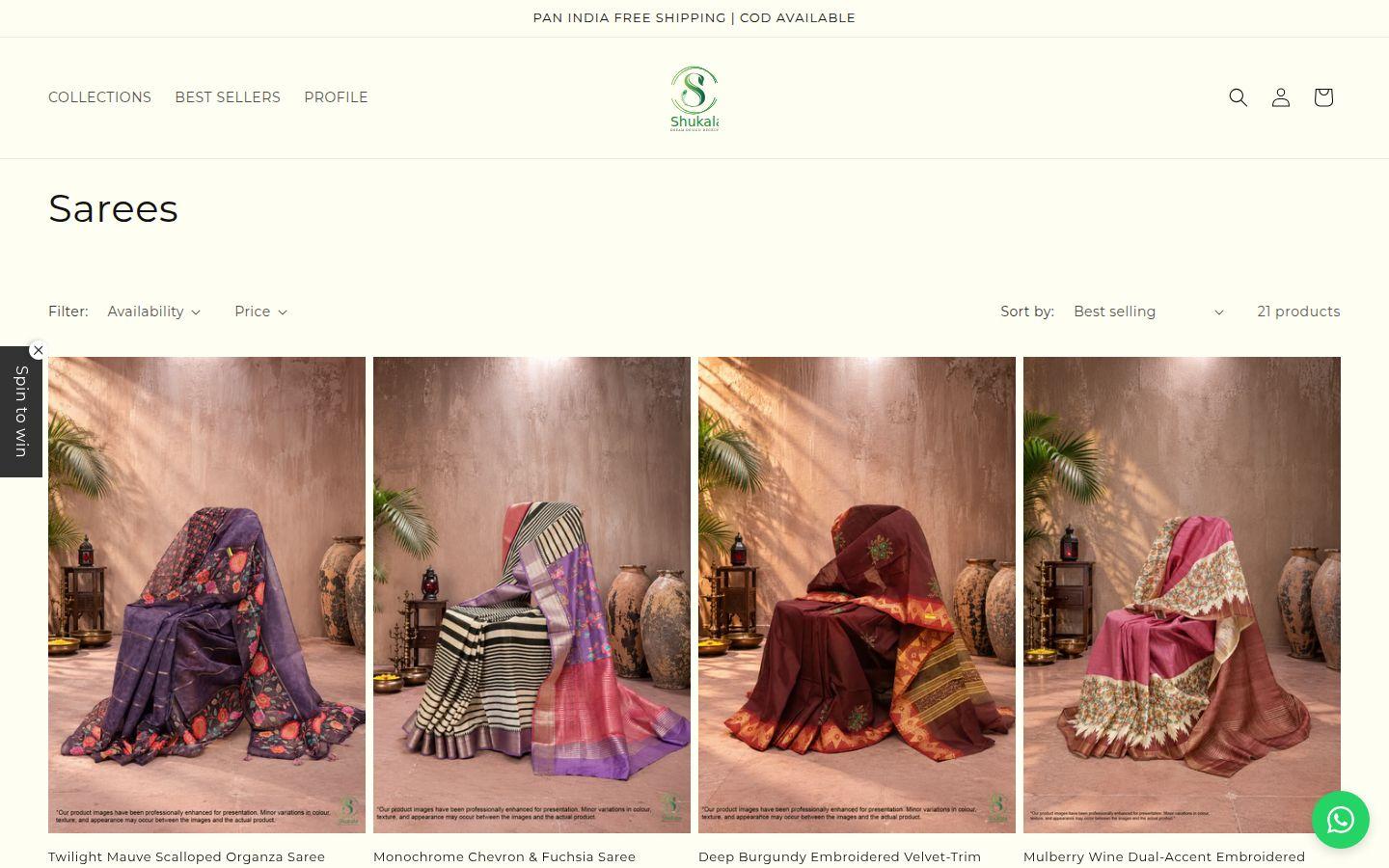
The collections follow how customers think about the range rather than how stock is stored: Sarees (21 products on 23 November 2026), Salwar Materials (52), Cord Set, Kurti Set, Frocks, New Arrivals and Best Sellers. The Collections menu and the homepage collection tiles lead to the same groups, so a shopper who knows what she wants is one tap away from it.
Each collection page shows a product count, availability and price filters, and sorting by best selling, price or date. With 21 sarees that may sound like more than needed, but the price filter is what lets a shopper buying a gift stay inside a budget, and best-selling order gives a new visitor a sensible place to start.
Variants: colourways for fabric, sizes for stitched pieces
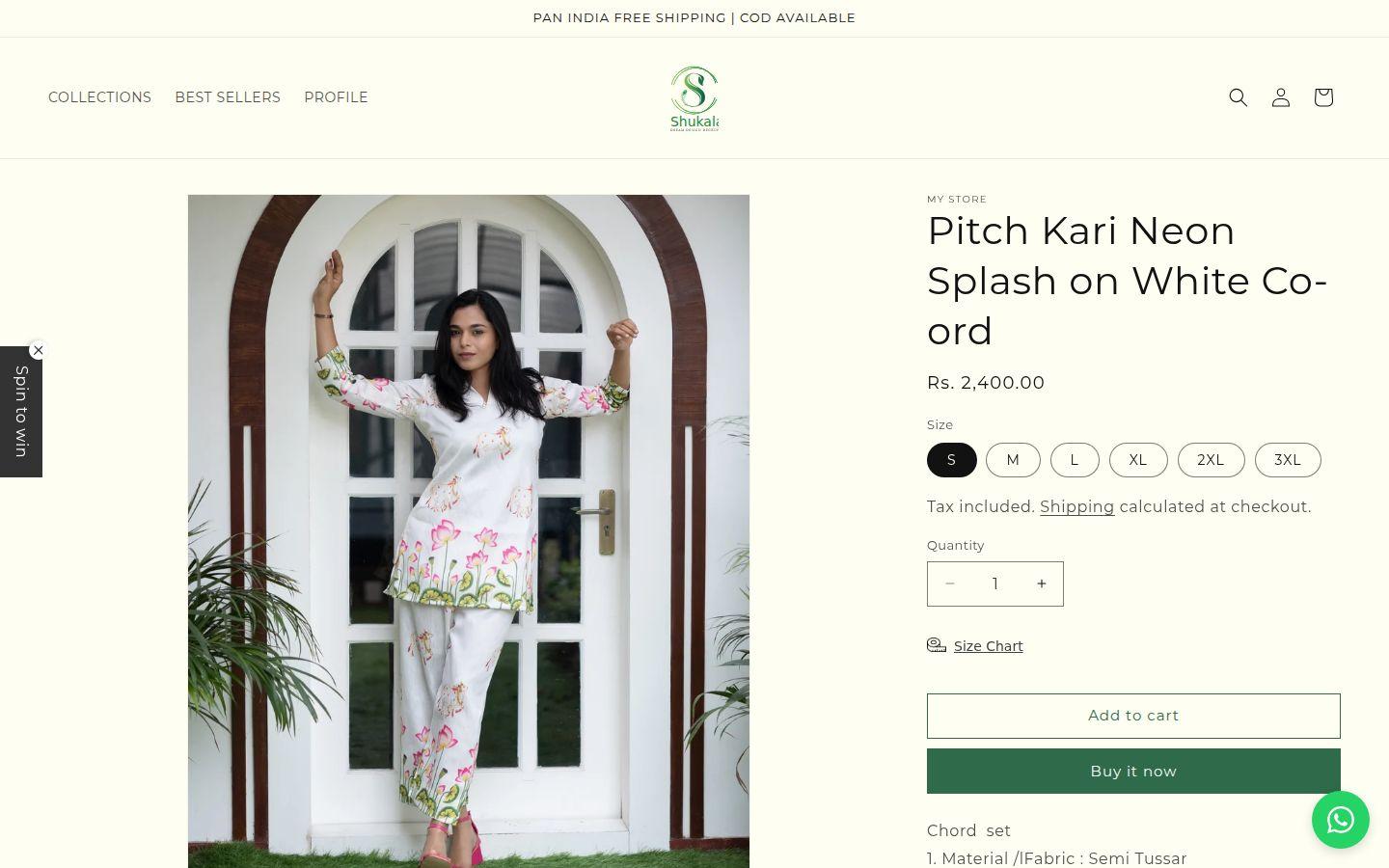
Ethnic wear catalogues go wrong when every product is forced into the same option set. On Shukala, products use the option that fits them. Salwar materials are sold as colourways, with options such as Peach, Pink, Blue and Green on one listing, so a shopper compares colours without leaving the page. Co-ords, kurtis and frocks are sold in sizes from S to 3XL, with a size chart linked next to the size buttons. Sarees are single items; the description states the fabric and whether an unstitched blouse piece is included.
That split matters for returns as much as for conversion. Most fashion returns in India are about fit or colour. Offering sizes only where a size exists, and a size chart where it does, removes one avoidable reason for an exchange.
Product pages that answer the questions a shop assistant would
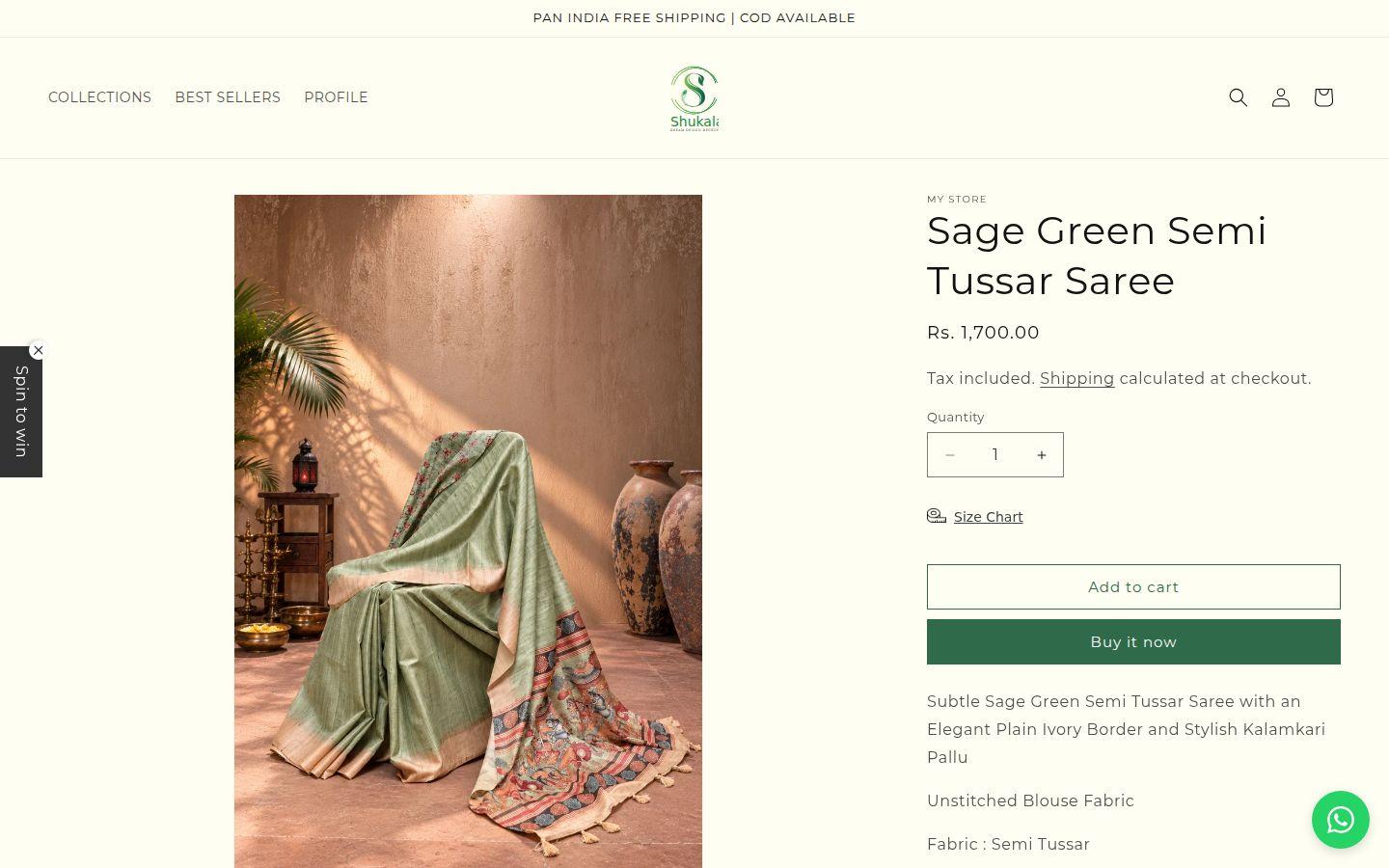
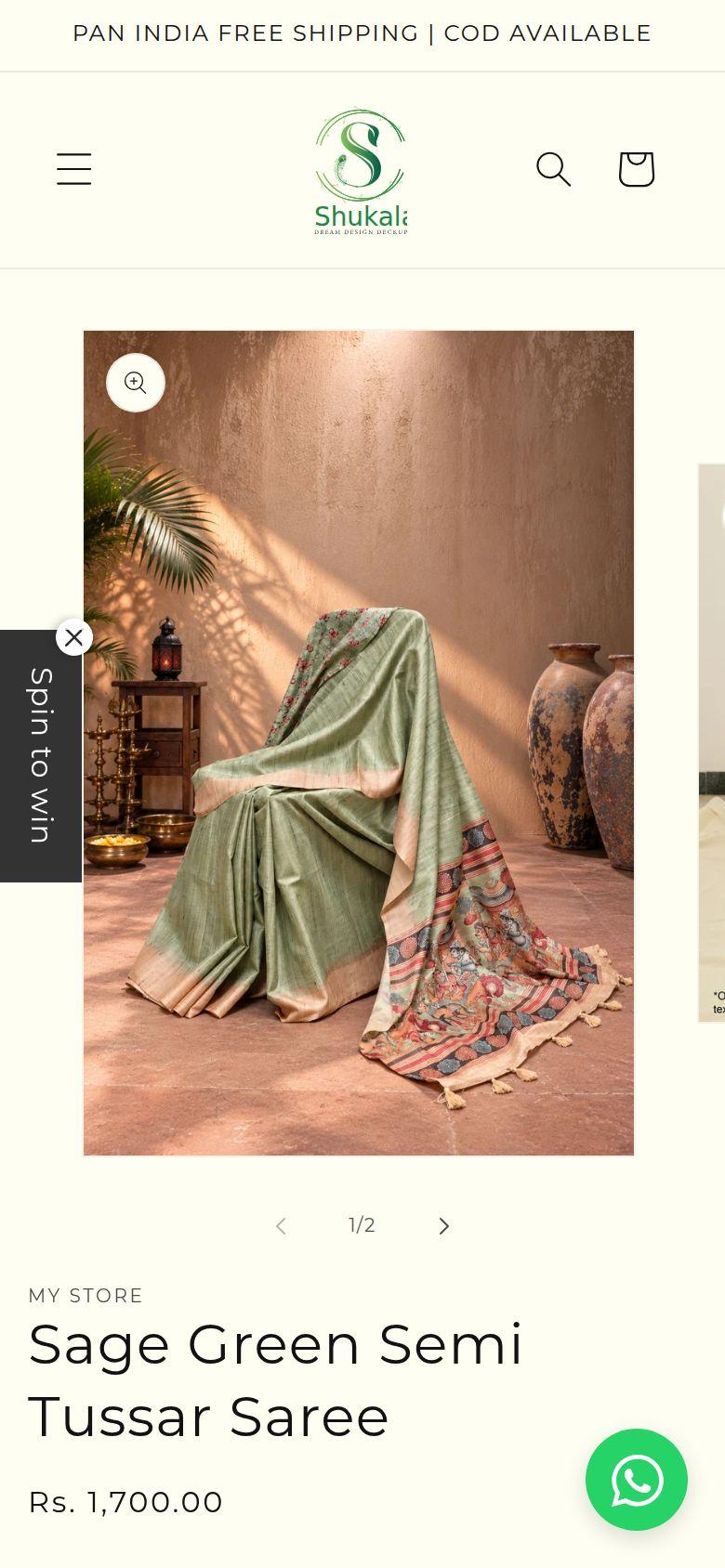
A saree product page leads with large photography, the price with tax included, and two buttons: Add to cart for shoppers building an order, and Buy it now for those ready to pay straight away. The description names the fabric (semi tussar, organza, chanderi silk and so on), the border and pallu work, and whether a blouse piece is included.
Below that, collapsible tabs cover shipping details, returns, size help, specification, material and care, and a disclaimer. These are the questions an assistant in the boutique would answer in person; collapsing them keeps the page short on a phone while keeping the answers one tap away.
Explaining a new product with video: the Zip & Go Saree
Shukala's lead product is the Zip & Go Saree, a ready-to-wear saree with a built-in zip, so there is no pleating or pinning. A new idea like that needs explaining, so the homepage gives it the hero banner, a short written explanation of how it works and who it suits (office, travel, everyday wear), and a row of short product videos. A floating video player also follows the shopper down the page.
Video does work that photos cannot for ethnic wear: it shows how the fabric falls and moves. For a pre-stitched saree it also proves the main claim, that it goes on in seconds.
Mobile first, because that is where saree shoppers are
On a phone the store keeps the same order of information: the shipping and COD bar, then the logo, search and cart, then the hero. The menu collapses behind a single icon, the collection tiles scroll sideways, and the WhatsApp button stays within thumb reach in the bottom corner. On product pages, the photo comes first and the buttons follow without the shopper having to zoom.
Cart, checkout and bringing shoppers back
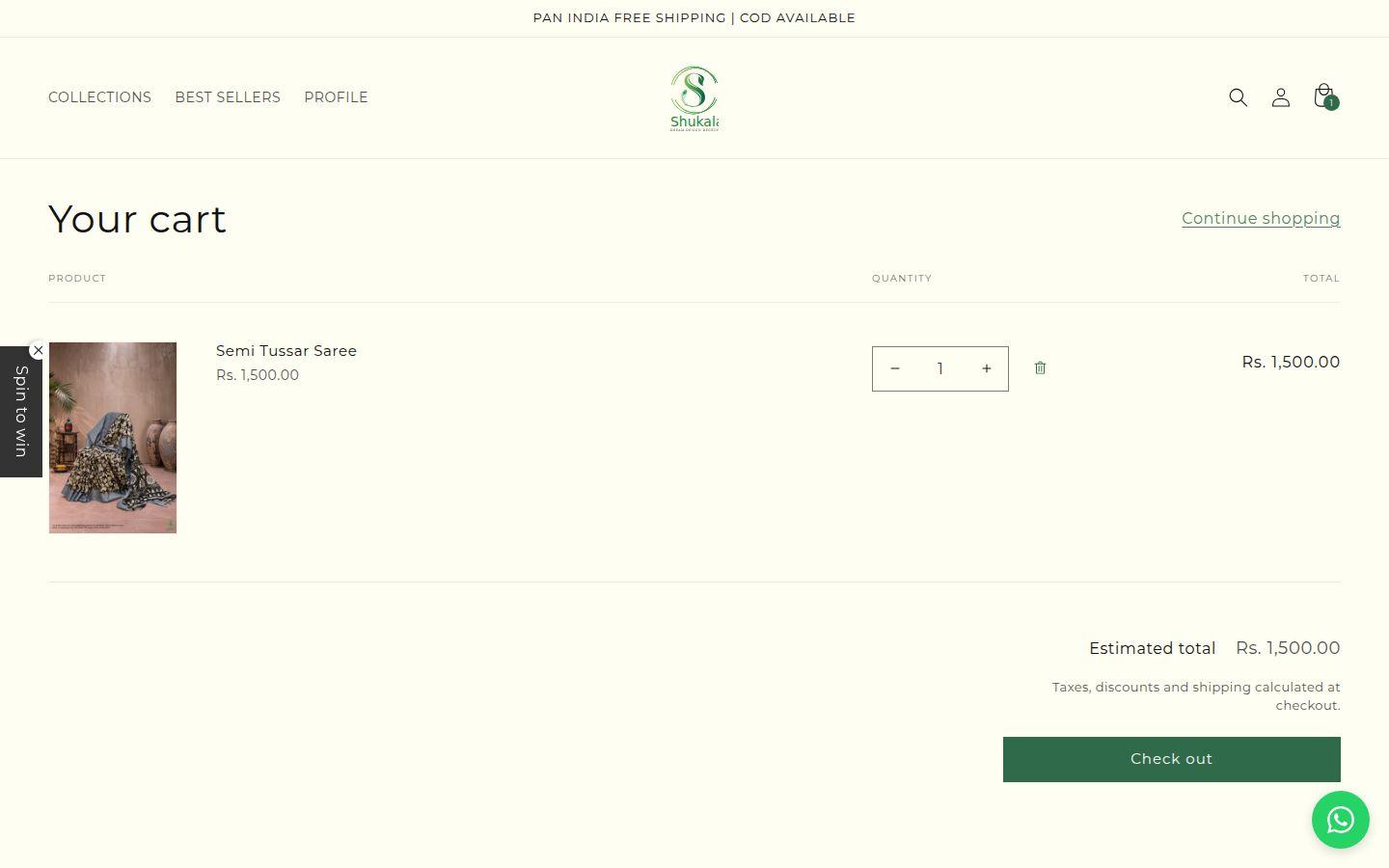
The cart is deliberately plain: product, quantity, total, and a note that taxes, discounts and shipping are calculated at checkout, followed by a single Check out button into Shopify's checkout. Nothing on the way to payment competes for attention.
For shoppers who are not ready to buy yet, the store offers 10% off for subscribing to emails and a spin-to-win discount tab. Both turn a browsing visit into a contact the label can follow up with when new sarees arrive, and a product review widget is in place for buyers to leave reviews on individual products.
What other ethnic wear brands can take from this build
Before choosing colours or fonts, answer the trust questions: cash on delivery, shipping cost and returns. Then shape the catalogue around how your customers shop, not how your stock is stored. Decide per product type whether it needs sizes, colourways or neither. If you sell something new, give it video. And design every page for a phone first, because that is where most of your shoppers will see it.
Frequently asked questions
Is Shopify a good platform for a saree store in India?
For most saree and ethnic wear labels, yes. Shopify handles Indian payment methods and cash on delivery through its checkout and apps, it is easy for a small team to update without a developer, and a theme can be customised for the brand. A custom build makes sense when you need things Shopify does not do well, such as a multi-vendor marketplace.
How should a saree store handle sizes and variants?
Only use sizes where a size exists. Sarees and dress materials are usually sold as single items or colourways, with the blouse piece and fabric stated in the description. Stitched items such as kurtis and co-ords need size options and a size chart. Mixing the two in one option set confuses shoppers and causes avoidable returns.
Should an online saree store offer cash on delivery?
Most Indian fashion stores do, especially for first-time buyers from a smaller label. Showing COD and shipping terms early, as Shukala does in its announcement bar, reduces drop-off at checkout. Many stores add rules such as COD limits or confirmation calls to manage returns.
Can customers contact a Shopify store on WhatsApp?
Yes. A floating WhatsApp button, as on Shukala, opens a chat with the store's number from any page. It suits shoppers who want to ask about fabric, colour or delivery before paying.
What does a Shopify saree store cost to build?
It depends on the number of products, the theme and how much custom work the design needs. Our ecommerce cost guide explains the main cost drivers, and we quote after a short call about your catalogue.