
The problem we were asked to solve
When a vessel is due in port, the superintendent may have days, sometimes hours, to arrange hold cleaning, an inspection or spare parts from vendors in a port they do not know. The usual tools are email threads, phone calls and old supplier lists. Quotes come back in different formats, and checking whether a supplier is genuine takes time nobody has.
MariBiz wanted one place where a ship owner posts a requirement once and receives comparable quotes from approved vendors in that port. No marketplace plugin does RFQs by vessel and port with moderation in between, so we built it from scratch. The work sits in two repositories, the first from March 2026 and the current MariBiz2 codebase.
Modelling an RFQ around a vessel in a port
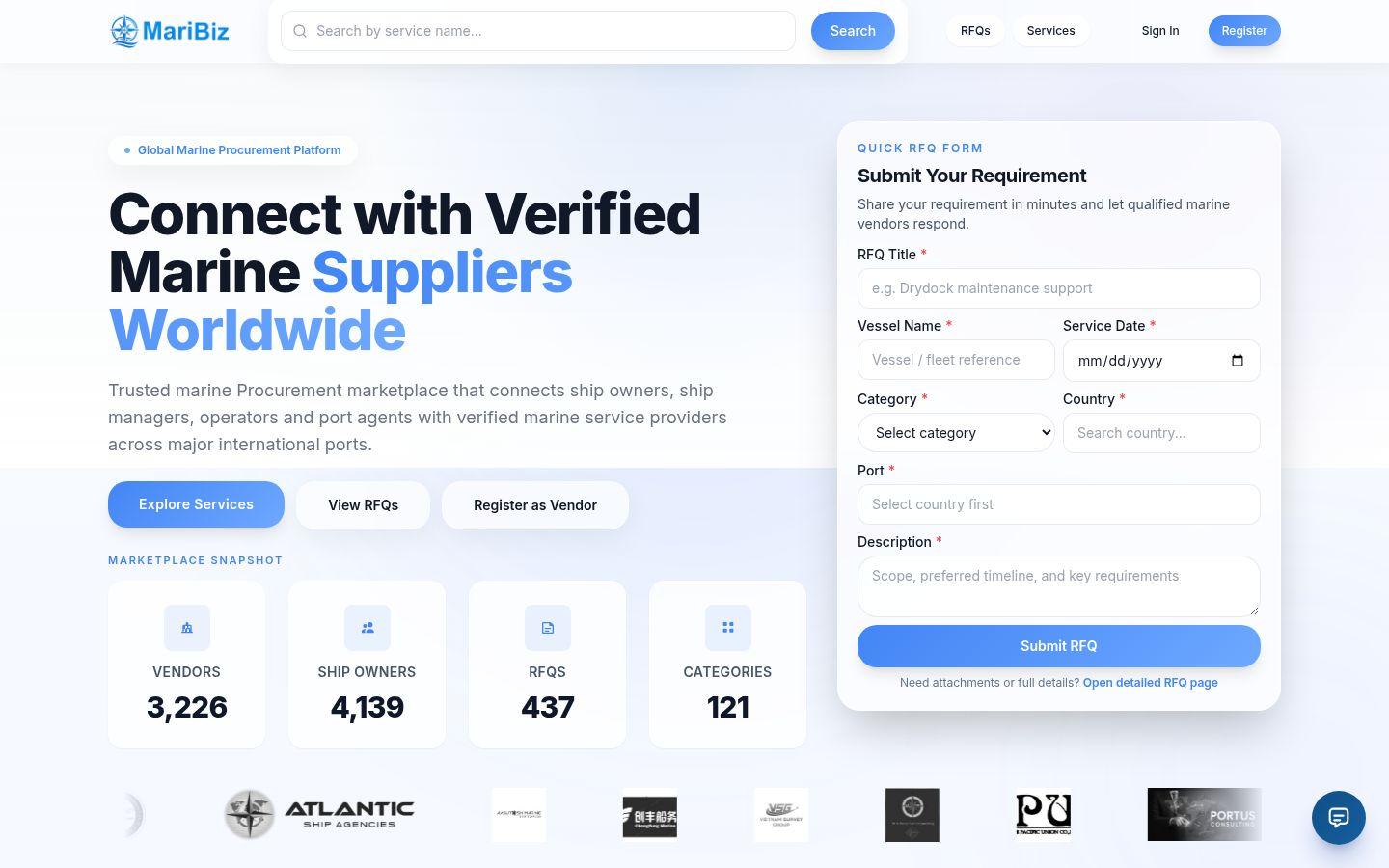
The first job was getting the data right. Over a few weeks in March 2026 we added RFQs (called projects in the code) with their details, a vessel name and attachments, a service date, a port, and moderation status. The homepage form now asks for exactly what a vendor needs to quote: title, vessel, service date, category, country, port and scope.
Ports were harder than they look. The same port is written several ways, and many smaller ports are missing from standard lists. We imported country and port data from CSV, opened the port field only after a country is chosen, allowed custom ports per country, and later added port aliases and validation for custom entries, so two spellings of the same port still match the same vendors.
Moderation at every step, without slowing buyers down
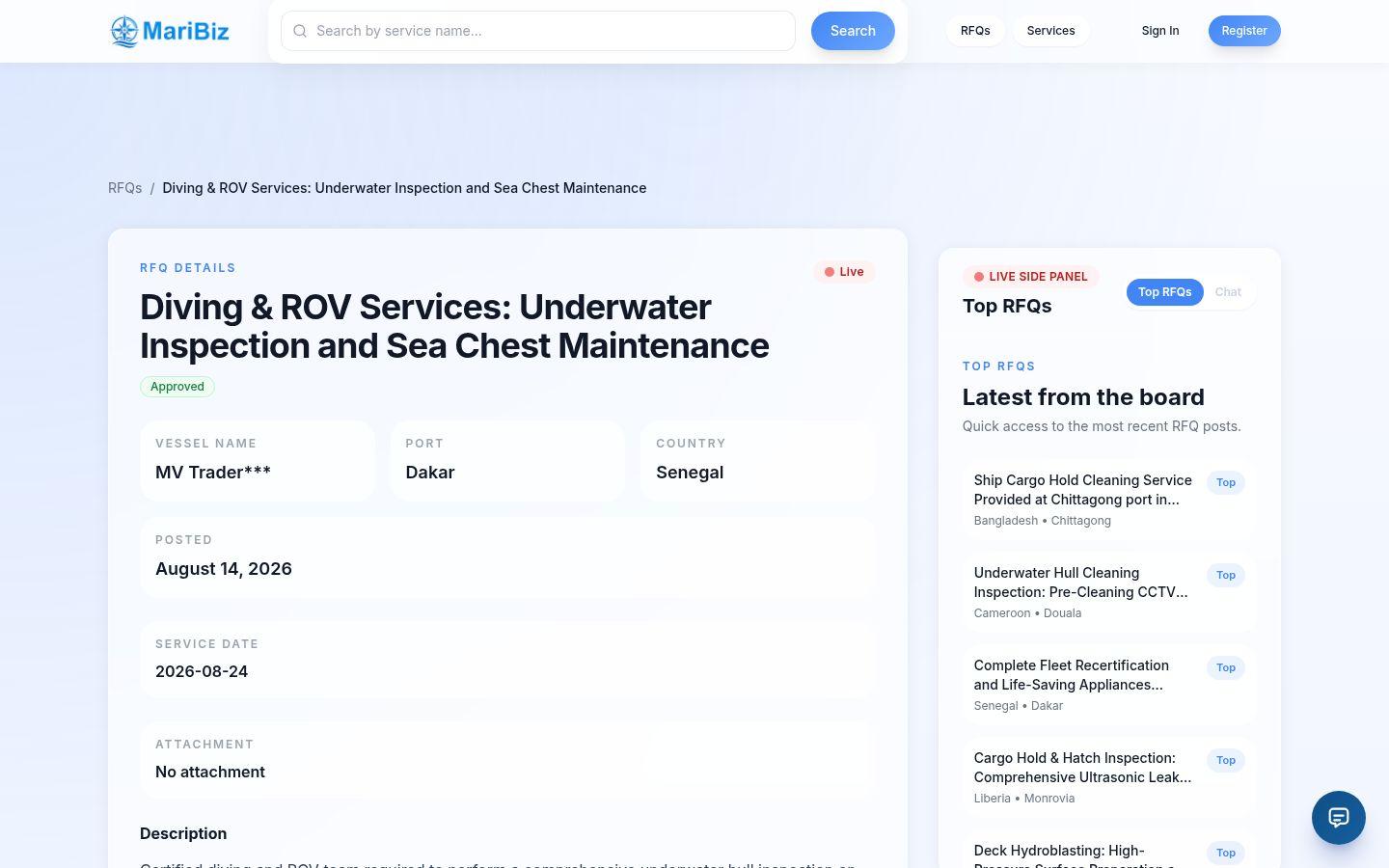
In shipping, a bad supplier is expensive, so nothing on MariBiz goes straight through. We built three moderated workflows. A vendor's service is approved, rejected or sent back with a correction request. An RFQ is reviewed by an admin, who can assign an operator and approve it or ask for changes, and then matching vendors are notified. A vendor's quote is checked by an admin for quality before the ship owner sees it, and the owner accepts one approved quote.
Admin actions are written to an activity log and quotes carry approval timestamps, so the platform keeps a record of who approved what and when. In April we added vendor-scoped chat rooms, so each vendor quoting on an RFQ has its own conversation with the buyer, kept separate from the other vendors quoting on it.
A catalogue in the industry's own vocabulary
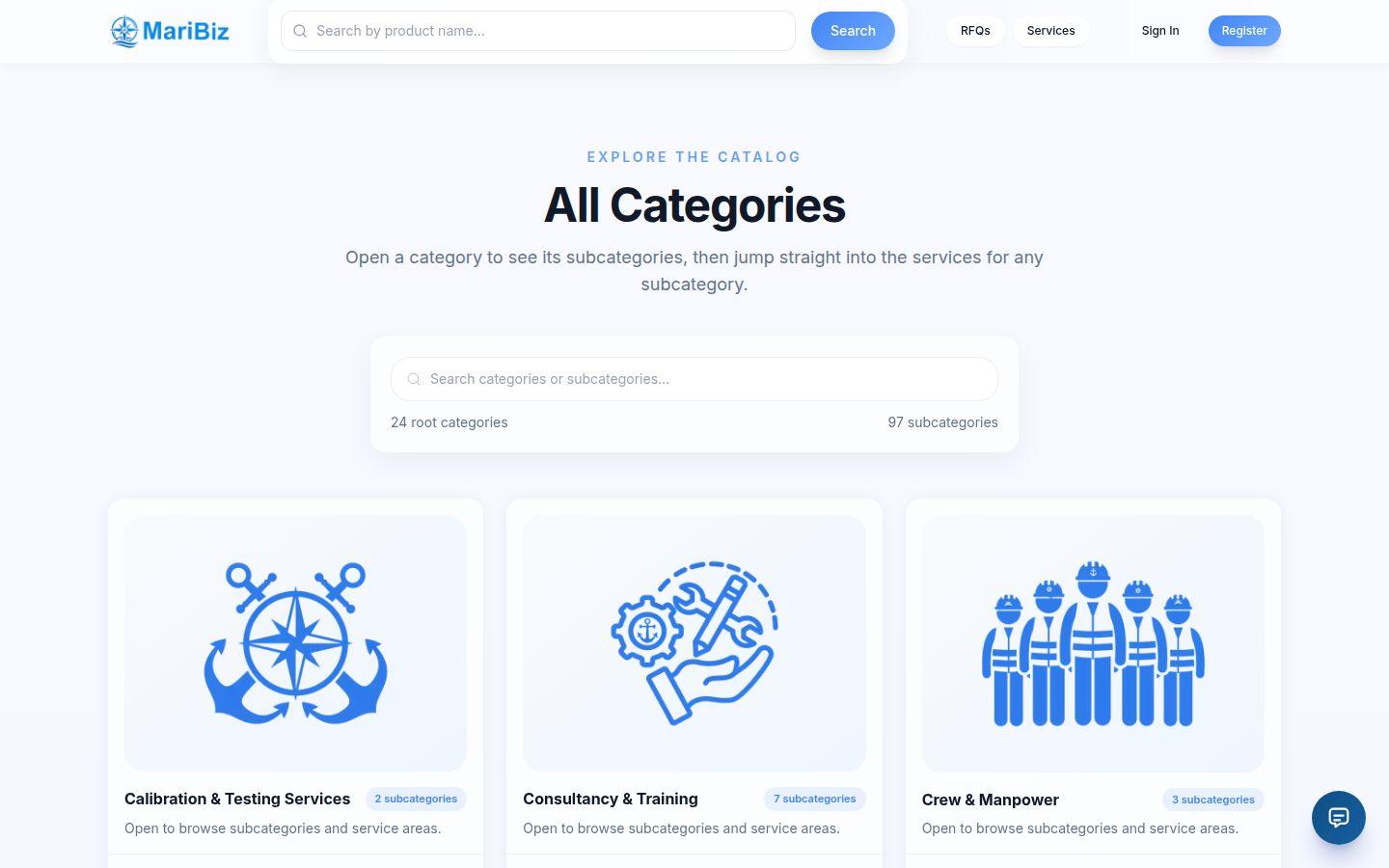
Generic categories mean nothing to a chief engineer. We cleaned up the categories migrated from the first version and gave them a parent and child structure. The live catalogue has 24 root categories and 97 sub-categories with the names the industry uses, such as hold cleaning, slop and sludge reception, ballast water compliance, ultrasonic thickness measurement, cash to master and crew change. The same list feeds the RFQ form, so buyers and vendors use the same words, and each category has its own page and clean address.
The small details that took real work
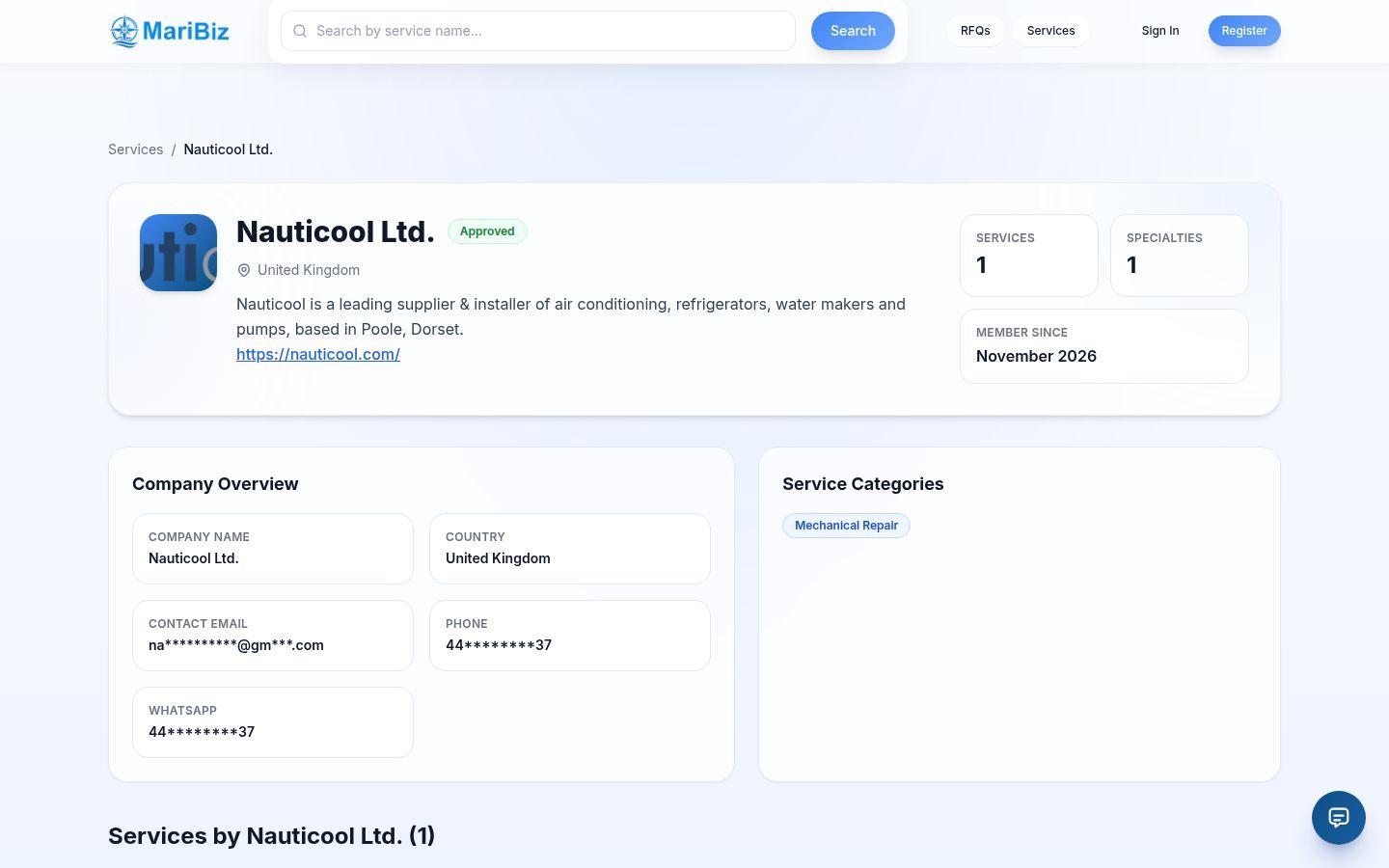
Shipping is international, so sign-up had to be too. Registration has a searchable country list that fills in the right dialling code and updates it when the country changes, and a phone number is required, because vendors are reached by phone and WhatsApp. Vendor profiles carry a logo and WhatsApp number fields, and each vendor gets a short, readable profile address. When a vendor renames its company, the address is regenerated so links still make sense.
Language mattered as well. We replaced "buyer" with "ship owner" across the interface, because that is who posts the RFQs and how they describe themselves. For the team running the platform we added CSV exports of users and vendors filtered by date, and in May a dedicated landing page for marine RFQs that records leads straight into the database.
Growing the supply side with a voice-call campaign engine
A procurement marketplace is only useful if the right vendors are on it, and marine vendors are spread across every time zone. In April 2026 we built a voice campaign engine inside the platform. Admins and a dedicated caller role choose an audience from listed vendors or a CSV of contacts, generate a call script, and launch, pause or rerun the campaign. Twilio, ElevenLabs and Groq power the calls and the scripts.
Doing this properly took a series of changes: webhook idempotency so a repeated Twilio callback never double-counts a call, personalised and intro audio, a follow-up channel, call attempt notes, custom contact lists, and country time zones with working hours, so calls go out in each vendor's local working hours. Caller accounts can reach only the campaign tools, enforced in the backend, not just hidden in the menu.
Keeping it fast, and running it ourselves
As RFQs, bids and messages grew, we added query indexes in three rounds: at the end of March, again in April together with queue work for admin analytics, and on 22 November 2026 for dashboards, along with caching of the signed-in user. Bulk service imports moved to batch inserts, and Redis became optional, with runtime handling for when it is unavailable.
MariBiz runs on servers we set up rather than a managed platform: an Nginx reverse proxy with a separate API subdomain, the backend in a PM2 cluster, and a migration deploy script that retries if the database is briefly unavailable. The API is documented with OpenAPI, 91 paths and 112 operations. On 24 November 2026 Google PageSpeed scored the homepage 90 on mobile and 91 on desktop.
What is live today
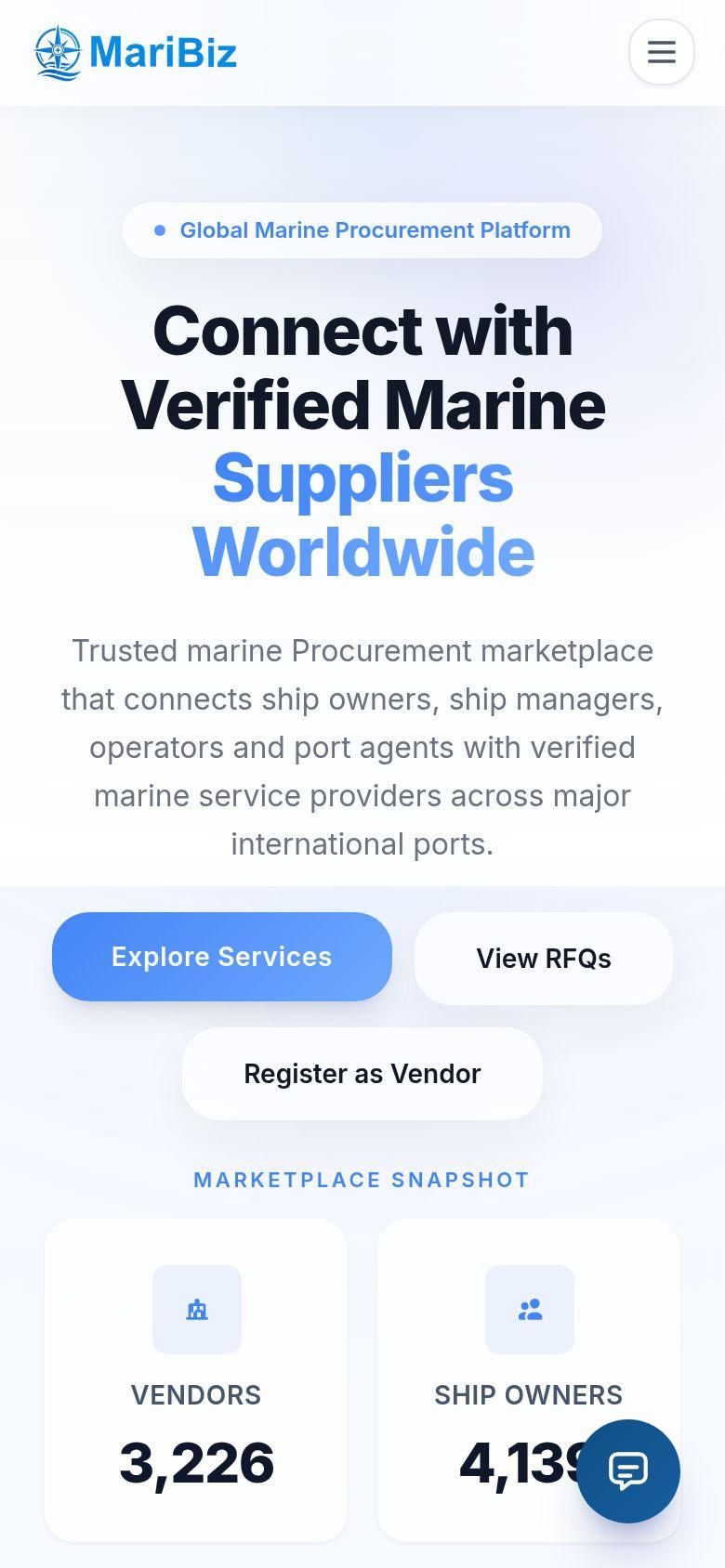
MariBiz runs with port-based RFQs, moderated services and quotes, private buyer-vendor chat, approved vendor profiles, a 121-category catalogue, a 14-question FAQ, a blog and help centre, and its own voice campaign tools. The homepage counters are the platform's live figures, not results we claim: on 23 November 2026 they showed 3,226 vendors, 4,139 ship owners and 437 RFQs.
Frequently asked questions
What is a marine procurement platform?
A marketplace where ship owners, managers and port agents post requirements (RFQs) for marine services or supplies, and approved vendors in the relevant port send quotes. MariBiz is one example.
Why moderate quotes before the buyer sees them?
Because a poor or incomplete quote wastes a superintendent's time under deadline. On MariBiz an admin checks quote quality first, and the buyer chooses from approved quotes.
How do you match vendors to a port when port names vary?
Choose the country first, then the port from a list; allow custom ports per country; and keep aliases so different spellings of the same port match the same vendors.
Should a B2B marketplace be custom-built or use a marketplace plugin?
Plugins suit simple product marketplaces. RFQs, moderation, port-based matching and private quote chat usually need a custom build. Our custom software guide explains how to decide.
Can NextGen Fusion build a procurement platform for another industry?
Yes. Structured RFQs, a domain catalogue, moderated suppliers and private quote chat apply to construction, manufacturing and logistics too. We start by mapping how buyers request quotes today.