
Named sarees and two ways to browse
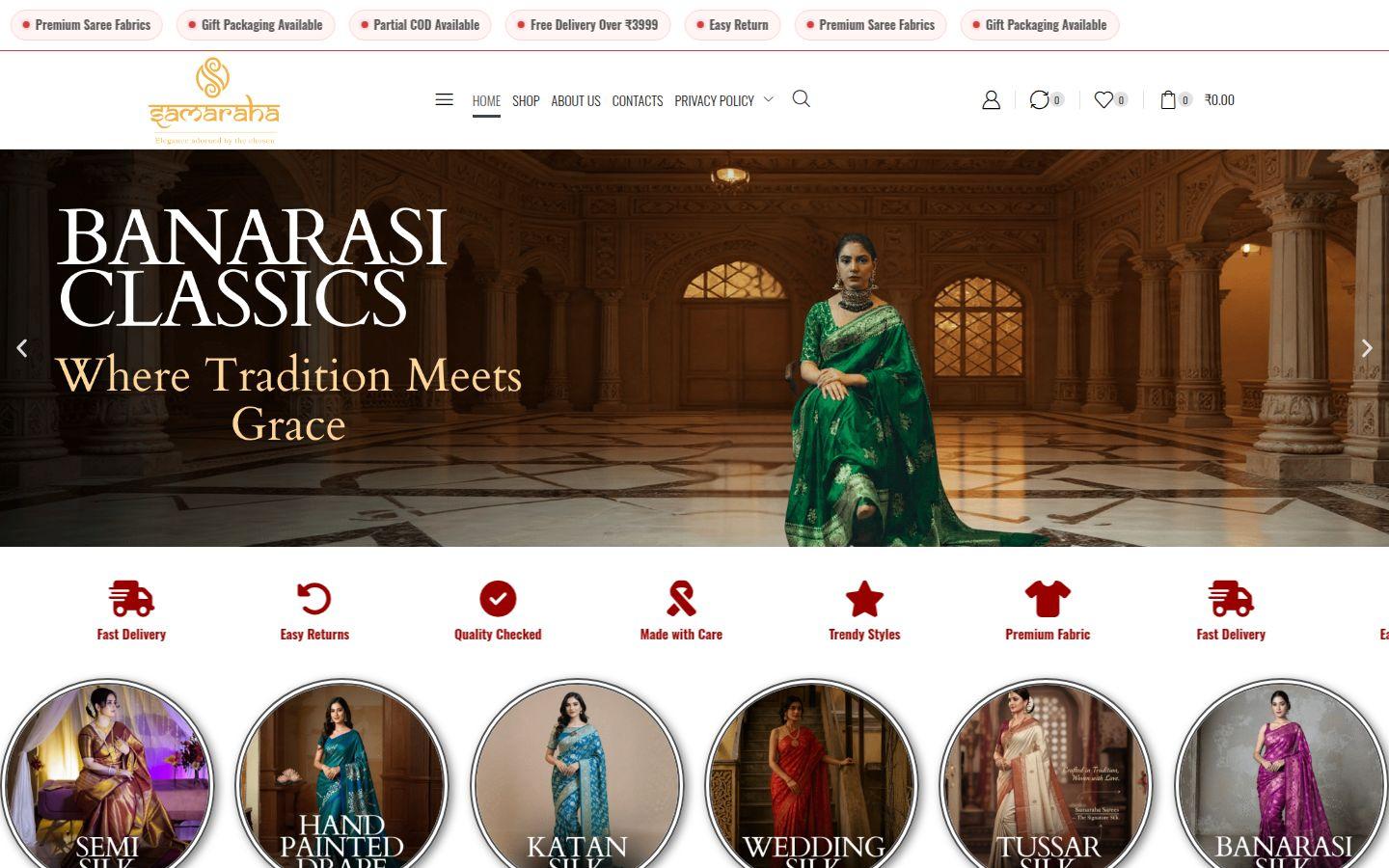
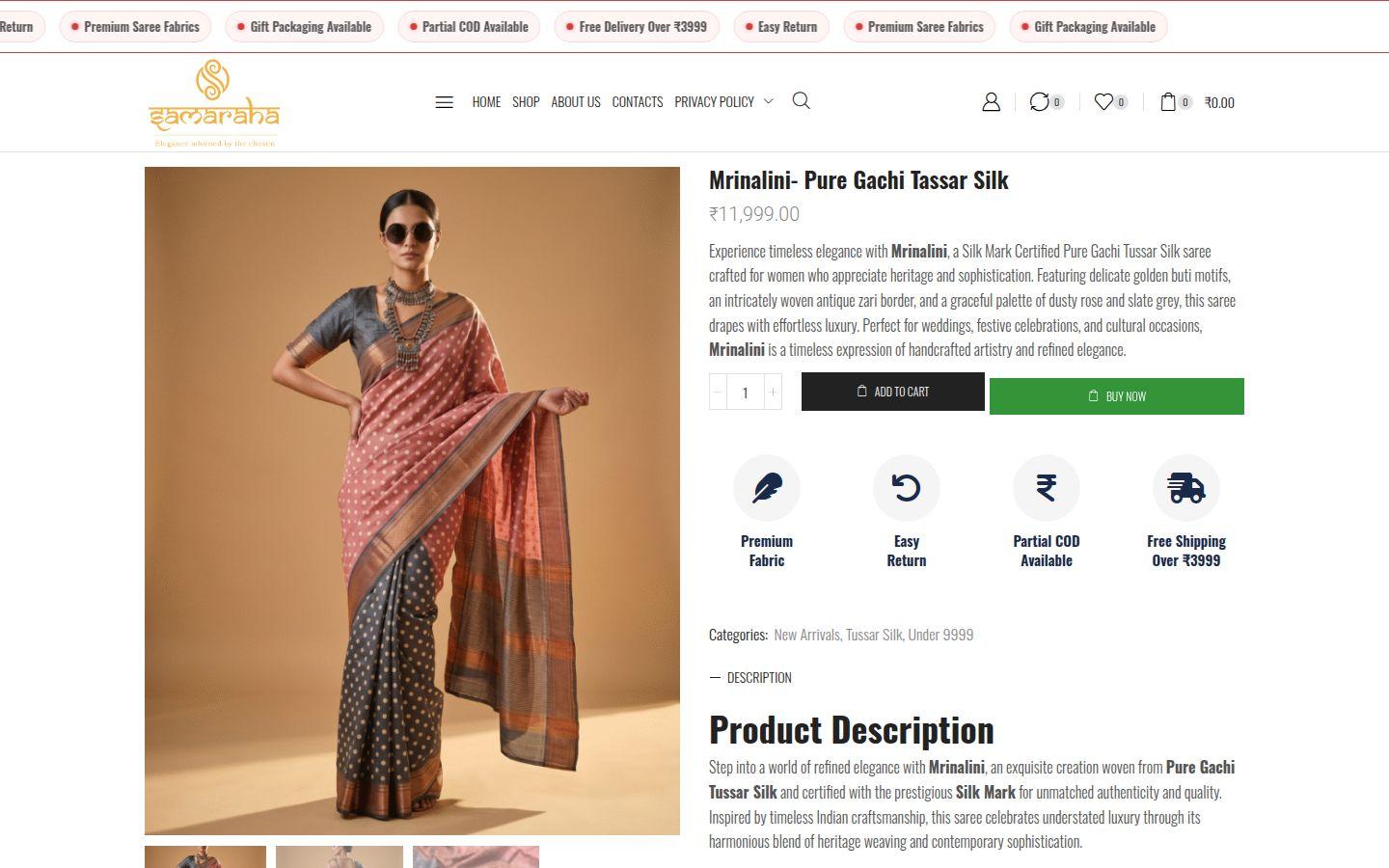
Every saree has a name as well as a description, for example Mrinalini (pure gachi tussar silk) or Madhurima (pink Banarasi). Names make a small catalogue feel curated and give shoppers something to remember and ask about on WhatsApp.
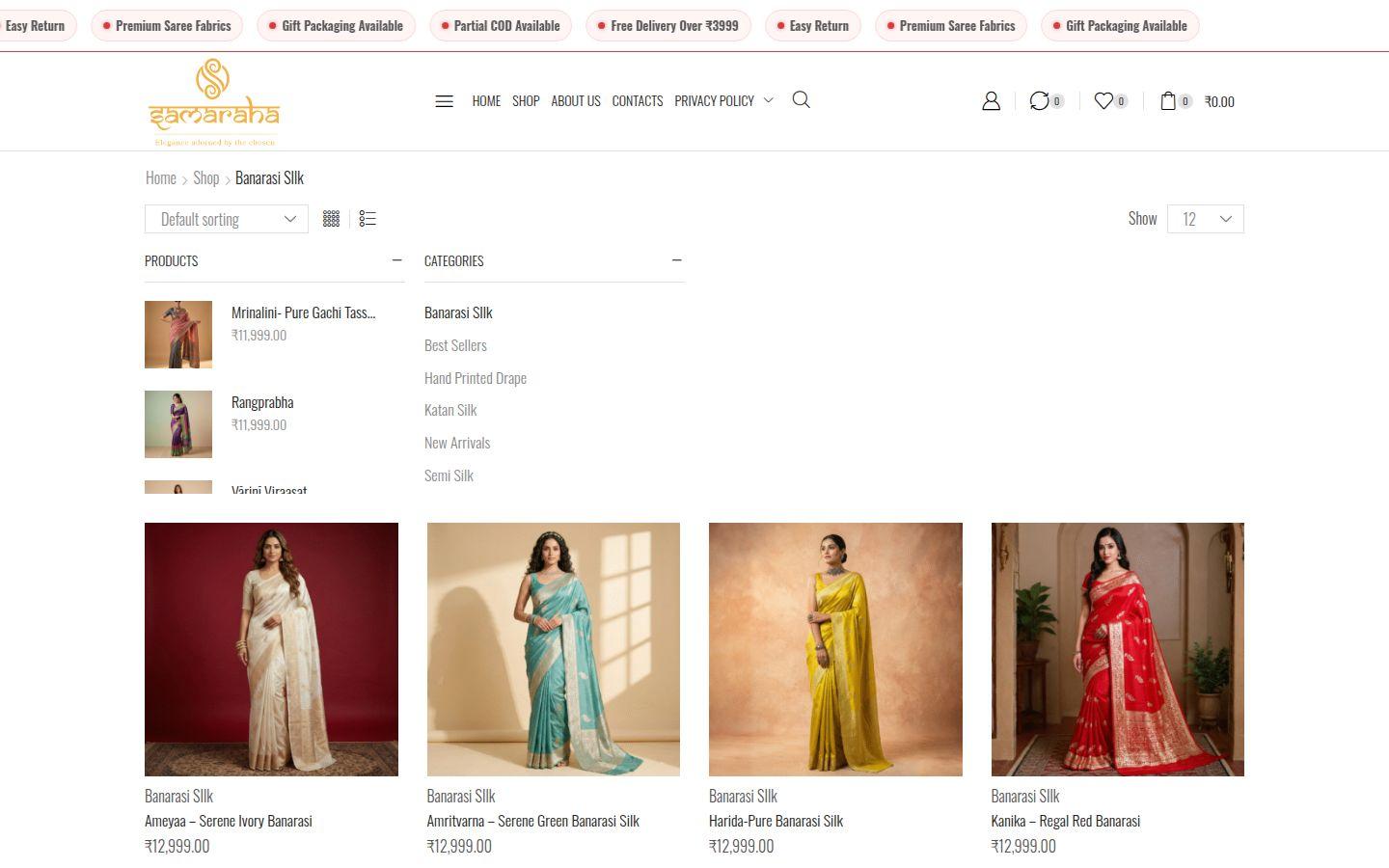
Shoppers can browse by type of silk (Banarasi, tussar, katan, semi silk, hand-printed drape, wedding silk) or by budget, using three price-band collections: Under ₹3,999, Under ₹9,999 and Under ₹19,999. Budget collections suit gift buyers, who usually know what they want to spend before they know which silk they want.
Reducing the risk of a high-value order
The announcement bar repeats five commitments on every page: partial COD available, free delivery over ₹3,999, easy returns, premium saree fabrics and gift packaging. Partial COD is a useful middle ground for expensive items. The buyer pays part upfront and the rest on delivery, which protects the seller from refused parcels while still reassuring the buyer.
Product cards show stock honestly: sold-out sarees are labelled Out of Stock and some are marked Available on Backorder, so a shopper is never surprised at checkout. Sale prices show the original price alongside the current one.
Product pages written like a sales conversation
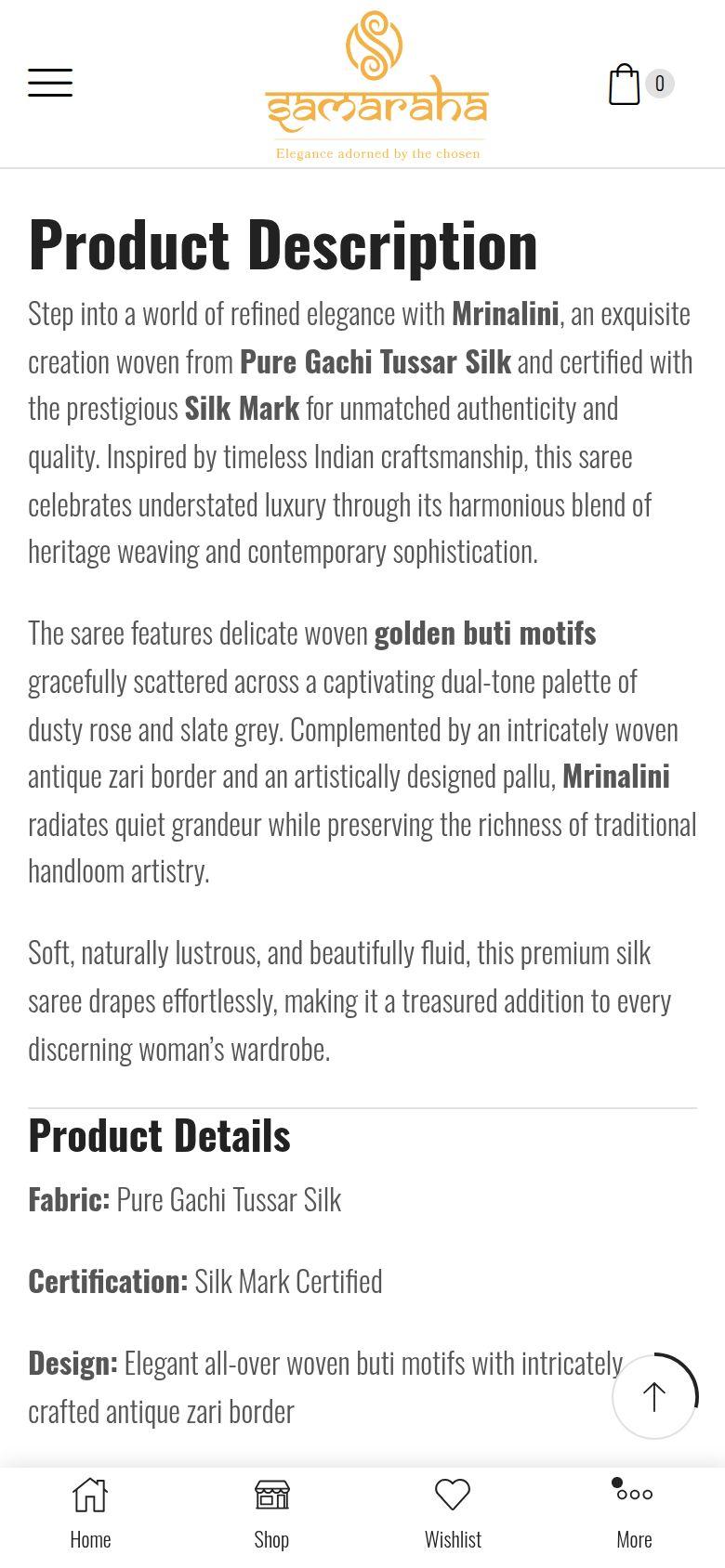
Each product page leads with the name, the price and a short summary, followed by Add to Cart and Buy Now and the same trust icons as the header. The full description then reads like a conversation with a knowledgeable seller: a narrative paragraph, a Product Details list (fabric, Silk Mark certification, design, colour palette, whether the blouse piece is included and stitched or unstitched, texture), an Occasion section and a Styling Tip.
Certification and blouse details are the two facts most silk buyers ask about, so they are stated plainly in the list rather than buried in prose. A "Why saree lovers choose Samaraha" block and related products sit below.
Designed for gifting as much as self-purchase
Silk sarees are among the most common gifts at Indian weddings and festivals. The store reflects that with gift packaging in the announcement bar, price-band collections and an Occasion section on every product. A buyer shopping for a mother-in-law's gift can start at Under ₹9,999, read which occasions a saree suits, and check that gift packaging is offered, all without contacting the store.
The mobile layout
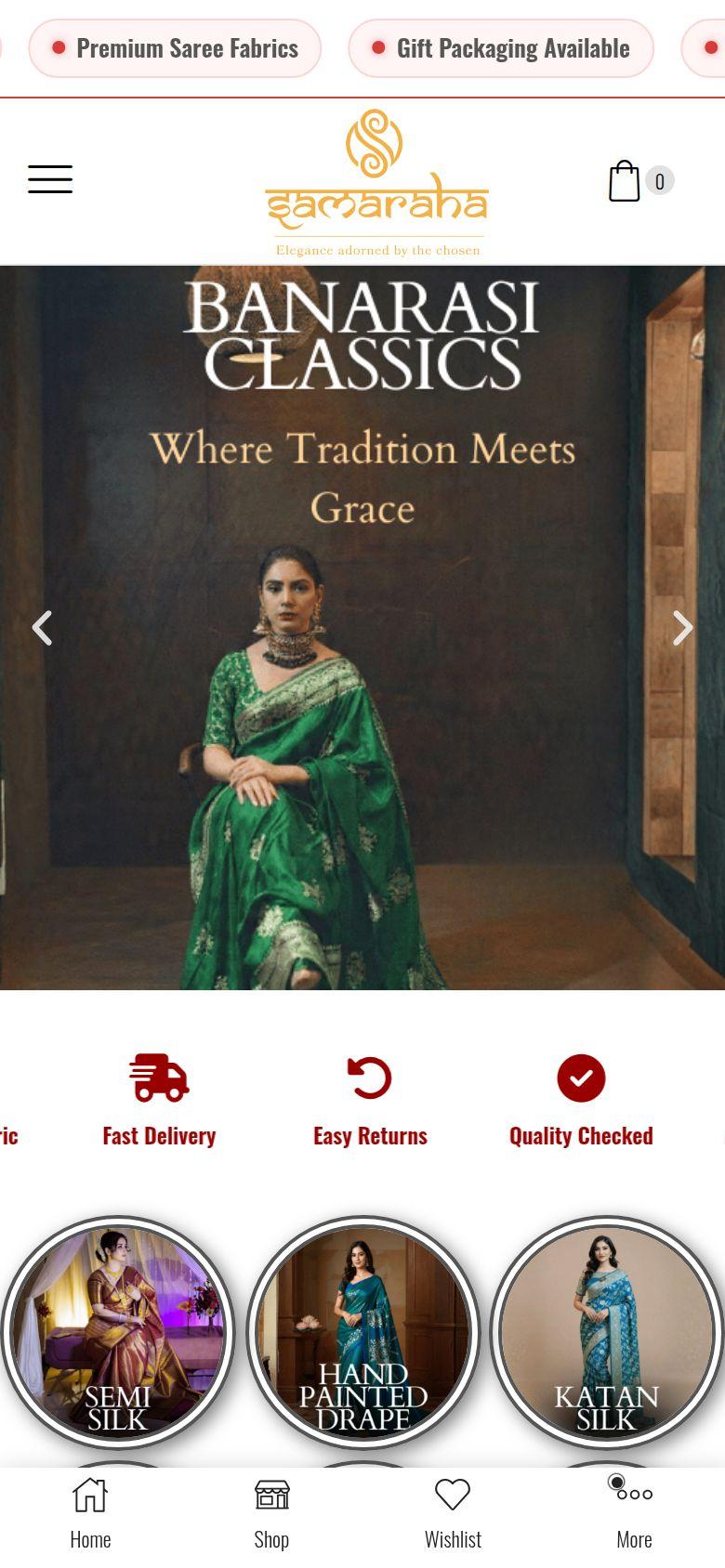
On a phone, the round collection tiles become a swipeable row under the banner, which makes switching between silk types easy with one thumb. The product description stays fully readable, with headings for details, occasion and styling, and a bottom navigation bar keeps Home, Shop, Wishlist and Menu in reach.
Why WooCommerce suits a curated silk range
A small, high-value catalogue benefits from long, editorial product pages: a story paragraph, a details list, an occasion section and a styling tip. WooCommerce lets each of those be laid out exactly as the brand wants, and the same product data feeds category pages, price bands and related products without duplicate work.
It also keeps running costs predictable. There are no per-sale platform fees on top of the payment gateway, which matters when a single order can be a five-figure silk saree.
Lessons for premium saree brands
Name your sarees. Offer budget collections for gift buyers. State certification and blouse details in a list, not a paragraph. Consider partial COD for expensive items. And be honest about stock: an out-of-stock label on the listing is better than a disappointed buyer at checkout.
Frequently asked questions
How do online saree stores show that silk is genuine?
By stating the fabric and any certification, such as Silk Mark, on the product page in a clear list, using close-up photography of the weave and zari, and having a return policy that covers authenticity concerns.
What is partial COD and why use it for sarees?
Partial cash on delivery means the buyer pays a part of the price online and the rest on delivery. It reduces losses from refused parcels on expensive items while still giving buyers the reassurance of paying on delivery.
Should a saree website have price-band collections?
For gift-heavy categories like silk sarees, yes. Collections such as Under ₹3,999 or Under ₹9,999 let buyers who start with a budget browse only what fits it.
WooCommerce or Shopify for a silk saree store?
Both work. WooCommerce gives more control over layout and costs; Shopify is easier to maintain. The deciding factors are usually who will update the store and which payment and COD options you need.
Can I sell sarees on backorder?
Yes. WooCommerce can mark products as available on backorder, so buyers can order a saree that is being rewoven or restocked. Say the expected dispatch time clearly on the product page.