
Organising a catalogue by weave
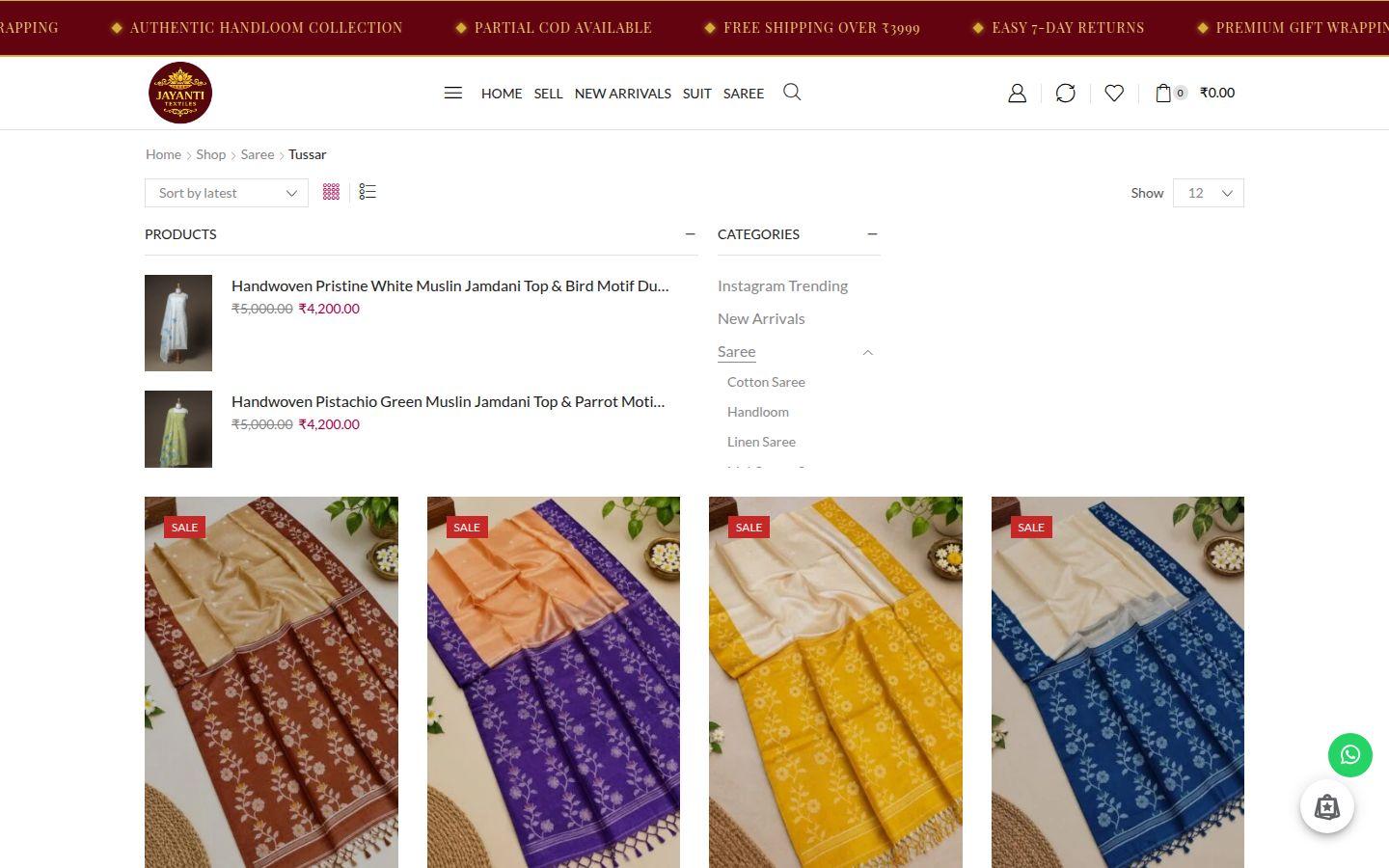
Handloom buyers search by weave and fabric, not by generic labels like "party wear". The saree menu lists Murshidabad silk, muslin, tissue, handloom, cotton, mol cotton, tussar, matka and linen sarees. The suit menu lists linen, silk linen, cotton and muslin suits. On 23 November 2026 the Saree category held 121 products and Suit 80, with an Instagram Trending collection for pieces that have been popular on the label's social media.
Weave-based categories also help search engines. Each one is a page a shopper might land on from a search such as "muslin jamdani saree" or "linen suit fabric".
Encouraging prepaid orders without dropping COD
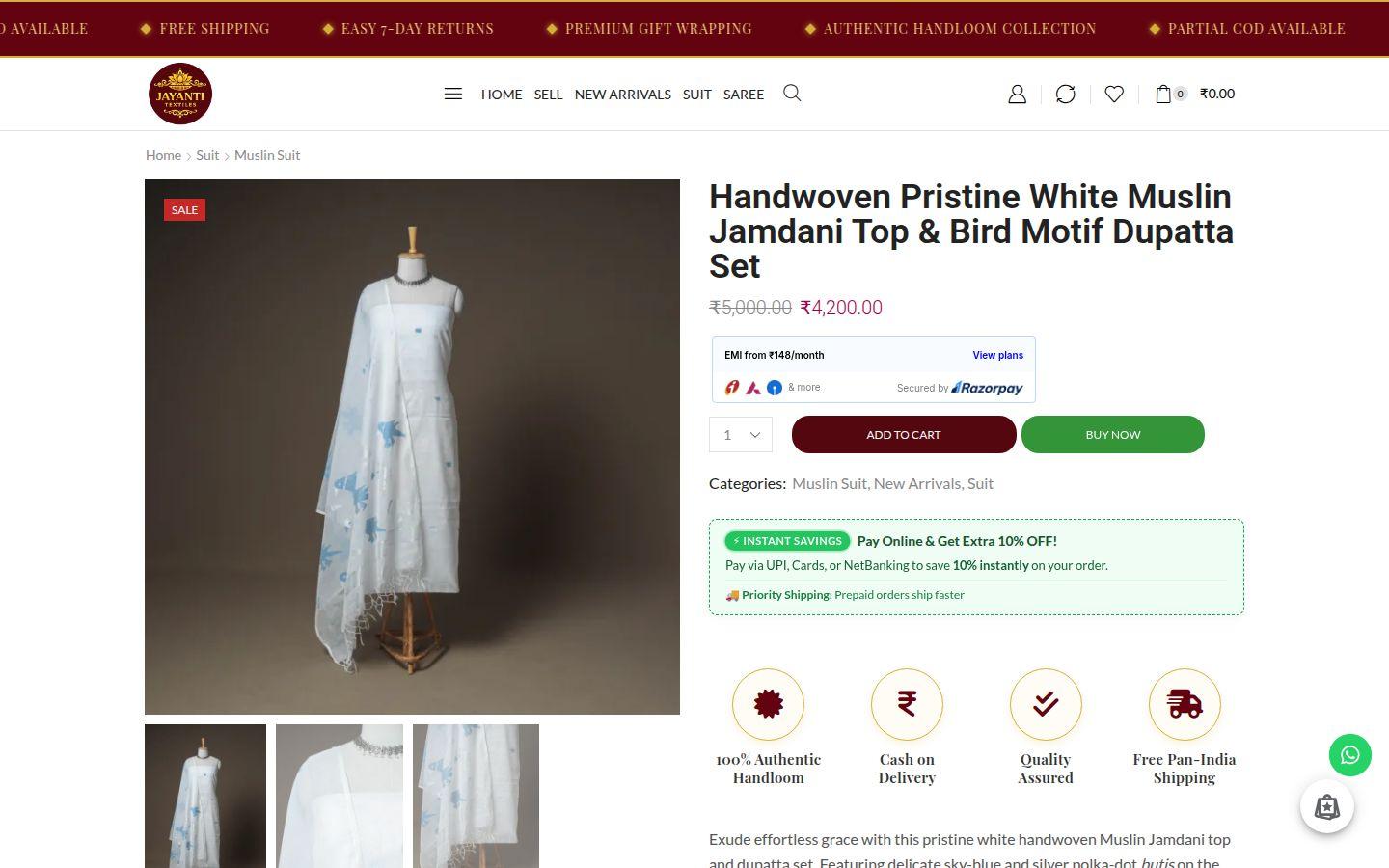
Cash on delivery is expected in Indian fashion, but refused COD parcels are expensive for a textile seller. Jayanti Textiles keeps COD available, as partial COD, and makes paying online clearly better. Product pages show an Instant Savings box offering an extra 10% off when paying by UPI, card or net banking, and state that prepaid orders ship faster.
The trade-off is spelled out where the buyer decides, not hidden in a policy. That is more effective than removing COD, which would lose buyers who are not yet ready to trust a new store.
Describing fabric that photos cannot fully show
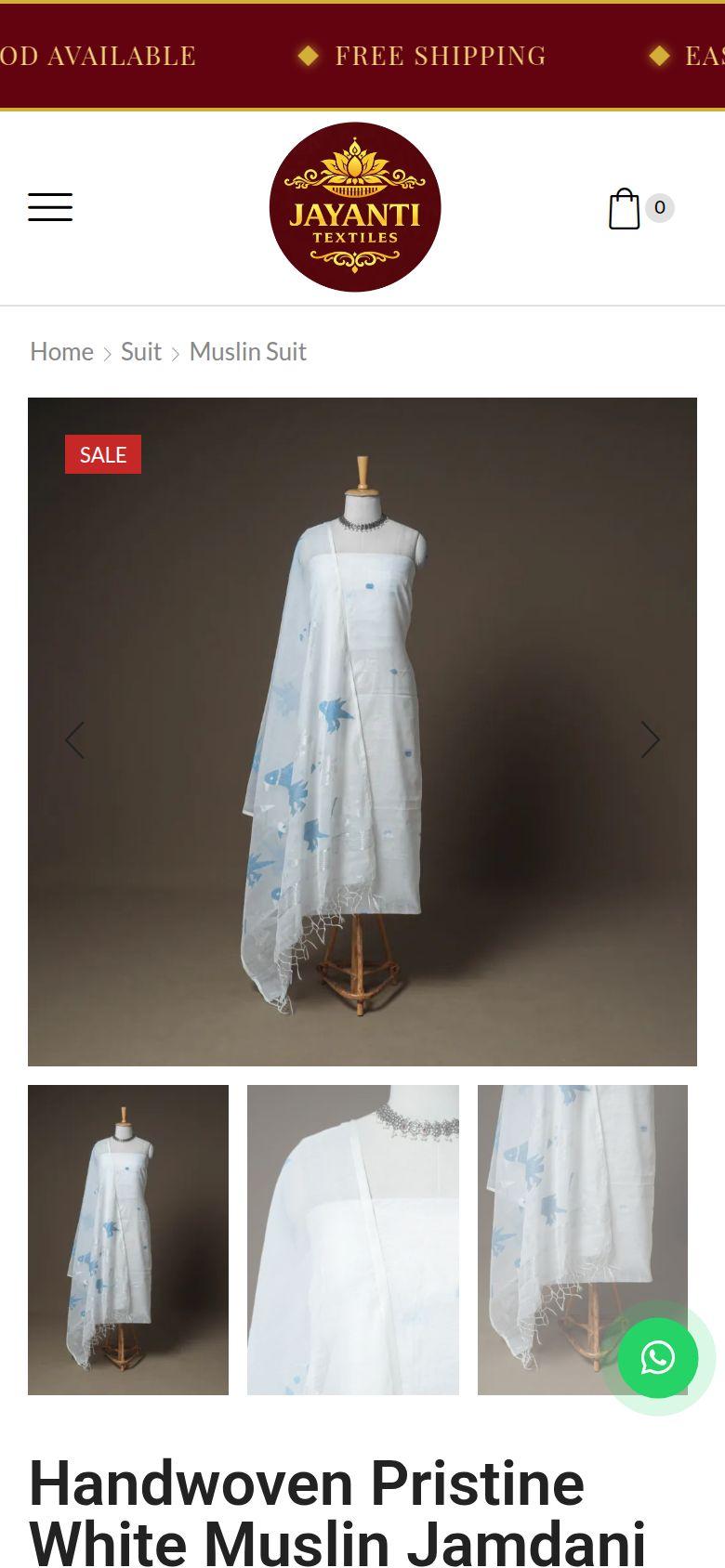
Sheer muslin, fine mul cotton and tissue look different on a screen than in the hand. The product pages compensate with detailed descriptions. A muslin jamdani suit page describes the colour and motif of the top fabric and of the dupatta separately, the border and pallu finish, and adds a practical note: because fine muslin is sheer, a matching lining is recommended when tailoring.
That note is the kind of advice a good shopkeeper gives at the counter. It prevents a disappointed customer who did not realise the fabric is translucent, and it shows that the seller knows the product.
Custom stitching and gift wrapping
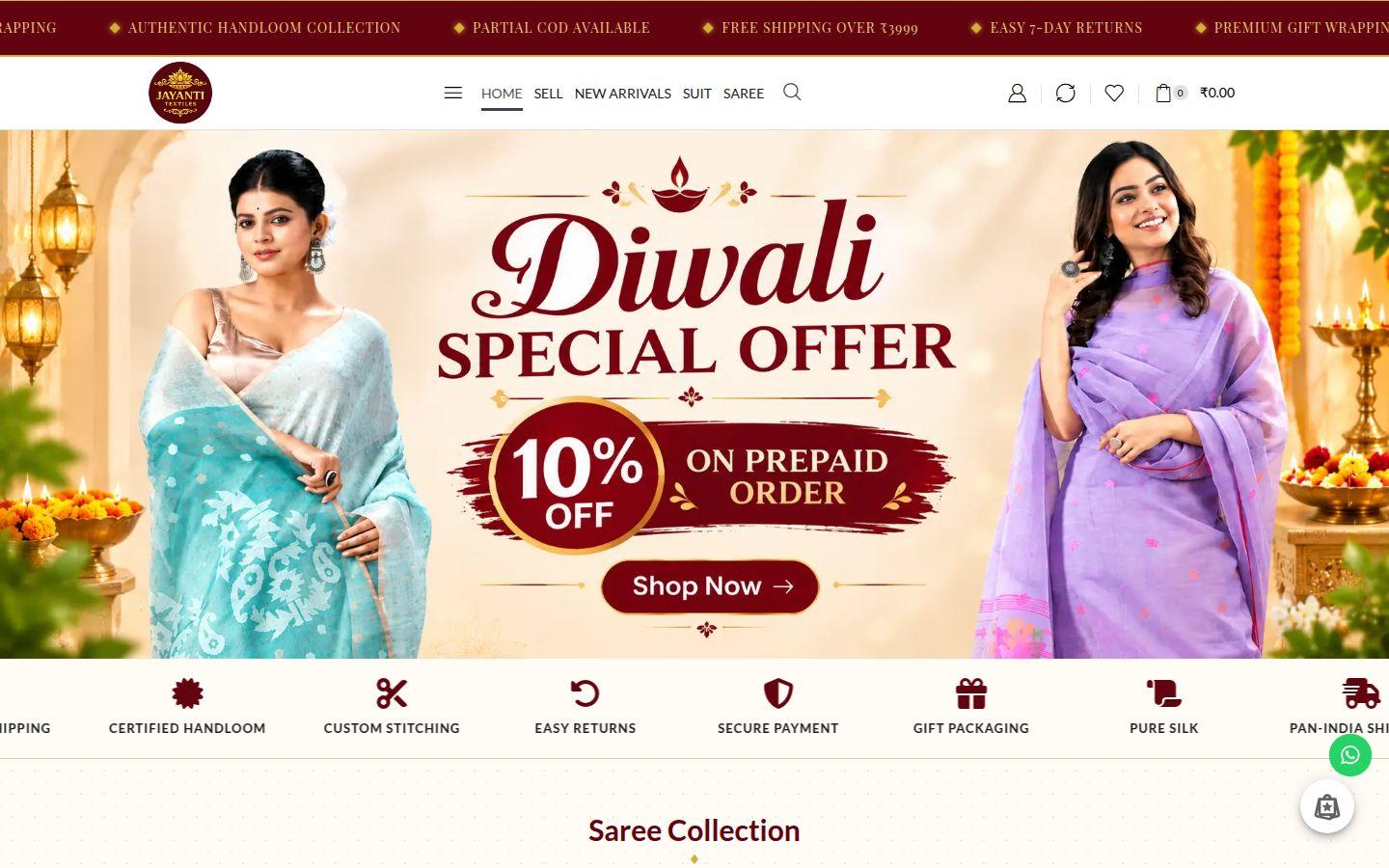
Unstitched fabric leaves the buyer with a tailoring job. The store's trust strip lists custom stitching, so a shopper who does not have a regular tailor can still buy a suit fabric. Premium gift wrapping appears in the announcement bar, because handloom sarees are often bought as gifts. Free shipping over ₹3,999 and easy seven-day returns complete the strip.
Telling the craft story on the homepage
Below the product rows, a section titled "The Magic of Traditional Handwoven Craftsmanship" explains the Bengal handloom tradition and the artisans behind it. For handloom brands, this story is part of the product: buyers are paying for craft, and the homepage says so before showing more products.
Mobile shopping
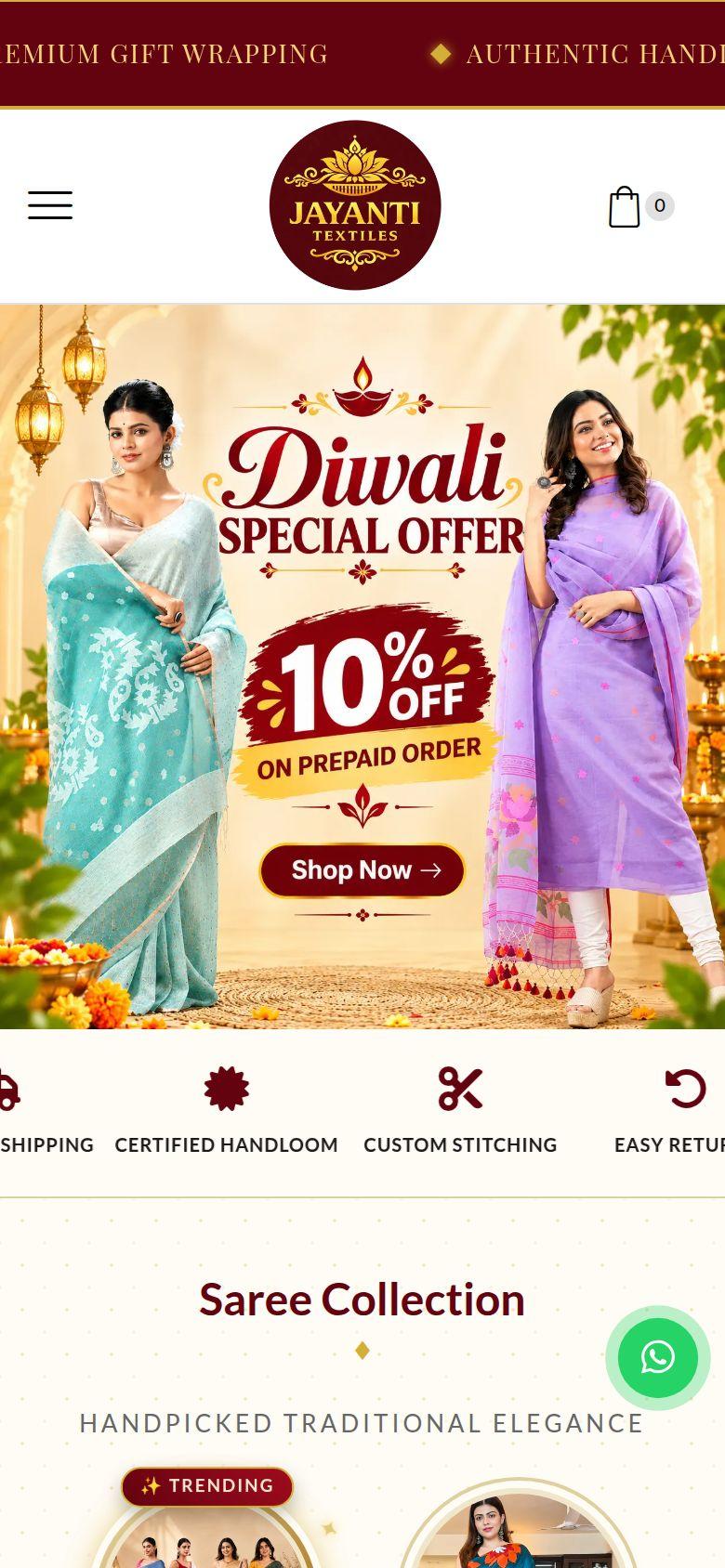
On a phone the banner, trust icons and Saree Collection heading stack in order, and a WhatsApp button floats at the bottom right. Product pages lead with a large photo and thumbnails for close-ups of the weave.
Why WooCommerce for a large handloom catalogue
With more than 200 sarees and suits, the catalogue changes constantly as weaves sell out and new pieces arrive. WooCommerce's nested categories (Saree, then Tussar or Muslin) match the weave structure, and a product can sit in a weave category, New Arrivals and Instagram Trending at the same time without being duplicated.
Running on WordPress also lets the label publish the craft story and care guides on the same domain as the shop, so the content that explains handloom also strengthens the shop pages in search. And payment rules such as a prepaid discount and partial COD can be configured without changing platform.
What handloom sellers can take from this
Name categories after weaves. Reward prepaid orders instead of removing COD. Write descriptions that include practical advice, such as lining for sheer fabrics. Offer stitching if you sell unstitched suits. And tell the craft story, because it is part of what your buyer is paying for.
Frequently asked questions
How should a handloom saree website organise its categories?
By weave and fabric (jamdani, tussar, muslin, mul cotton, linen, Murshidabad silk), because that is how handloom buyers search, with a separate group for suits or fabrics.
How can an online textile store reduce COD returns?
Offer a clear incentive for paying online, such as an extra discount or faster dispatch, and consider partial COD. Show the incentive on the product page, not just in the policy.
Should unstitched suit sellers offer stitching?
It widens the market to buyers without a regular tailor. Even a simple custom stitching option, with a measurement form or a WhatsApp follow-up, can help.
How do you sell sheer fabrics online?
Describe the sheerness honestly, recommend lining where needed, and show close-up photos in natural light so buyers know what to expect.
Can an online store offer a discount only for prepaid orders?
Yes. WooCommerce and most Indian gateways support payment-method-based discounts. Show the saving on the product page and again at checkout so buyers see it before choosing COD.