
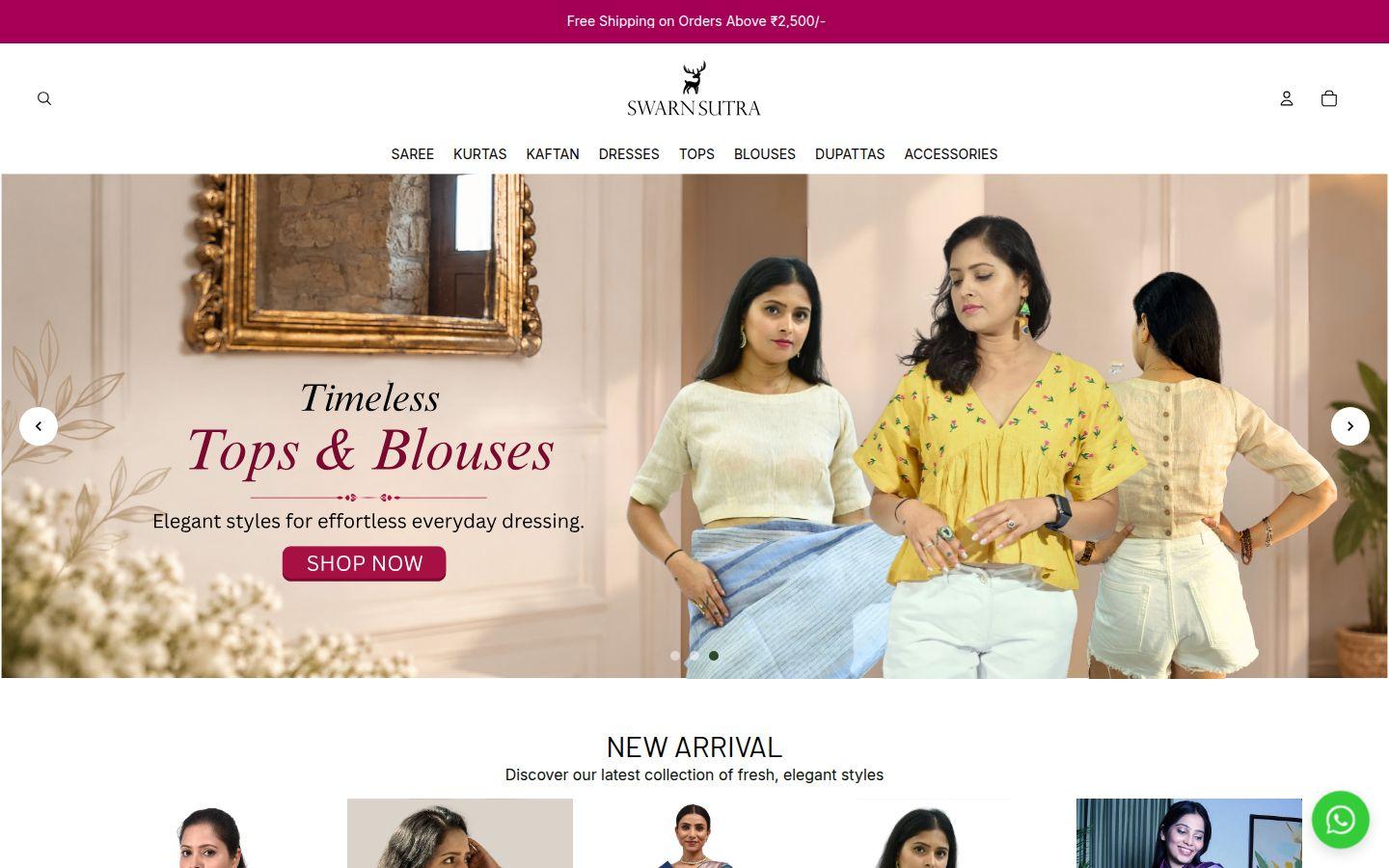
A fabric-first label needs fabric-first navigation
The main menu lists garments (sarees, kurtas, kaftans, dresses, tops, blouses, dupattas and accessories), and the saree menu opens into fabrics: cotton, linen, silk, tussar silk, chanderi, pattu, katan and organza. The homepage adds an "Explore Our Fabric Collection" block with large tiles for silk, linen and cotton.
That double route means a shopper who thinks "I want a linen saree" and one who thinks "I want something in linen" both get there in one or two taps.
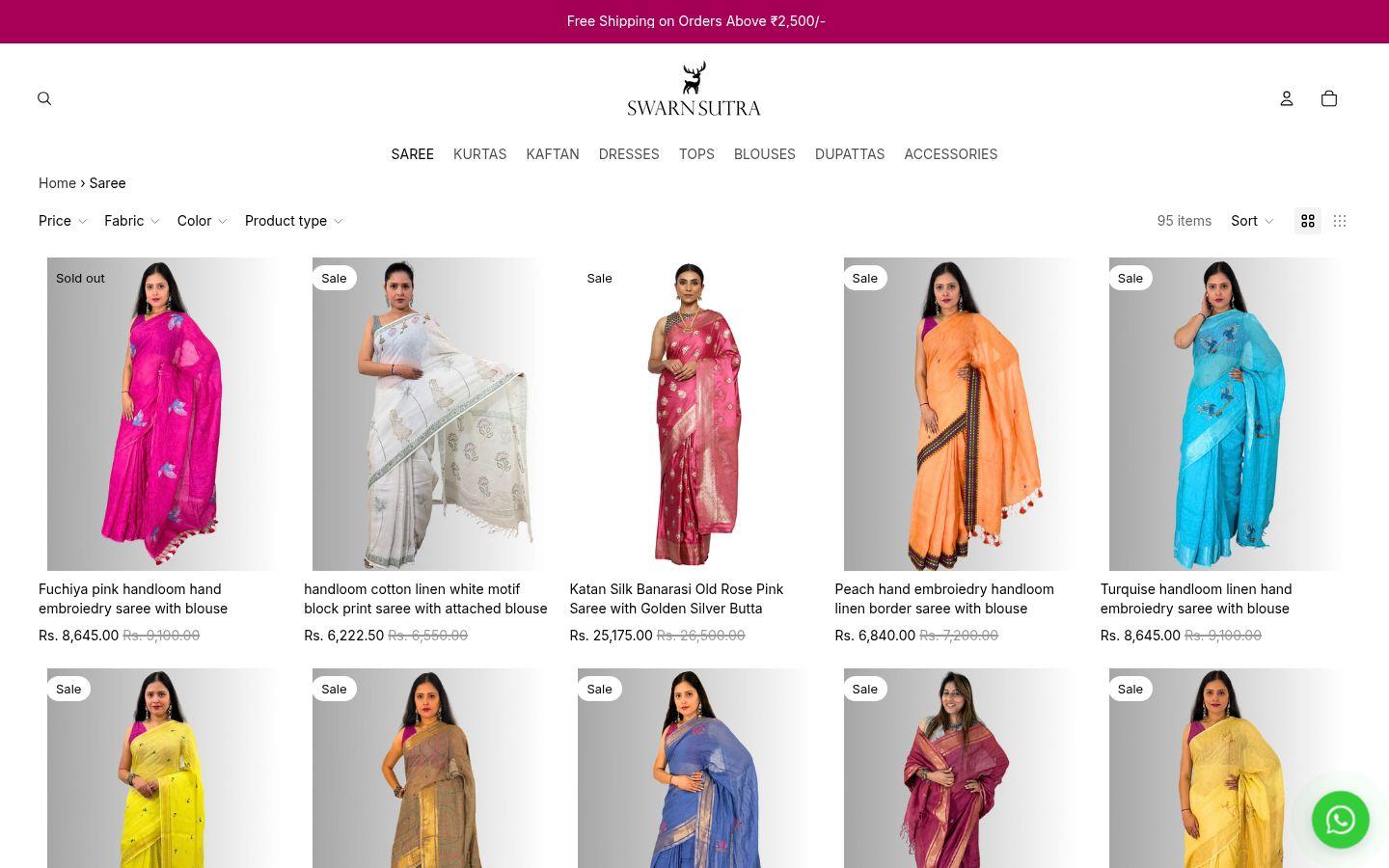
Collection filters for a large range
With 95 sarees on 23 November 2026, the saree collection needs filters. Shoppers can filter by price, fabric, colour and product type, sort the results, and change the number of columns in the grid. Each card shows the sale and regular price, and sold-out pieces are labelled rather than hidden, which signals that pieces are limited and sell through.
A specification table on every product
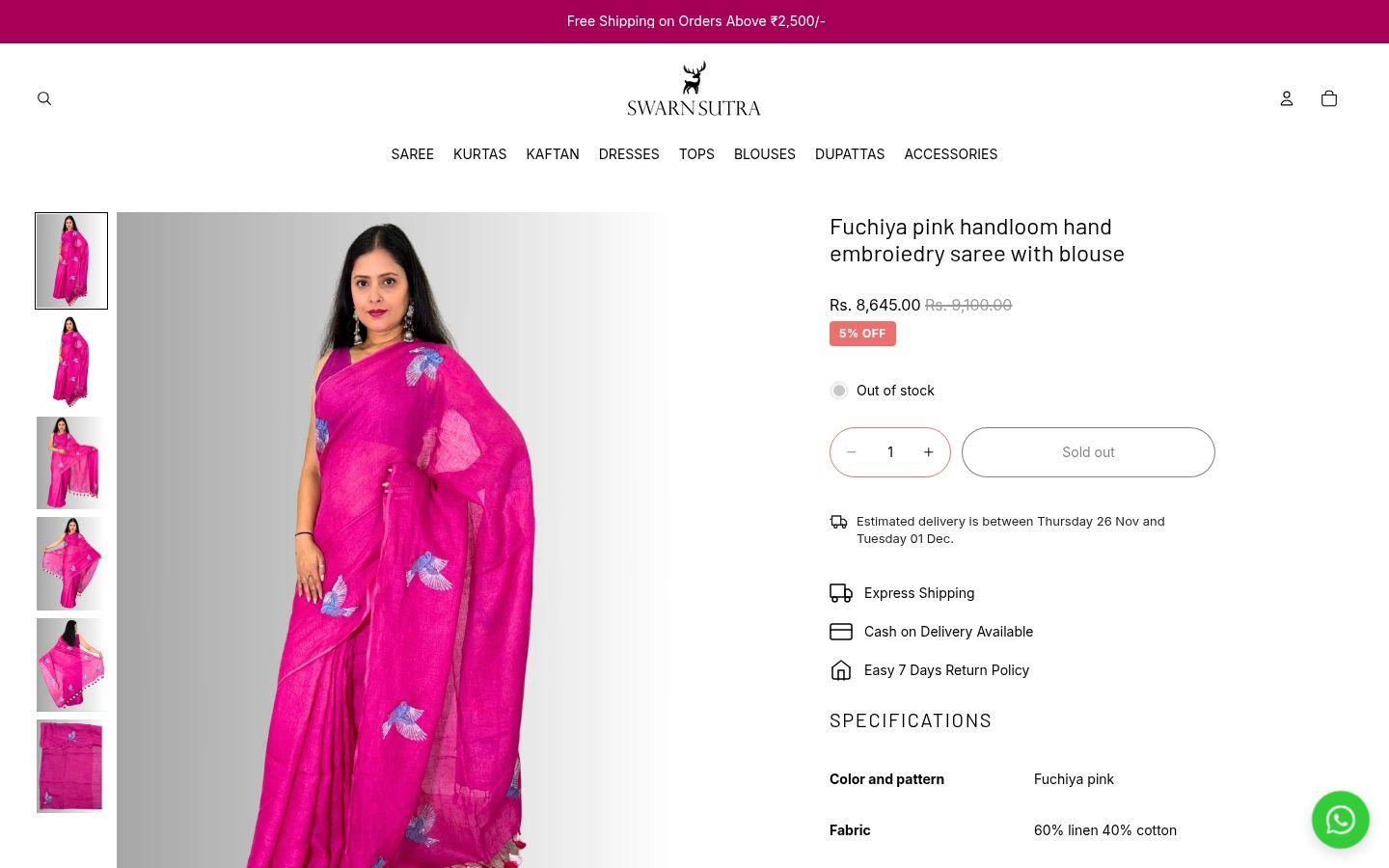
Handloom buyers want specifics. Each product page has a Specifications block listing colour and pattern, fabric composition (for example 60% linen, 40% cotton), length (6.5 metres), embellishment technique and the items included, such as a blouse piece. A short description and bullet points follow.
Structured specifications help in two ways. Buyers can compare pieces quickly, and Shopify can pass the same fields to Google Shopping and other channels without retyping.
Delivery dates, not delivery promises
Instead of a generic "ships in a few days", product pages show an estimated delivery window with real dates (for example Thursday 26 November to Tuesday 1 December), followed by lines for express shipping, cash on delivery and a seven-day return policy. A shipping section adds that prepaid orders ship free, COD is available, orders arrive in six to seven business days and tracking is shared on dispatch.
A date range is easier to plan around than a number of days, which matters for buyers ordering a saree for a specific event.
Blouses designed to be bought separately
Swarn Sutra sells ready blouses as a category of their own, many with side zippers and boat necks in handloom linen, tissue linen and tussar. A shopper who already owns a saree, or who bought an unstitched blouse piece elsewhere, can buy a ready blouse to match. The store presents blouses with the same spec-led product pages as sarees.
Showing sold-out pieces on purpose
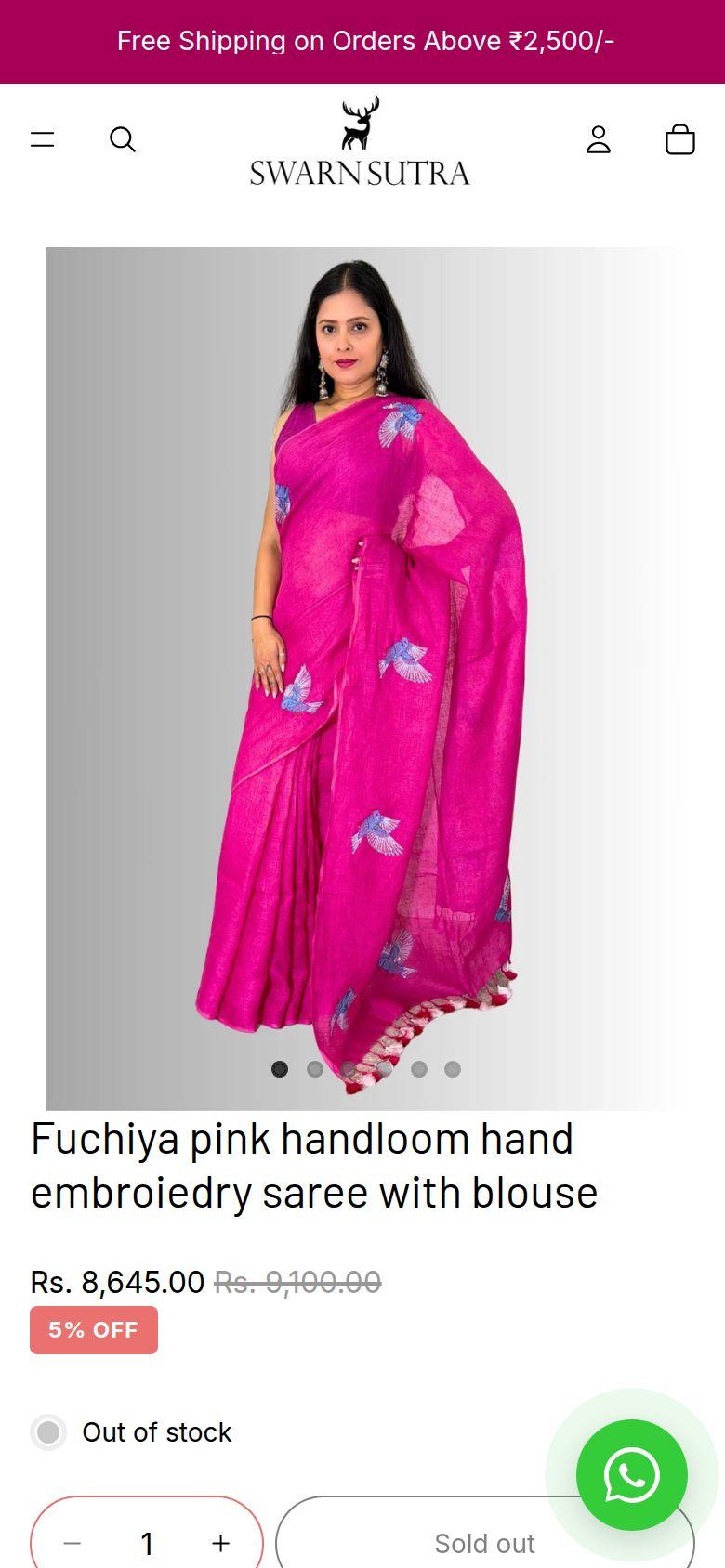
Handloom pieces are often one of a kind or made in very small runs. Instead of hiding sold-out items, the collection grid keeps them visible with a Sold out label. That tells new visitors the range genuinely sells through, shows the breadth of the weaver's work, and gives returning customers a reason to ask on WhatsApp whether a similar piece is coming.
Mobile experience
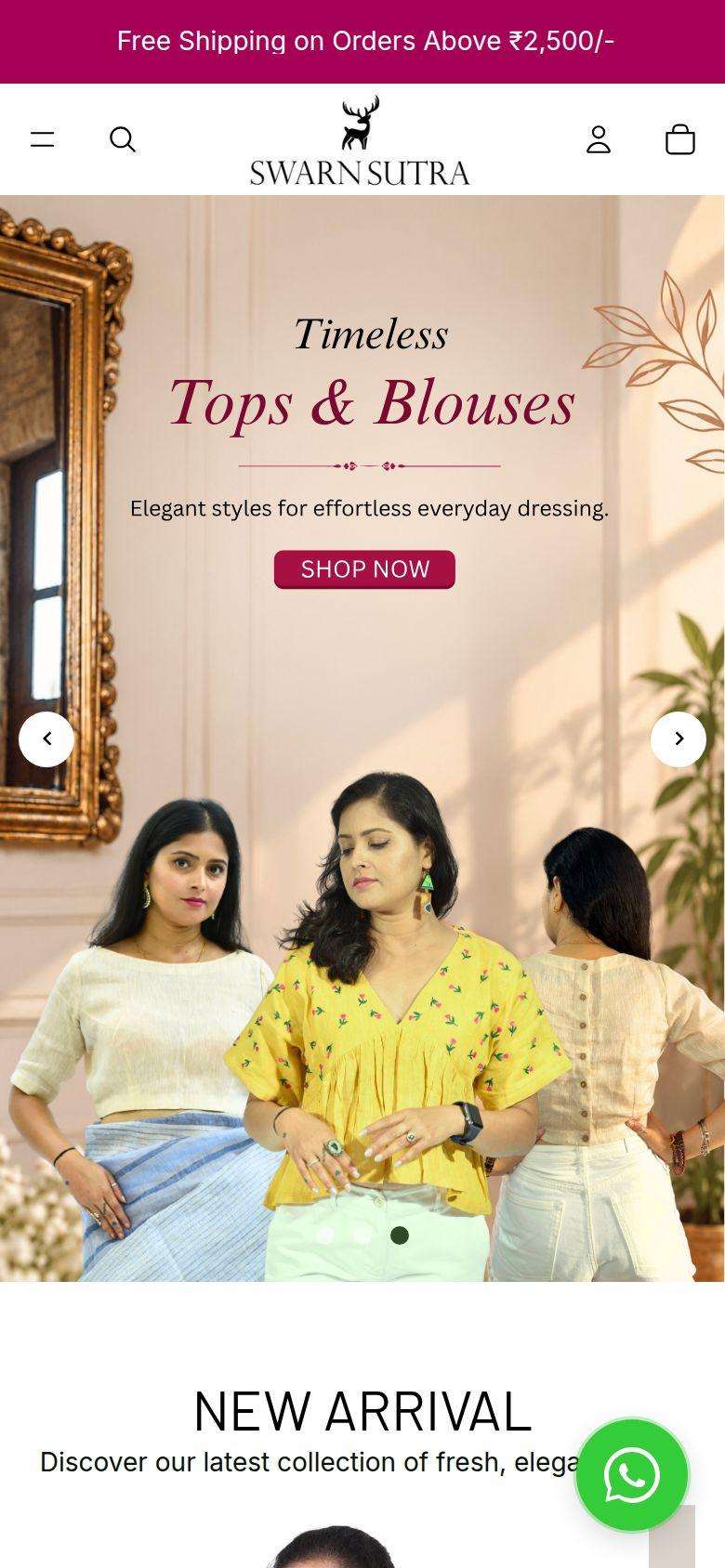
On a phone, the free-shipping bar stays at the top, the banner fills the screen width, and New Arrival products follow directly. Product pages show a tall photo carousel, then the price, discount and stock status, with the WhatsApp button always in reach.
Why Shopify for a 170-piece handloom range
A handloom label usually has a small team that photographs, lists and ships everything itself. Shopify keeps the admin simple: adding a product, setting a sale price or marking a piece sold out takes minutes, and filters for fabric, colour and product type are configured once and then update themselves as products are added.
Product specifications such as fabric composition and length are stored as structured fields, not just text. That is what powers the Specifications block on the page, and the same fields can feed Google Shopping and other sales channels. For a fabric-led brand, structured data is what turns a catalogue into something shoppers and search engines can filter.
Takeaways for handloom labels on Shopify
Give shoppers both garment and fabric routes into the catalogue. Add filters as soon as a collection passes a few dozen items. Use a specification block for fabric composition and length. Show delivery as dates. And sell matching pieces, such as ready blouses, as their own category.
Frequently asked questions
Is Shopify a good choice for a handloom clothing brand?
Yes for most labels. Shopify is easy for a small team to run, handles COD and Indian payments through its checkout and apps, and its product fields and filters suit fabric-led catalogues.
What should a handloom product page include?
Fabric composition, length or size, weave or embellishment technique, what is included (such as a blouse piece), care instructions and an estimated delivery date.
How many products before a collection needs filters?
Once a collection has more than about 20 to 30 items, filters for fabric, colour and price save shoppers from scrolling and help them find what they came for.
Should a saree store sell blouses separately?
It helps. Ready blouses let shoppers complete a look with a saree they already own, and they are a natural add-on to saree orders.
Can Shopify show a delivery date range on product pages?
Yes. Shopify themes and delivery-date apps can calculate an estimated window from the order date, dispatch time and destination, as on Swarn Sutra.