
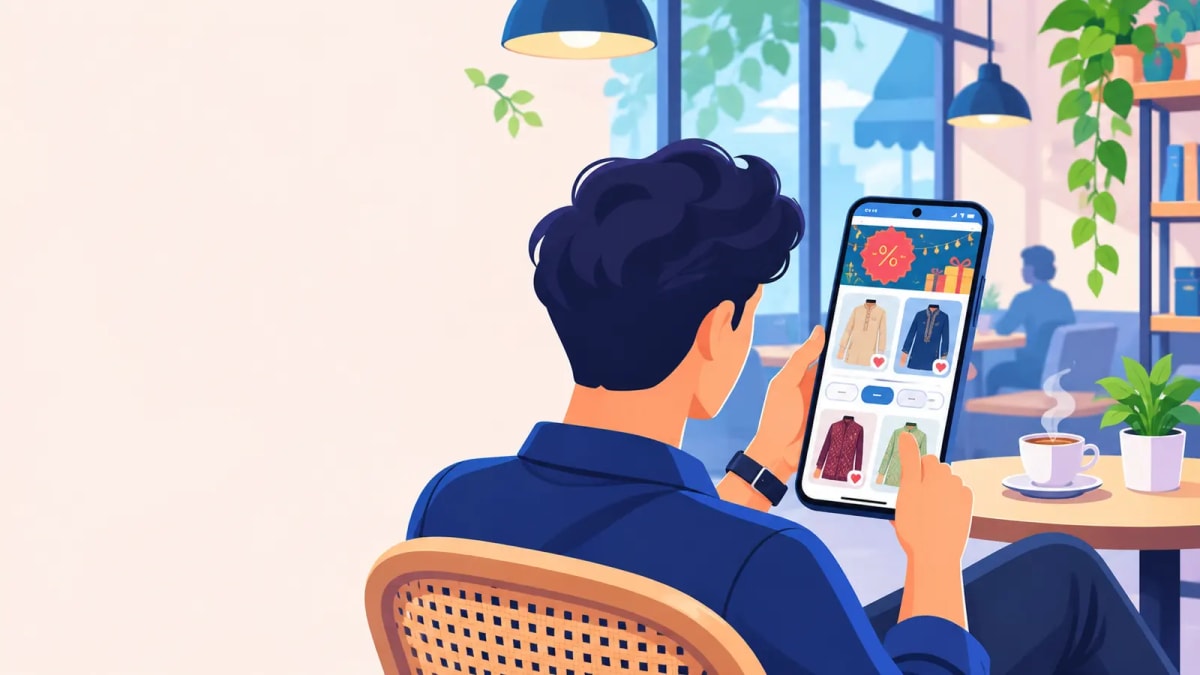
Does your brand need an app yet?
An app is not the first thing a fashion brand should build. Before recommending one, we look at three numbers from your store:
- Repeat purchase rate. If most customers buy once, a better website and retargeting will do more than an app.
- Share of mobile traffic. For most Indian fashion stores, the large majority of visits come from phones; an app makes sense when those visitors come back often.
- Catalogue rhythm. Brands that release new collections, festive edits or limited drops regularly give customers a reason to open an app.
If the numbers do not support an app yet, we will tell you, and improve your fashion ecommerce store instead.
What goes into a fashion shopping app
A catalogue built for browsing. Large images that load fast on mobile data, swipeable photo galleries, video where you have it, and filters that match how people shop for clothes: occasion, size, colour, fabric, price and fit. For ethnic wear, occasion filters such as wedding, haldi, mehendi and festive are often the most used.
Size guidance that reduces returns. Size charts per product and per brand, garment measurements as well as body measurements, fit notes such as "runs small", and a saved size profile so the app pre-selects the customer's size next time. Wrong size is one of the most common reasons for fashion returns, so this is where an app earns its keep.
Wishlists and back-in-stock alerts. Customers save pieces for later and get a notification when a saved item is restocked, goes on sale or is running out in their size.
Drops and early access. New collections released to app users first, with a countdown and a notification when the drop goes live. Loyal customers feel recognised, and launches sell through faster.
Checkout that matches Indian buyers. UPI, cards, net banking and wallets through Razorpay or your existing gateway, cash on delivery where you offer it, saved addresses, and order tracking from dispatch to delivery.
Returns and exchanges in the app. A customer chooses the item, the reason and exchange or refund, books the pickup and follows the status, without emailing support. Your rules, such as no returns on altered or sale items, are applied automatically.
Loyalty and referrals. Points on purchases, rewards for reviews with photos, member-only prices and referral codes. These turn the app from a store into a reason to come back.
Made-to-order and custom sizing. For bridal and couture labels, the app can take measurements, alteration requests and delivery dates for made-to-order pieces, with status updates as the piece moves through production.
WhatsApp and stylist help. A button that opens a WhatsApp chat about a specific product, so a customer unsure about colour or fit gets a human answer.
Connected to the store you already run
Most brands already sell on Shopify, WooCommerce or a custom site. The app does not replace it; it connects to it. Products, prices, stock, customers and orders stay in one place, so a piece sold in the app is out of stock on the website at the same moment, and your team manages one catalogue. We check what your platform exposes through its APIs during discovery. If you run separate systems for stores and warehouses, see our page on fashion software development.
Notifications without annoying customers
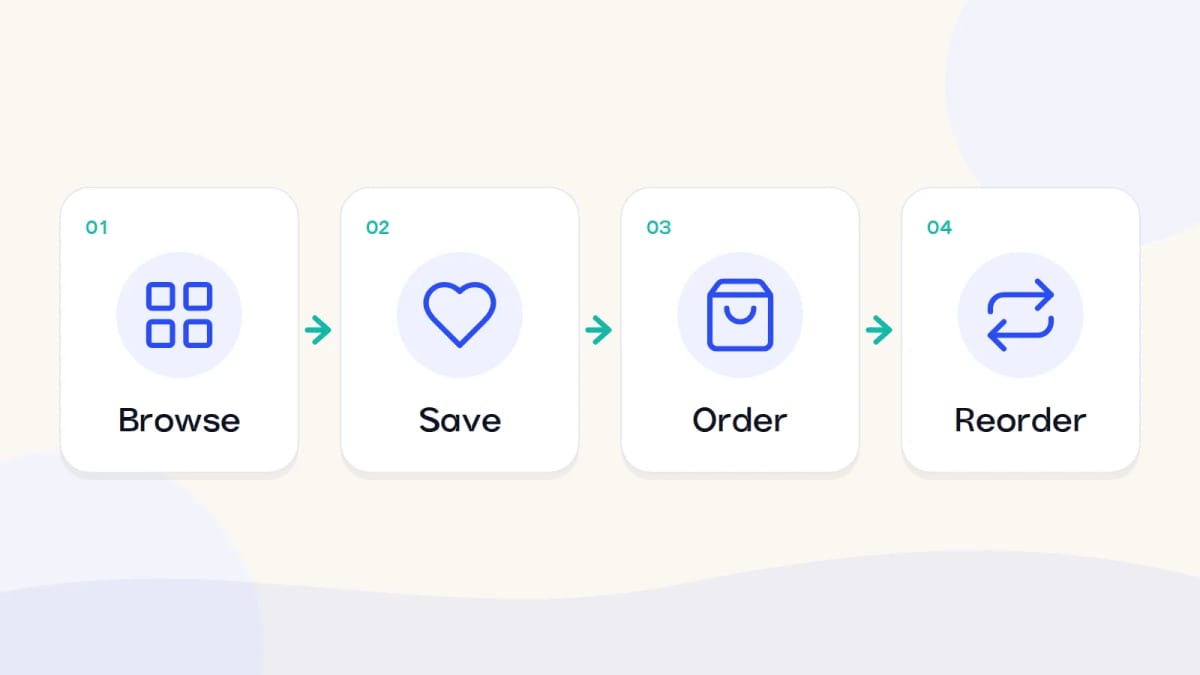
Push notifications are the main reason to have an app and the main reason people uninstall one. We set them up around the customer's own actions: a saved item restocked, a size back, an order shipped, a drop they asked to hear about. Promotional messages are limited and timed sensibly, and customers choose what they receive in the app's settings. Your team sends campaigns from an admin screen with audience rules, such as customers who bought sarees in the last six months.
Speed and image quality
Fashion sells on images, and images are heavy. We serve each photo at the size the phone actually needs, in modern formats, cached after the first view, so the catalogue scrolls smoothly on a mid-range phone and does not burn through a customer's data. Product videos start muted and only load when they come into view.
Speed also decides how the app feels during a sale. When thousands of customers open the app at the moment a festive drop goes live, product pages and stock checks must stay quick, and a customer who has a piece in the cart must not lose it to a slow payment screen. We test the app and its connection to your store at the traffic you expect on your biggest day before that day arrives.
Your own app or the marketplaces' apps?
Most Indian fashion brands also sell on large marketplaces, and their customers already have those apps. Marketplaces bring volume, but the customer belongs to the marketplace: you cannot message them, your products sit next to competitors' at lower prices, and commission and return costs come out of every order. Your own app is the opposite trade. It brings fewer customers at first, but every one of them is yours to reach again, at no commission, in your brand's look and with your own offers. The two work together: marketplaces for discovery, your app for the customers who have chosen your brand. A common pattern is to include a card in every marketplace parcel offering a first-order reward in your app, so that over time more repeat orders move to the channel where you keep the margin.
Launching the app to customers you already have
An app with no installs earns nothing, and paid installs for a fashion app are expensive. The cheapest installs come from people who already buy from you. We plan the launch with you:
- Website banners and a smart prompt inviting mobile visitors to continue in the app, shown to returning customers rather than first-time visitors.
- Order confirmation and delivery messages with an app link and a reward for the first app order.
- Instagram and WhatsApp announcements to your existing followers, timed with an app-only collection or early access to a festive edit.
- Packaging inserts with a QR code, so every parcel invites the customer to install.
- In-store QR codes at your counters and exhibition stalls, where a customer who loved the fabric can save the piece and buy it later.
Measuring whether the app is working
We agree a few numbers before launch and review them with you each month: installs from existing customers, notification opt-in rate, share of repeat orders placed in the app, average order value in the app compared with the website, return rate by channel, and uninstalls after notifications. If the app is not lifting repeat purchases within a few months, the data shows why, whether that is too few installs, notifications customers ignore or a checkout step that loses them, and we fix that rather than adding features nobody asked for.
How we build it
- Study your store data. Bestsellers, return reasons, repeat customers and the devices they use, so the app is built around real behaviour.
- Agree the first release. Catalogue, size guidance, wishlist, checkout, order tracking and returns usually come first; loyalty, drops and made-to-order can follow.
- Prototype. You and a few loyal customers tap through a prototype before code is written.
- Build in short cycles. We build in Kotlin with Jetpack Compose, cache the catalogue and wishlist on the phone with Room, and send notifications through Firebase Cloud Messaging. You get a test build every one or two weeks on a private testing track.
- Test. On a range of Android phones and network speeds, with real product photos and real orders in a test environment.
- Release. We prepare the Play Store listing and submit through your brand's Google Play Console account. Google sets review times and policies, and we confirm them with you before the release date.
- Grow. We watch crash reports, reviews and conversion data and keep improving.
Proof: five live fashion stores (direct fashion work; websites, not apps)
- Tatvivah Trends. A Next.js marketplace for ethnic wear with 3000+ products, occasion-based filtering for wedding, haldi and mehendi, verified sellers, Razorpay payments, digital gift cards and a 10-day returns policy. Read the case study.
- Vashtara Heaven. A Shopify kidswear marketplace whose designer studios dispatch directly, with free shipping above ₹499, cash on delivery and a 7-day return window set out before checkout. Read the case study.
- Kalamohini. A WooCommerce store for handcrafted tissue-silk sets with mirror-work, with curated collections, artisan-quality imagery and WhatsApp customer support. Read the case study.
What affects the cost
We do not publish prices. The main factors are the store platform and its APIs, catalogue size and filters, size guidance and saved profiles, returns and exchange rules, loyalty and referral features, made-to-order flows, languages, and the admin screens your team needs. You get a fixed written quote within one working day of a clear brief, milestone approvals and a 50% advance to start.
Case studies
Case study · E-Commerce / Wedding Fashion
TatVivah Trends
Premium ethnic wedding wear marketplace with 3000+ products, verified sellers, and occasion-based filtering.
Read the TatVivah Trends case studyCase study · E-Commerce / Kidswear
Vashtara Heaven
Multi-vendor kidswear marketplace on Shopify — denim co-ords and printed sets for girls and boys, dispatched direct from each designer.
Read the Vashtara Heaven case studyCase study · E-Commerce / Artisan Fashion
Kalamohini by Aditya
Hand-crafted tissue-silk sets with intricate mirror-work — premium artisan ethnic wear store.
Read the Kalamohini by Aditya case study
Frequently asked questions
How do I create an app for my clothing brand?
Start with your store data: if customers buy repeatedly and mostly on phones, an app that connects to your existing store is worth building. We prototype it first, then build and publish it under your brand.
Will the app work with our Shopify or WooCommerce store?
Usually, yes. The app connects to your store's catalogue, stock, customers and orders, so you manage one catalogue. We confirm what your platform supports during discovery.
Do you build iPhone apps for fashion brands?
Our app service covers native Android. If you need iOS as well, tell us during discovery and we will explain the options.
Can the app reduce size-related returns?
It helps: size charts per product, garment measurements, fit notes and a saved size profile make the right size easier to pick.
Can we offer cash on delivery in the app?
Yes, alongside UPI, cards, net banking and wallets, with the same COD rules as your store.
Can customers return or exchange items in the app?
Yes. They choose the item and reason, book a pickup and follow the status, with your return rules applied automatically.
Can we launch new collections to app users first?
Yes. Early access drops with a countdown and a notification when the collection goes live.
Have you built fashion apps before?
We have built five live fashion stores, which are websites. We have not published a fashion app case study yet, and we say so.