
Where Kala Mohini started and what the store had to do
An Instagram label sells through conversation. A customer sees a set, sends a message, asks whether it comes in her size, what the fabric is and whether there is a lining, and then pays. That works for a handful of orders and breaks as soon as the catalogue grows, because every sale needs someone on the phone.
The store had to answer one question: can a shopper finish the purchase on her own? For a label whose products are almost all stitched, that meant the store had to handle sizes properly, answer the fabric and fit questions on the product page, and make delivery and payment clear before anyone reached the cart.
Problem one: 86 stitched products, and no two size runs alike
Every product in the store is stitched, so every product needs sizes. We set all 86 up as WooCommerce variable products with a Size attribute, and six of them also have a Colour attribute, which doubles the combinations to manage on those listings.
The tricky part is that the size runs are not the same from piece to piece. On 24 November 2026, L, XL and XXL were offered on all 86 products, M on 72, XXXL on 33, S on 12 and 5XL on only two. A store that assumes one standard size chart for everything either shows sizes that do not exist or hides ones that do. Because each product carries its own set of sizes, the size buttons on a product page show only what that piece is actually made in.
- 86 variable products, each with its own size run (S to 5XL)
- 6 products with both size and colour options
- On average about five photos per product, up to nine
Making size the first filter, not the last surprise
Because the size data is consistent across the catalogue, it can drive a filter. Category pages have a filter column with category counts, a price slider, size buttons from S to 3XL, colour and availability (in stock, out of stock and on sale). A shopper who wears XXL can hide everything she cannot order before she falls for it, which is exactly the disappointment a stitched-wear store needs to avoid.
We also added a line to every product card, "Choose your size and colour on the product page", so nobody expects a one-tap add to cart on a product that needs a size first.
Problem two: answering the DM questions on the product page
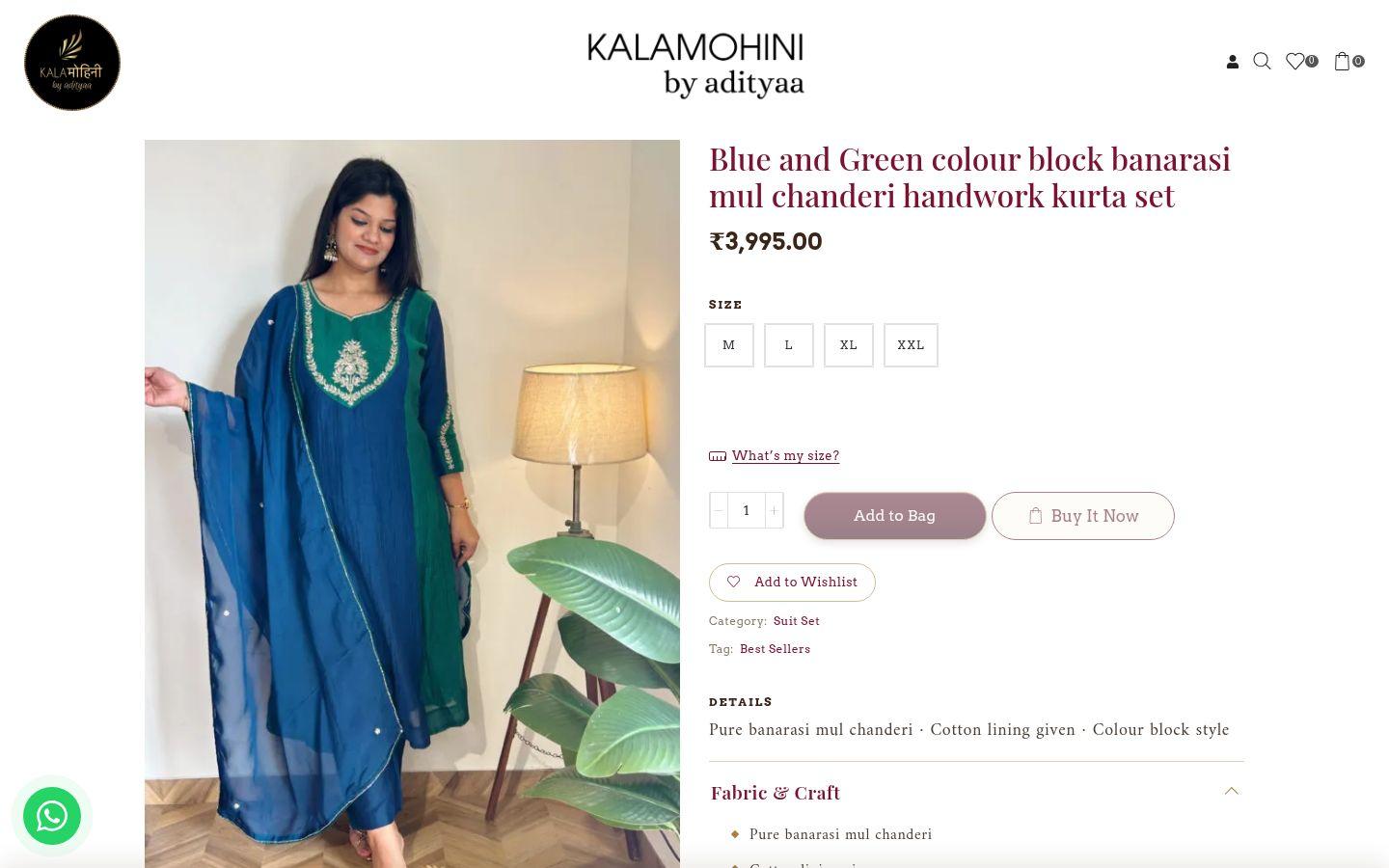
The questions that used to arrive one by one on Instagram are the ones we moved onto the product page. Size buttons sit directly under the price with a size guide beside them. Under the Add to Bag and Buy It Now buttons, the details are split into four labelled tabs: Fabric & Craft, Fit & Size, Shipping & Returns and Care Instructions.
The Fabric & Craft tab lists what the set actually includes, for example pure Banarasi mul chanderi with cotton lining, handwork on the neckline and sleeves, a cutdana-bordered dupatta and santoon pants. Lining, fabric and what comes in the set are the details a shopper cannot judge from a photo, so they get their own tab instead of a paragraph she has to scroll for.
Problem three: a catalogue that changes with the season
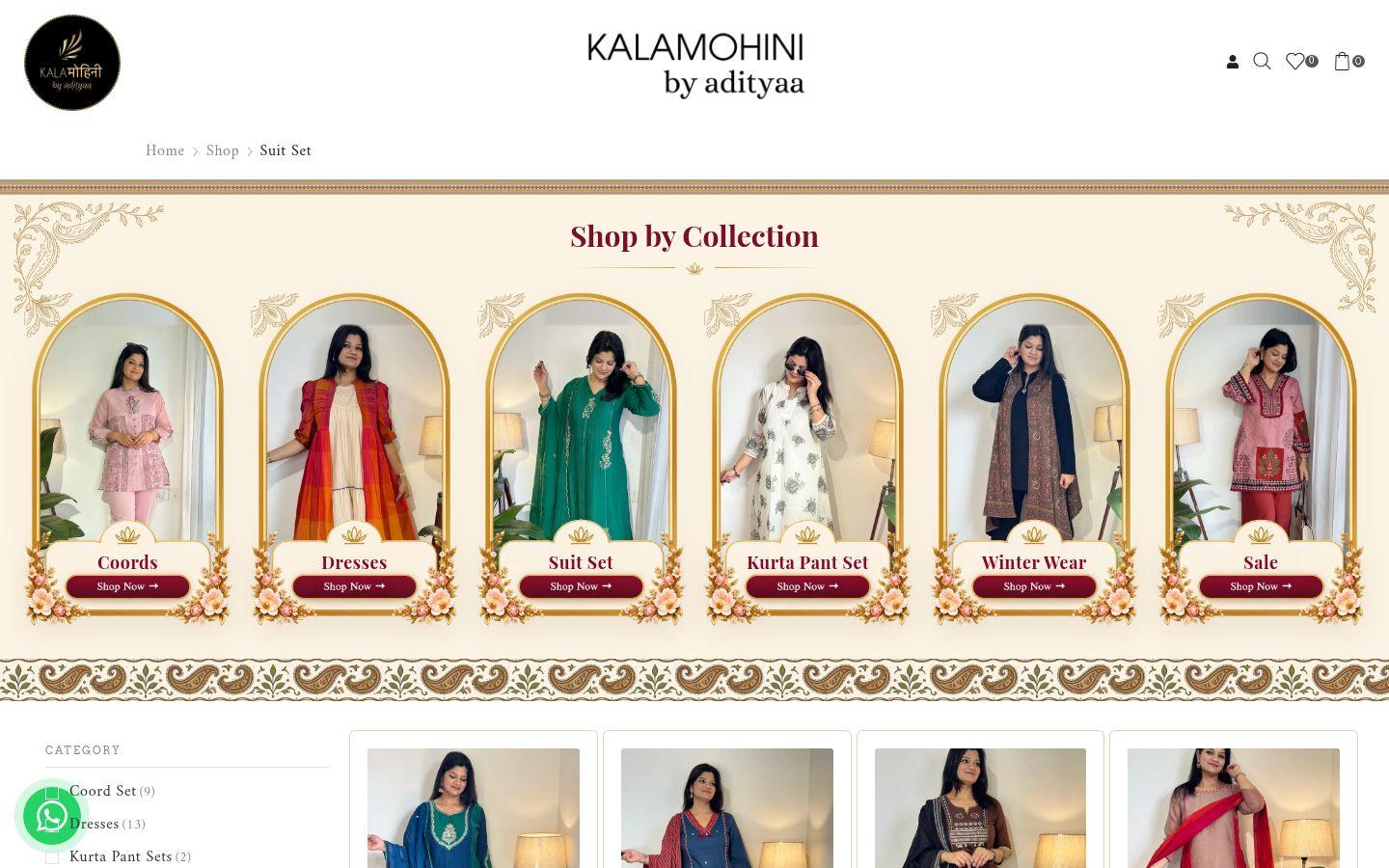
Kala Mohini sells chanderi kurta sets in summer and woollen co-ords in winter. We organised the catalogue into categories that can be featured in turn rather than pages that have to be rebuilt: on 24 November 2026 these were Suit Set (47 products), Winter Wear (17), Dresses (13), Coord Set (9), Sale (9) and Kurta Pant Sets (2).
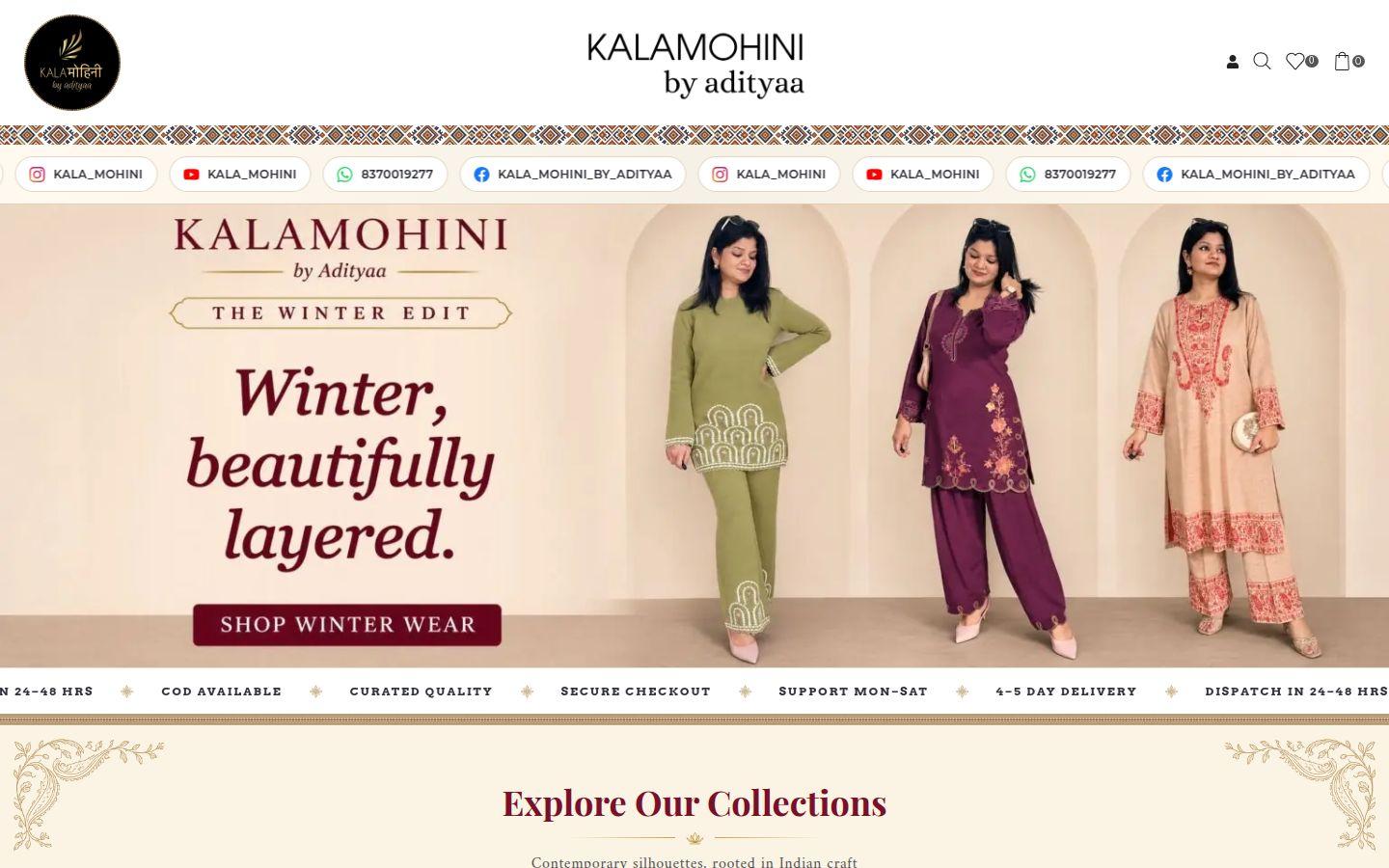
The homepage leads with whichever edit is in season, currently the Winter Edit, followed by New Arrivals and Best Sellers. Moving from summer to winter is a banner and a featured category, a change made in the WordPress admin, not a rebuild.
How we built it, and why these tools
We built on WordPress with WooCommerce and the XStore theme, which supplies the fashion templates, filters and mobile navigation the store uses. The store runs on an XStore child theme, so the parent theme can be updated for security fixes without wiping out the store's customisation. Page layouts such as the homepage and the lookbook sections are built with Elementor Pro, which means the label can edit banners and featured sections visually.
WooCommerce gives the store the things an Indian label needs out of the box: variable products, cash on delivery, order emails and policy pages, without a monthly platform fee on top of hosting. The trade-off is that a WordPress store needs looking after, with plugin and theme updates, and the plugin list is short: WooCommerce, Elementor and Elementor Pro, the theme's core plugin and Contact Form 7.
Delivery promises and WhatsApp, placed where decisions are made
Directly under the hero, a scrolling strip states the promises that decide whether a first-time buyer carries on: delivery in four to five days, dispatch in 24 to 48 hours, cash on delivery, secure checkout and support Monday to Saturday. Specific numbers are easier to believe than "fast shipping".
We kept WhatsApp, because that is where Kala Mohini's customers already talk to the label, but changed its role. A floating WhatsApp button is on every page, and near the footer of each product page a block titled "Your Everyday Lookbook Is Ready" offers styling help on WhatsApp or by email. The conversation becomes help choosing an outfit rather than a request for basic details the page already answers. The footer lists support hours, the privacy, cancellation, return and exchange and shipping policies, and a Track Your Order link.
Built for the phone the customer arrives on
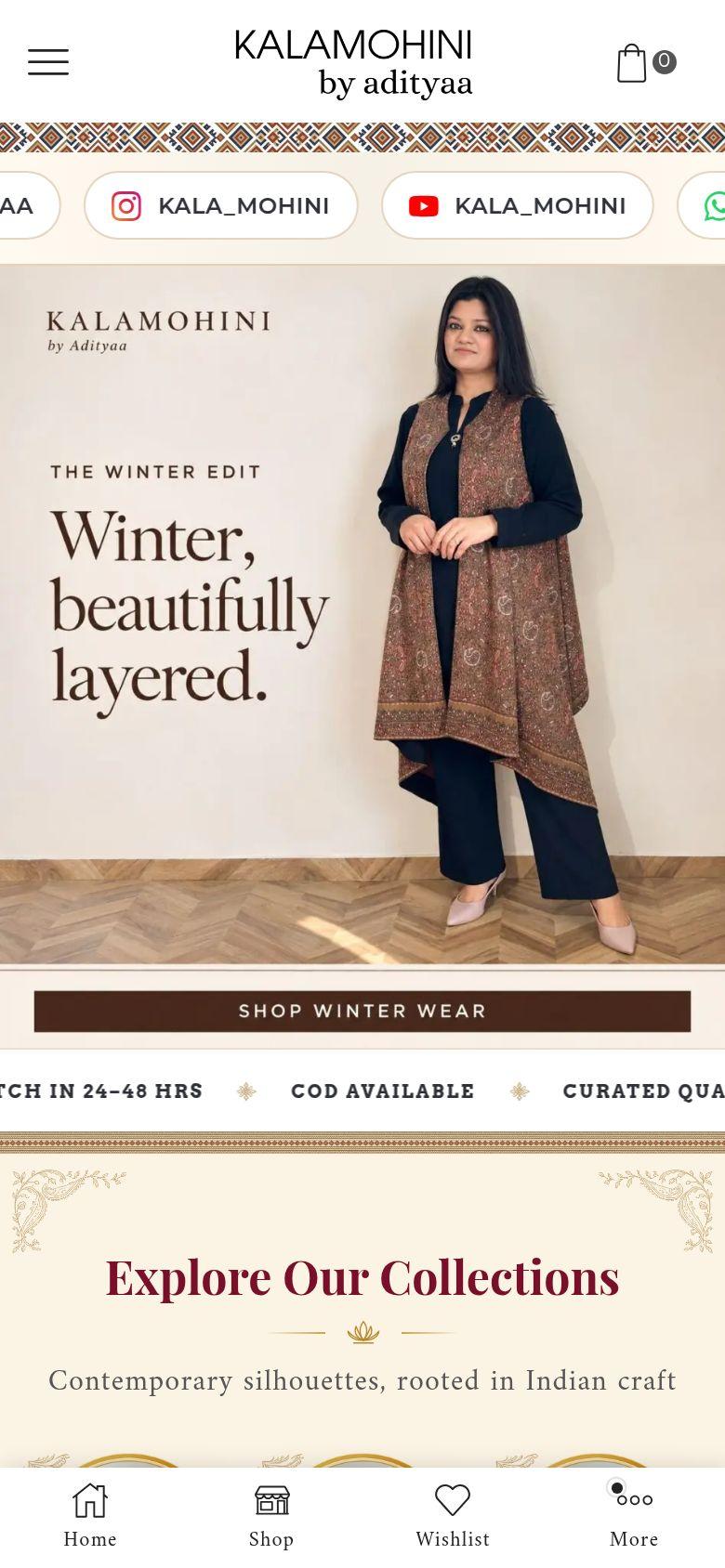
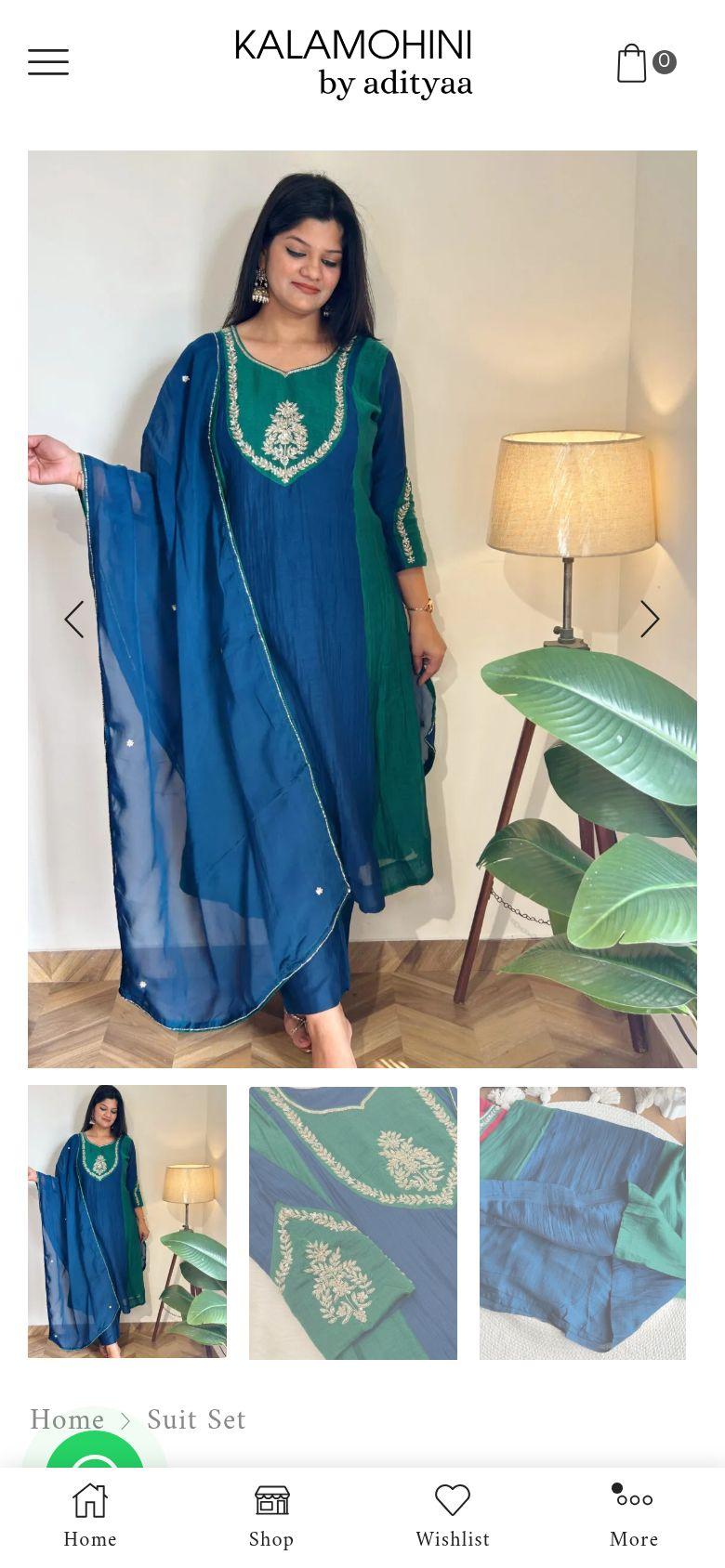
A shopper who finds a piece on Instagram arrives on a phone. On mobile the header shrinks to the logo, menu and cart, the delivery strip keeps scrolling under the banner, and a bottom bar gives one-tap access to Home, Shop, Wishlist and Menu. Product photos run full width with thumbnails underneath, so the shopper can check embroidery and mirror work up close before she scrolls to the sizes.
What we delivered
The live store sells 86 stitched pieces across six categories, every one with its own size run, a size filter on every collection, product pages that explain fabric, fit, shipping and care, cash on delivery, seasonal edits the label switches itself, and WhatsApp styling help on every page. A shopper can now go from an Instagram post to a paid order without sending a single message, and the label's WhatsApp is free for the conversations that actually need a person.
Frequently asked questions
Is WooCommerce good for an ethnic wear store in India?
Yes, if you want full control over design, plugins and hosting costs. It supports Indian payment gateways, cash on delivery and size and colour variants. Shopify is simpler to run; our WooCommerce vs Shopify guide compares them for Indian stores.
How should a stitched-wear store handle different sizes per product?
Set each product up as a variable product with only the sizes it is made in, keep the size attribute consistent across the catalogue, and use it as a filter on collection pages. That is how the Kala Mohini store works.
Why use a child theme on a WooCommerce store?
Design changes made in a child theme survive theme updates. Without one, every security update to the theme risks overwriting the store's customisation.
Can the store owner change seasonal collections without a developer?
On Kala Mohini, yes. The homepage features categories and Elementor sections, so switching from a summer edit to a winter edit is a banner and a featured category in the admin.