
Two buyers, one catalogue: stitched and unstitched
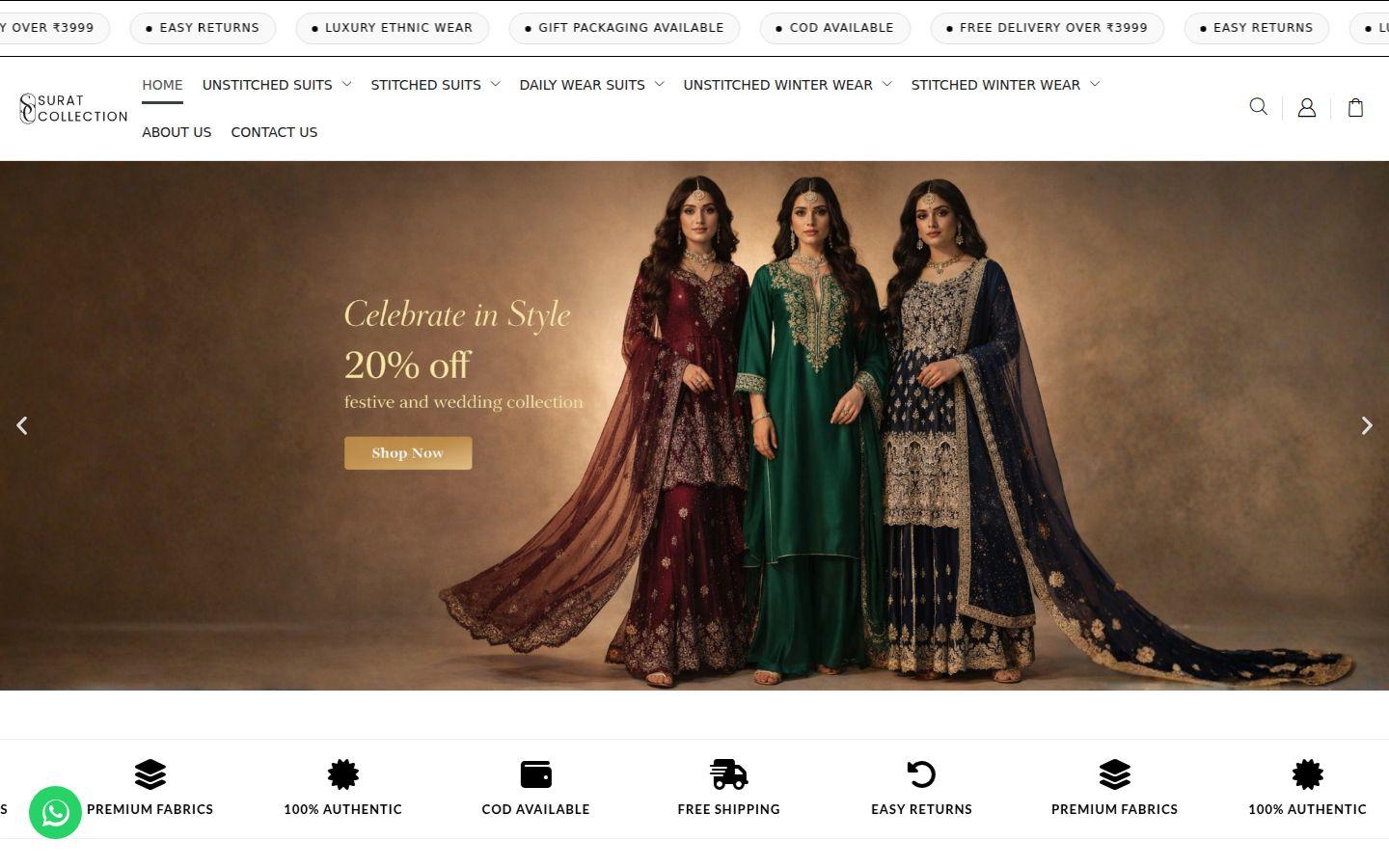
A woman buying a stitched suit wants her size and a quick delivery. A woman buying an unstitched suit wants fabric details and will spend time with her tailor. Mixing the two in one list frustrates both. Surat Collection's main menu puts them side by side as separate top-level choices: Unstitched Suits, Stitched Suits, Daily Wear Suits, Unstitched Winter Wear and Stitched Winter Wear.
Under each, the sub-categories follow the vocabulary buyers use. Stitched suits include Pakistani suits, bridal, rasam suits, sharara, garara, co-ord sets and frocks. Unstitched suits are split into bridal, heavy and simple. Dupattas have their own group (chiffon, cotton, pure and stole), because many buyers come only for a dupatta.
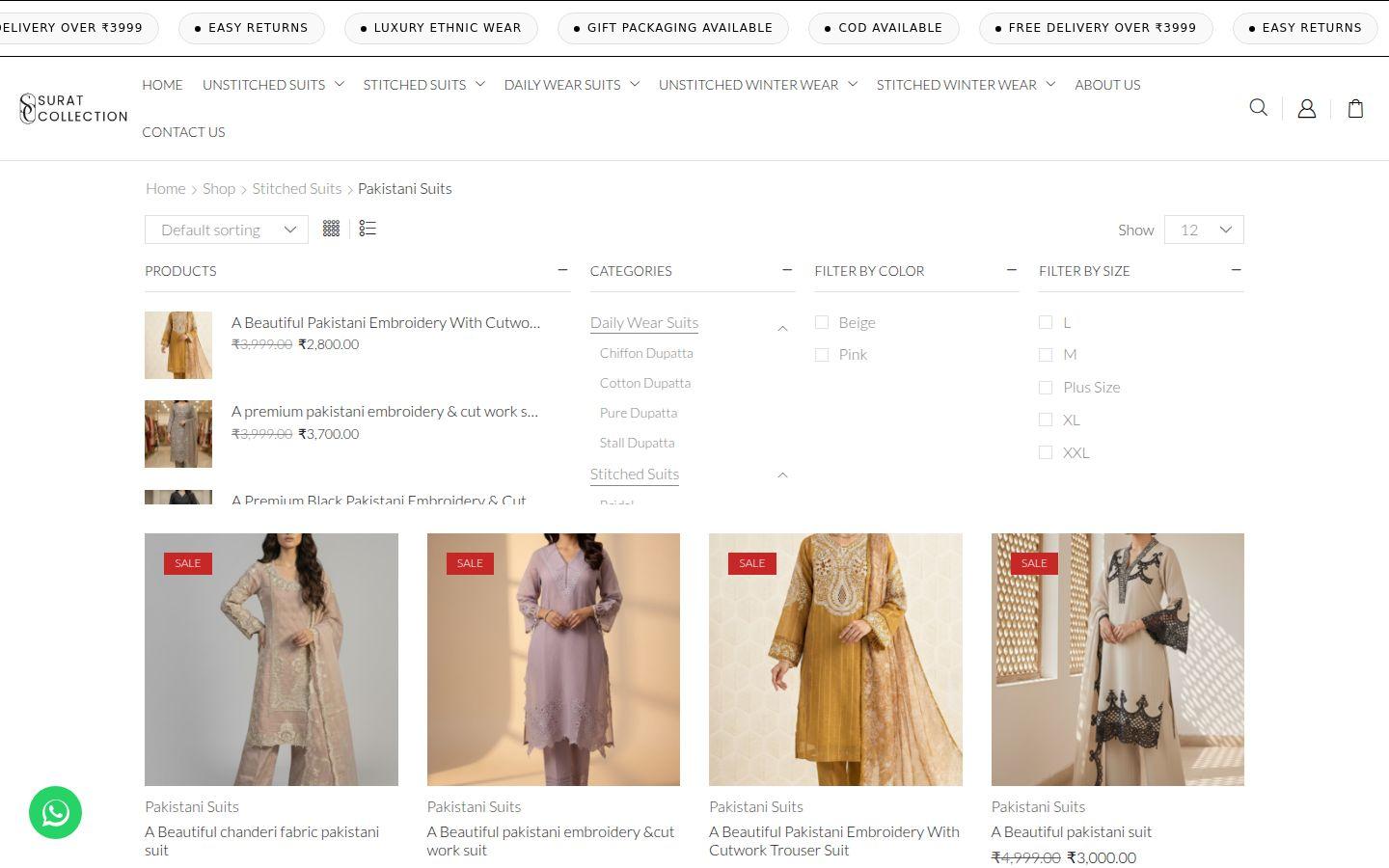
Filters for colour and size
Collection pages have a category list plus colour and size filters, and sorting by popularity, rating, latest and price. The size filter is only meaningful for stitched wear. Because stitched products carry sizes and unstitched ones do not, filtering by size naturally shows the ready-to-wear options.
Product pages for embroidered suits
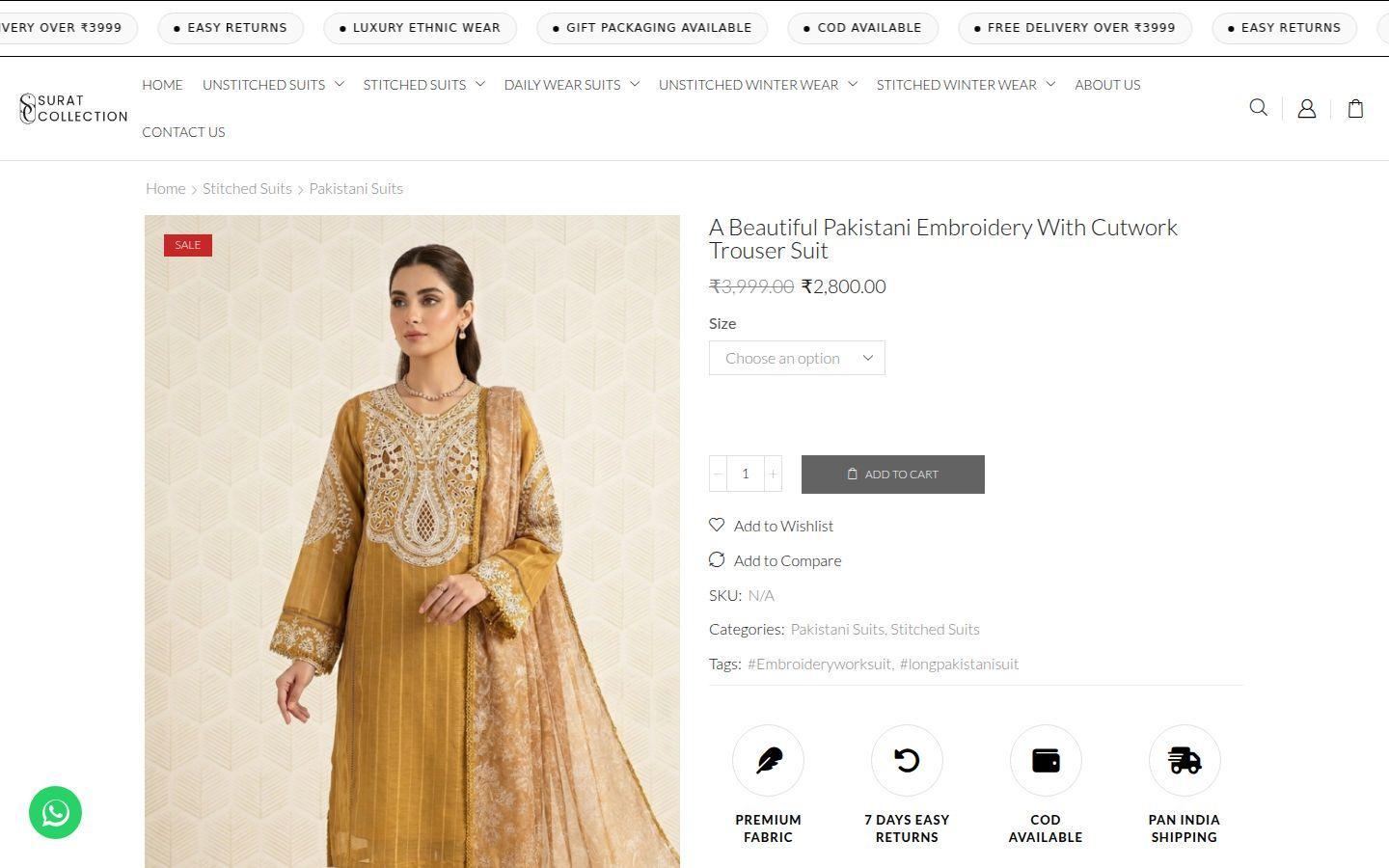
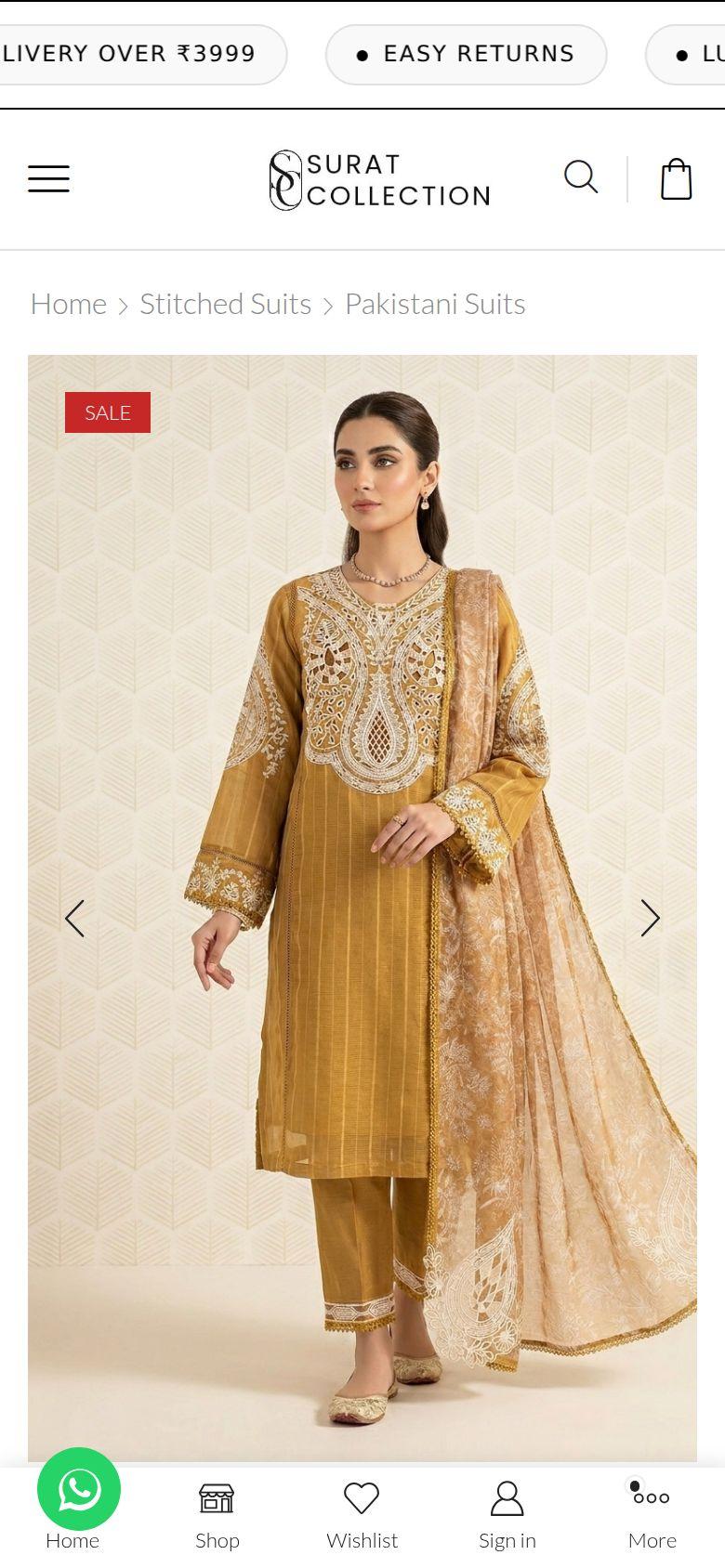
Embroidery, cutwork and handwork are the selling points, so product pages lead with large photography and a gallery. Stitched suits have a size selector and the breadcrumb shows where the suit sits (for example Stitched Suits, then Pakistani Suits). Under the Add to Cart button, four icons repeat the store's promises: premium fabric, seven-day easy returns, COD available and pan-India shipping.
Below that, tabs cover the description, additional information and reviews, and a related products row keeps shoppers browsing similar Pakistani suits. Sale prices show the original and current price side by side.
Winter wear as its own season
Velvet and woollen suits sell in a short window. Giving stitched and unstitched winter wear their own top-level menu items means they can be promoted in season without being mixed into summer cottons, and they can be moved down the menu again in spring.
Trust for a fashion store that ships across India
The announcement bar states COD available, free delivery over ₹3,999, easy returns, luxury ethnic wear and gift packaging. The same promises repeat as icons on the homepage and on product pages, so they are visible at every stage of the journey. A WhatsApp button stays on screen throughout.
Dupattas and gifting as their own entry points
Many buyers arrive for a single dupatta to complete an outfit they already own, or for a suit to gift at a wedding. The separate dupatta group (chiffon, cotton, pure and stole) gives the first group a short path, and gift packaging in the announcement bar answers the second group's main question before they reach the cart.
Both are small, low-effort additions to the catalogue structure, but they turn visitors who would otherwise leave into orders of their own.
Mobile layout
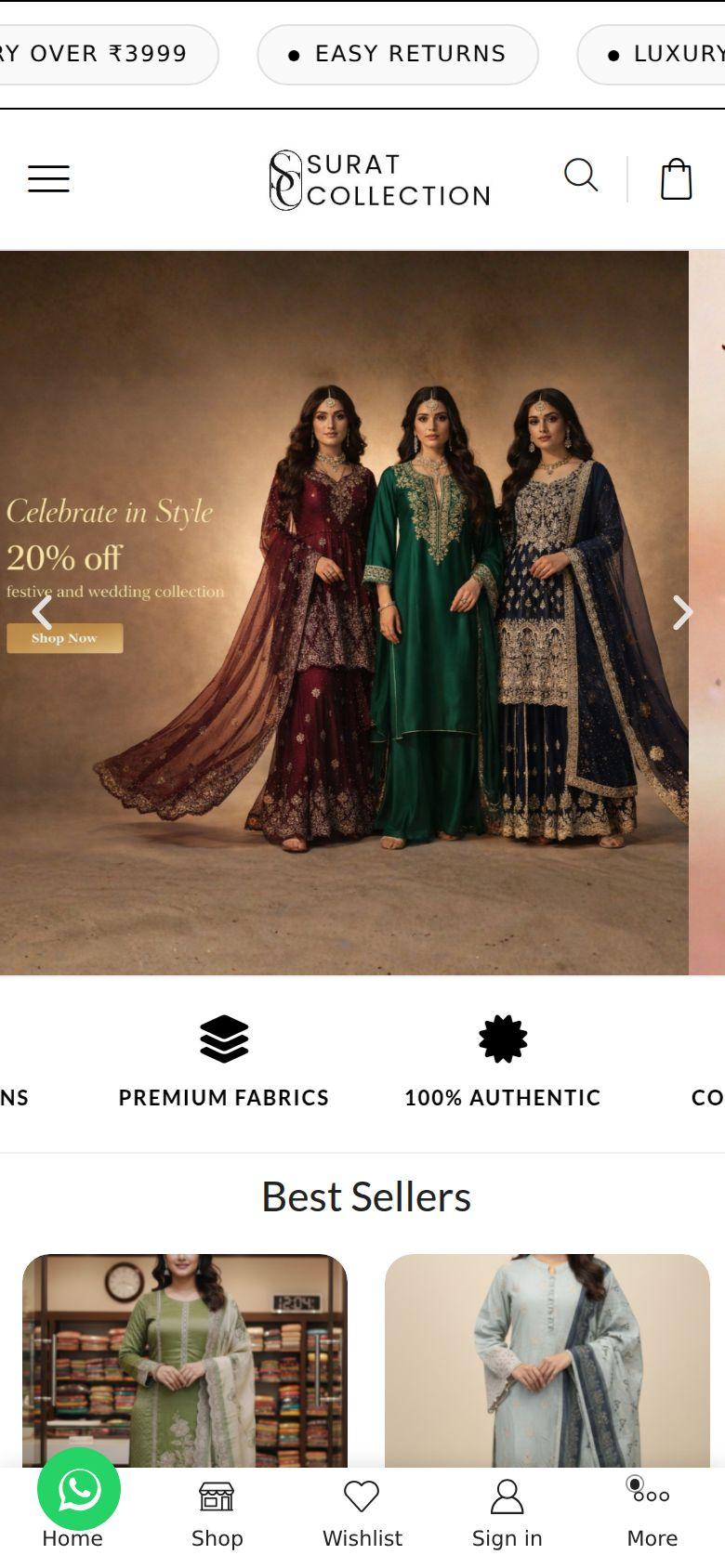
On a phone, the menu collapses behind an icon, the banner and trust icons stack above the Best Sellers row, and a bottom bar gives access to Home, Shop, Wishlist, Sign in and More. Product photos are full width, with a sale badge where relevant.
Why WooCommerce for a nested suit catalogue
Surat Collection's range has three levels: stitched or unstitched, then a style (Pakistani, sharara, rasam), then individual designs, plus seasonal and dupatta groups alongside. WooCommerce's nested product categories and menus map directly onto that structure, and breadcrumbs show the path on every product page.
Stitched suits use variable products with sizes, while unstitched suits stay simple products, so the store does not ask a fabric buyer to choose a size. The same filters (colour and size) work across both because the data is consistent. That flexibility is the main reason a self-hosted store suits a catalogue shaped like this one.
What other suit sellers can learn
Separate stitched and unstitched at the top of the menu. Use the sub-category names your buyers use: Pakistani, rasam, sharara, garara. Give dupattas their own section. Treat winter wear as a season with its own menu items. And repeat the same trust promises at every step.
Frequently asked questions
Should a suit store separate stitched and unstitched suits?
Yes. The two buyers need different information, sizes for one and fabric details for the other, so separate top-level categories make both journeys shorter.
Which filters matter most for an ethnic suit store?
Category, colour, size (for stitched wear) and price. Sorting by price and newest also helps shoppers who return often to check new designs.
How should a store handle seasonal ranges like winter suits?
Give them their own categories and menu items so they can be promoted in season and moved down afterwards without restructuring the catalogue.
Is WooCommerce suitable for a suit store with many variants?
Yes. WooCommerce variable products handle sizes and colours, and categories can be nested to match how buyers browse.
What is the difference between stitched and unstitched suits online?
Stitched suits are ready to wear and sold in sizes; unstitched suits are sold as fabric (often top, bottom and dupatta) for the buyer's tailor. A store should list them separately with the right details for each.