
Who this is for
- Individual artists and studios selling originals, prints and commissions.
- Craft brands working with artisan clusters, selling home décor, textiles, pottery, metalwork or wood.
- Cooperatives and NGOs that sell on behalf of makers and need to tell the makers' story responsibly.
- Galleries and exporters who need enquiry-led catalogues rather than a shopping cart.
What a handicrafts and art site needs
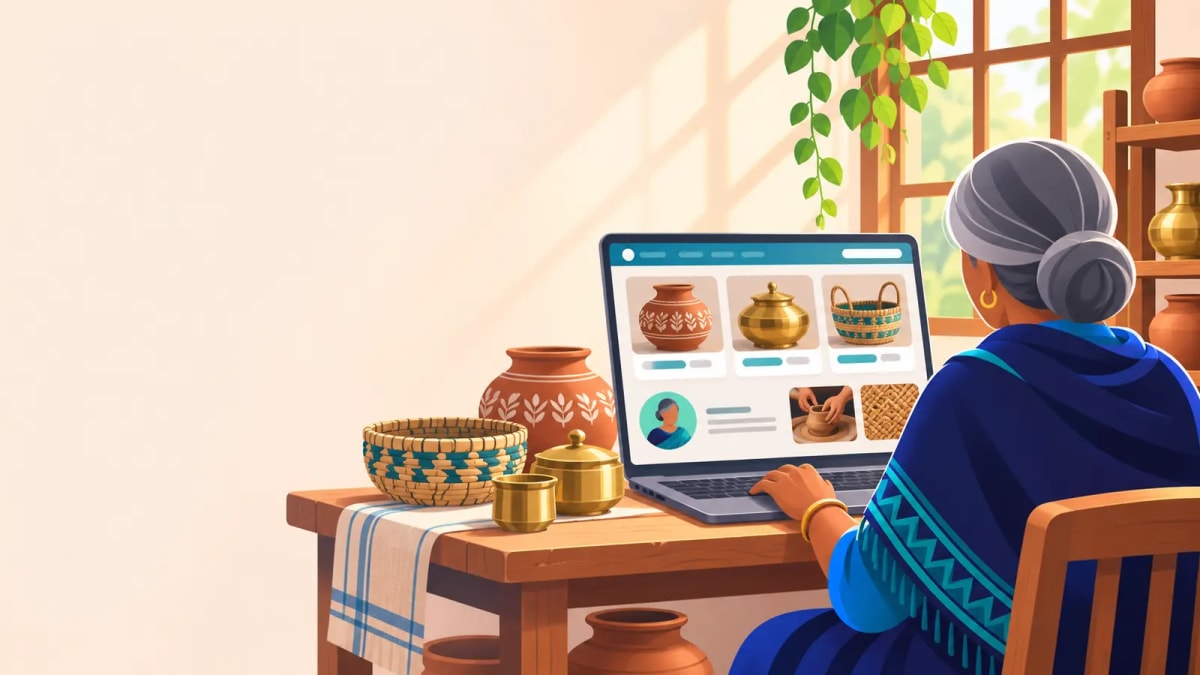
Story-led product pages. Each piece or range gets the maker, region, technique, materials and time taken, written in plain words. Close-up images of texture, back and scale shots with a hand or a known object beside the work. A buyer who has read the page should know why the price is what it is.
Honest variation. Handmade pieces differ. We build pages that say so, with a note that colour and pattern may vary, and a clear route to ask for the exact piece shown.
One-of-a-kind items. An original painting sells once. We handle single-stock items so that a sold piece shows as sold and moves to an archive, which can attract commission enquiries.
Commissions and custom orders. A form that asks for size, medium, purpose, deadline and a reference image. It goes to the artist, not a generic inbox.
Origin and certification. Where a craft carries a Geographical Indication under India's Geographical Indications of Goods (Registration and Protection) Act, 1999, only the registered proprietor and authorised users have the exclusive right to use the GI. If you are an authorised user, we show the GI properly on the page. We never add a GI claim to a product that you cannot document.
Shipping and packaging for fragile work. Glass, ceramics and framed art need specific packaging notes. We write a clear shipping page and a short care guide for each material.
International enquiries. If you ship abroad, a page that says what you ship, to where and how customs documents are handled by you, rather than a vague promise.
Selling online or taking enquiries?
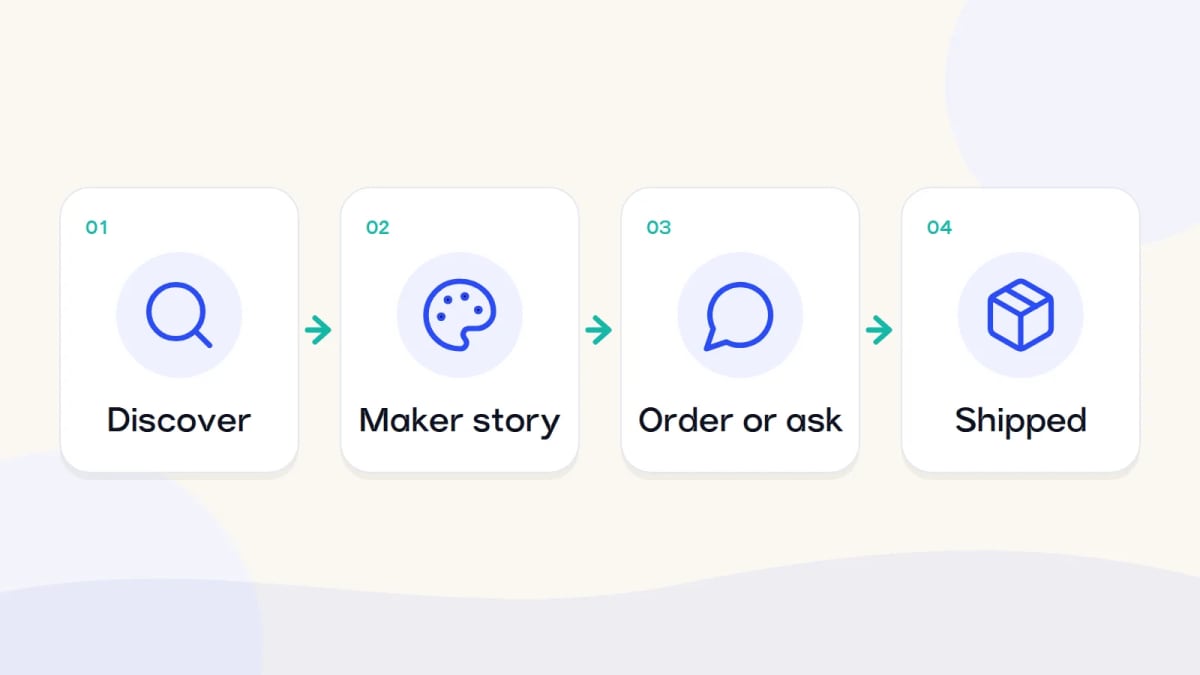
Not every craft business needs a cart. A gallery selling high-value work often does better with an enquiry button and a conversation. A brand selling hundreds of affordable pieces needs a store. We recommend the lighter model first: a catalogue with enquiry and WhatsApp, to which a store can be added later. If you want a store from the start, that is our ecommerce service, and we would quote it separately.
Which model fits which seller
| Seller | Typical catalogue | Model we suggest first | Key pages |
|---|---|---|---|
| Independent artist or studio | Originals, prints, commissions | Portfolio with enquiry and commission form | Artist statement, available works, sold archive, commissions |
| Craft brand working with clusters | 50–500 repeatable pieces | Store with WhatsApp support | Collections by craft, maker stories, care and shipping |
| Cooperative, NGO or council | Mixed work from many makers | Catalogue with enquiry, store later | About the makers, how buying works, wholesale and bulk enquiries |
| Gallery or exporter | High-value, curated pieces | Enquiry-led catalogue | Artists, exhibitions, trade enquiries, export documentation notes |
What decides the cost
The quote depends on how many products or works go live at launch, whether you need a cart and online payment or an enquiry-led catalogue, how much story writing we do versus edit, whether you sell in more than one language or currency, and whether wholesale buyers need their own price list behind a login. Photography is usually the biggest variable: we can work with your images or help you brief a photographer, and we say which in the quote.
How we build it
- Planning. We list your product families, your makers and how orders arrive today. That decides whether you need a store, a catalogue or both.
- Content. We help structure your maker and technique stories and write the non-story parts like shipping and care.
- Design. A restrained layout that lets photography lead. We ask for photographs shot in natural light and help you brief a photographer if needed.
- Build. WordPress with a custom theme for most craft businesses, so you can add a new piece in minutes. We use Next.js for larger catalogues. WooCommerce is available for the store. The stack is stated in the quote.
- Enquiry flows. Custom-order and wholesale forms that reach the right person.
- Testing and launch. Image loading on slow mobile data, form delivery and every shipping and care page.
Proof: closest real work (adjacent)
We have no handicraft or art-gallery case study. The nearest work is labelled adjacent.
Kalamohini by Aditya is a WooCommerce store for hand-crafted tissue-silk sets with mirror work. Product pages carry multiple angles, craft-process descriptions and material specifics, with curated collections and WhatsApp-based support. It is artisan fashion, not handicrafts or fine art. Read the case study.
New Saraswati Saree Centre is a WooCommerce store with 40+ handwoven products in cotton, muslin and paithani, organised by weave type, with festive collection pages. It is a textile retailer, not an art seller. Read the case study.
ClickNGreet is a WooCommerce gift store with 20+ categories, including resin art, frames and mugs, with product variants and occasion-based filtering. It shows how a catalogue of personalised and handmade-style gifts can be organised, but it is a gift retailer, so we label it adjacent. Read the case study.
SIDCO is an outreach site for a council that connects small-scale industry workers to central government schemes and free skills training in sewing, embroidery, weaving and painting. It is not a store, but it is our closest work on presenting artisans and their trades to the public. Read the case study.
Mistakes we see on craft sites
- Eight products, each with one photograph on a white background and no description of how it was made.
- A "handmade" claim with no maker, place or technique.
- A cart for original work where a conversation would have sold it.
- No shipping note for fragile items, so buyers ask the same question repeatedly on social media.
- A site that cannot show a sold item, so buyers keep enquiring for pieces that are gone.
Working with makers' stories responsibly
When a business sells on behalf of artisans, the maker's story is a product. We write it with the maker's consent, in their words, and without implying a relationship you do not have. We do not say that a purchase supports a named community unless you can document it. We would rather say less and say it accurately.
What to put on the page first
A buyer who lands on a craft page should see the work before reading any words, then one line on who made it and where. The story follows as the buyer scrolls. We design the first screen with that order in mind.
Quote and terms
We publish no prices. Share a few photographs and a fixed written quote follows within one working day. Milestone approvals apply, with a 50% advance to begin, and a craft site normally takes 3–5 weeks from content sign-off.
Request a quote
Message us on WhatsApp at +91 73482 28167 with a few photos of your work and how you sell today, and you get a fixed written quote within one working day.
Case studies
Adjacent work · another industry
Kalamohini by Aditya
Hand-crafted tissue-silk sets with intricate mirror-work — premium artisan ethnic wear store.
Read the Kalamohini by Aditya case studyAdjacent work · another industry
New Saraswati Saree Centre
Handwoven textile marketplace with 40+ products, multi-gateway payments, and festive collection pages.
Read the New Saraswati Saree Centre case studyAdjacent work · another industry
ClickNGreet
Personalized gift shop and marketplace with 20+ product categories and pan-India shipping.
Read the ClickNGreet case studyAdjacent work · another industry
SIDCO — Small Industries Development Council Organization
Outreach and application platform connecting small-scale industry workers to PMEGP government schemes, free skills training and welfare support.
Read the SIDCO — Small Industries Development Council Organization case study
Frequently asked questions
Have you built a handicrafts or art website?
Not a pure one. We built stores for artisan fashion, handwoven textiles and gifts, and a site for an artisan skills council, which we label adjacent.
Do I need a shopping cart?
Not always. Original art and high-value pieces often sell better through an enquiry. We discuss this in planning.
Can you handle one-of-a-kind items?
Yes. A sold piece can show as sold and move to an archive.
Can we show a GI tag on our products?
Only if you are the registered proprietor or an authorised user and can document it.
Will you write product descriptions?
We structure and edit descriptions from the maker's notes. We do not invent techniques or provenance.
Can we sell internationally?
We can build the shipping and enquiry pages. Customs, duties and carrier choices are your decisions.
Can buyers commission a piece?
Yes, with a custom-order form that goes to the artist.
Do you promise sales or rankings?
No. We build the site, and no one can guarantee positions or orders.