
Who this is for
- Residential developers selling apartments, villas or plotted layouts.
- Commercial developers selling offices, retail units or warehousing.
- Small and mid-sized builders with one to five active projects.
- Developers who sell through channel partners and need a page those partners can share.
What a developer's website needs
One page per project. Each project has its own page with location, configuration, amenities, floor plans, price range only if you choose to publish it, construction status and a site-visit button. Projects that share a locality still get distinct pages written with that project's real facts.
RERA information. In India, the Real Estate (Regulation and Development) Act, 2016 requires a promoter to show the project's registration number, and the Authority's website address, in advertisements for a registered project; state authorities add their own advertisement rules on top of that. Registered projects also carry details on the state authority's site. We place the registration number on each project page and in the footer, and we add whatever your state RERA requires for advertisements. We are a web developer, not a legal adviser, so please confirm current rules with your lawyer or the state RERA before launch.
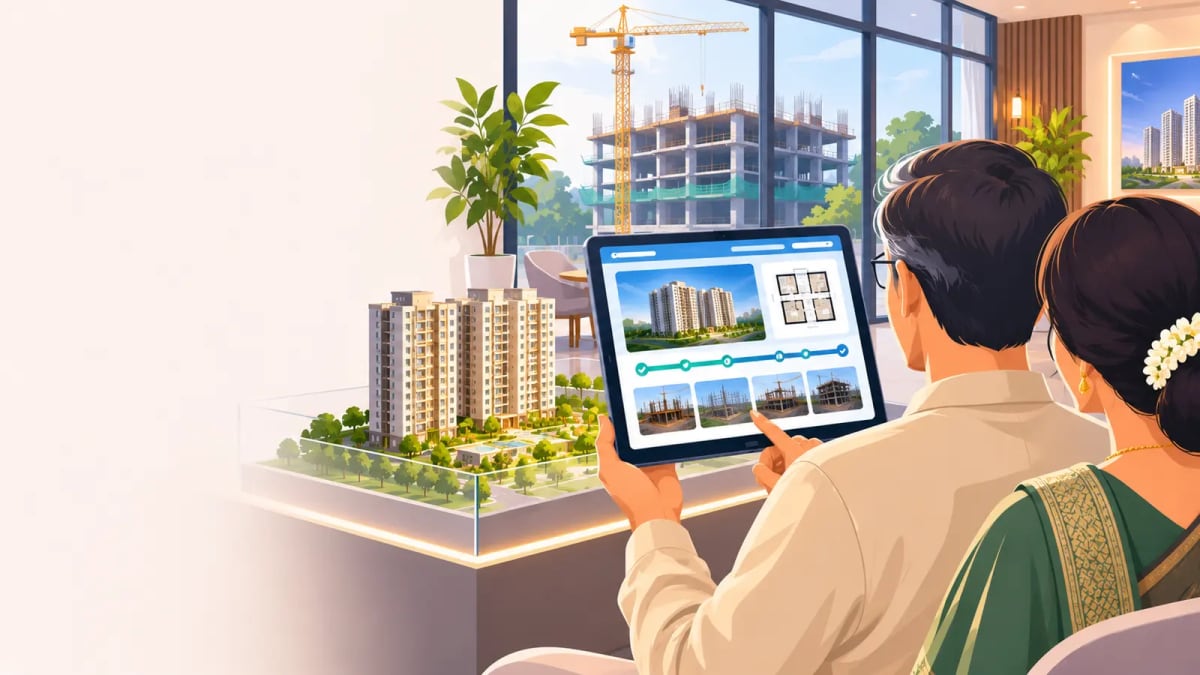
Construction progress. A dated construction update page with photographs per tower or phase. Buyers return to it, and it builds more confidence than any slogan. It also forces the site to stay current, so we agree who updates it and how often.
Floor plans and unit information. Clean, downloadable plans, carpet and built-up area stated as you document them, and a clear note on what is included. We avoid showing availability that is not synced with your sales team's actual stock.
Delivered projects. A record of completed projects with handover dates, because past delivery is the strongest evidence of future delivery.
Approvals and partners. Banks that have approved the project for home loans, architects, structural consultants and contractors, but only where you can name them with permission.
Lead capture with context. A site-visit form that asks which project, preferred date, budget band and a phone number. Leads go to the sales team, tagged by project, and a copy goes to a spreadsheet.
Channel-partner page. A simple page with project brochures and key facts that partners can share, without exposing internal price sheets.
Which developer website fits your stage
| Developer stage | Projects on the site | What the buyer needs to see | Pages we start with |
|---|---|---|---|
| First project, pre-launch or early construction | One | Who the promoters are, the land and approvals, the plan and a realistic timeline | Project page, about the promoters, RERA block, site-visit form |
| Established builder with 2–5 active projects | Two to five, plus completed ones | Delivery record, construction progress per project, comparison between projects | Projects index, one page per project, completed projects, progress updates |
| Multi-city developer | Many, in several cities | Fast way to filter by city, configuration and status | City pages, project explorer, channel-partner area, careers |
| Plotted or villa developer | Layouts and phases | Layout plan, plot sizes, infrastructure status, approvals per phase | Layout page with phase status, amenities, location and connectivity |
| Commercial developer | Offices, retail, warehousing | Specifications, floor plates, power and parking, leasing terms process | Building pages, specification sheets, leasing enquiry form |
How buyers actually move through a developer site
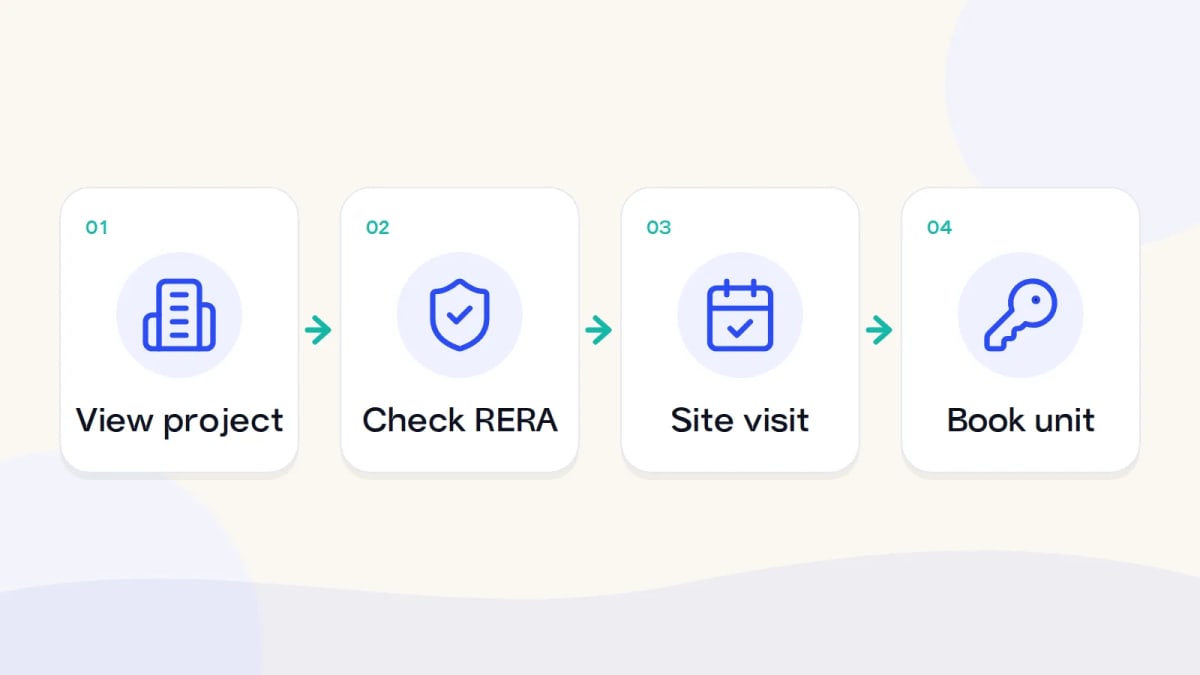
Property is a long decision, often weeks or months, and the website is visited many times along the way. The first visit usually comes from an advertisement, a portal listing or a search for the project's name, and the buyer checks only three things: location, configuration and whether the developer looks real. Later visits are more careful. The buyer downloads the floor plan, reads the RERA details, checks the construction updates and looks for the developer's earlier projects. Family members visit separately, often from another city or country. Near the decision, the buyer returns to book a site visit or call the sales team.
We plan the site around those visits. The project page opens with the facts a first-time visitor needs, the deeper material sits one tap below, and every page carries a way to save, share or ask. A brochure link that a buyer can forward to a parent on WhatsApp does more for a developer than a flashy animation.
Anatomy of a strong project page
- Top of the page: project name, locality, configurations offered, construction status and a site-visit button.
- Key facts block: RERA registration number and the authority's website, land area and number of towers or plots as documented, possession timeline as stated in your registration.
- Floor plans: each configuration with carpet area stated the way your agreement states it, in a file that opens quickly on a phone.
- Amenities: only those committed in your documents, with phase information where amenities come later.
- Location: a map, real travel distances to schools, offices, stations and hospitals that you have checked, and a note on road access.
- Construction updates: dated photographs per tower or phase.
- Developer section: completed projects, promoters and partners you may name.
- Enquiry: a short form, a phone number and WhatsApp, tagged with this project.
Buyers living in another city or abroad
Many buyers in Indian cities live elsewhere: a family in the Gulf buying a home near their parents, or a professional in Bengaluru buying in their home town. They cannot visit easily, so the site has to do more of the work. We add a section for remote buyers that explains how a video walk-through of the site or sample flat is arranged, how documents are shared, and who on your team handles remote buyers. Payment, tax and legal questions for non-resident buyers belong with your legal and finance advisers, and the page says so.
Local search for each project
A buyer often searches the project name, the locality plus "new flats" or the developer's name. Each project page is built to answer those searches: the locality in the title and first lines, a correct map, and a matching Google Business Profile for the sales office where you have one. We do not create location pages for localities where you have no project, because those pages mislead buyers and rarely rank for long.
What decides the cost
The quote depends on the number of projects and phases at launch, how many floor plans and documents we prepare for the web, whether you want a filterable project explorer or a simple list, how many languages you need, whether leads go to email and WhatsApp or into a CRM you already use, and whether channel partners need a private area. We quote each part in writing so you can choose what goes into the first release.
Channel partners and brochures
Many developers sell a large share of units through channel partners. Partners need accurate, current material they can forward: a project summary, plans, the RERA details and a contact for site visits. We build a partner page with downloadable material that you update in one place, so every partner sends the same facts. Internal price sheets and commission terms stay off the public site. If you later want partners to log in and register leads, that is a custom portal, which we scope separately.
Measuring what the site does
After launch, the question every sales head asks is which source brought which buyer. We tag each enquiry with the project and the page or campaign it came from, and set up simple reports so your team can see how many site-visit requests each project receives each week. We do not promise a number of leads; we make sure you can count them honestly.
Possession, handover and after-sales
Buyers who have booked keep using the website. They look for possession updates, handover checklists, maintenance contacts and the society or facility-management details. A small owners' section with dated notices and contact routes reduces calls to the sales desk and shows the next buyer that you stay accountable after the sale. We build it as public pages first and add owner logins only if you need them.
How we build it
- Planning. We list projects, phases, towers, approvals, delivered work and how leads arrive and get followed up today.
- Content. You provide facts and plans; we structure and edit them. We write the practical parts: how to visit, how to book, what the buying process looks like.
- Design. Premium but quick: images matter, yet each project page must load fast on a phone, since most enquiries start on one.
- Build. WordPress with a custom theme for most developers, so your marketing staff can post progress updates; Next.js when a custom project explorer is needed. The stack is stated in the quote.
- Lead routing. Forms to email and an optional WhatsApp alert, tagged by project and source.
- Testing and launch. Form delivery, image weight, RERA block on each page, brochure downloads and every phone link.
Proof: closest real work (adjacent)
We have no real estate case study. The nearest work is labelled adjacent.
Cleanship is a Next.js site for a marine cleaning company with a landing page for every service at every port it covers, 310 pages in all, and a quote form built for vessel, port and window. It is not a property business, but it shows how we handle many location-specific pages that each carry their own facts. Read the case study.
The Grafftee is a Next.js HR platform with service modules, FAQs and a direct demo-booking system feeding lead forms to a CRM. It is not a property business, but it is the closest lead-to-CRM flow we have built. Read the case study.
Things we see going wrong
- A project page that is a long gallery of renders with no carpet area or possession date.
- A RERA number buried in the footer in tiny type, or missing.
- A "limited units left" counter that is not connected to real stock.
- One form for all projects, so sales cannot tell which project a lead wants.
- A brochure PDF that is forty megabytes and never opens on mobile data.
Launch phases
Developers launch in phases. We build the project page so a new phase can be added without redoing the page, with a phase selector and status per phase. When a project completes, the page changes status to "delivered" and moves to the completed section, keeping its history.
Keeping progress updates honest
Construction updates only help if they are real and regular. We agree a rhythm with your site and marketing teams before launch, such as one dated photo set per tower each month, and we show the date on every update. If an update is late, the page says when the last one was posted rather than hiding it. Buyers who see a steady record of dated photographs trust the developer more than buyers who see a single glossy render, and the habit also keeps your own team aligned on where each project stands.
Quote and terms
We publish no prices. Share your projects and a fixed written quote follows within one working day. Work moves in approved milestones after a 50% advance, and a developer site normally takes 3–5 weeks from content sign-off, depending on how soon plans and photographs arrive.
Request a quote
Message us on WhatsApp at +91 73482 28167 with your projects, locations and RERA status, and you get a fixed written quote within one working day.
Case studies
Adjacent work · another industry
Cleanship
Marine cleaning company registered in Ajman Free Zone — a Next.js site with a landing page for every service at every port it covers across the UAE, India, the Gulf and West Africa.
Read the Cleanship case studyAdjacent work · another industry
The Grafftee
Comprehensive HR & talent acquisition platform for India's leading recruitment and workforce solutions company.
Read the The Grafftee case study
Frequently asked questions
Have you built a real estate website?
No. We label our location-page and lead-capture work as adjacent.
Do you add the RERA number?
Yes, as you provide it, on each project page. We do not give legal advice on advertising rules.
Can we show live availability?
Only if your sales team has a source of truth that the site can read; that is a custom build, quoted separately.
How do you develop a real estate developer website?
We list your projects, approvals, plans and delivered work, plan one page per project with a RERA block and site-visit form, build on WordPress or Next.js, test every form, and launch in about 3–5 weeks from content sign-off.
Can you include a virtual tour?
We can embed a tour you have produced. We do not produce 3D walk-throughs.
Do you write the project descriptions?
We structure and edit them from your facts. We do not invent amenities or dates.
Can channel partners get a login?
That is a custom portal; see our custom software service.
Do you guarantee leads or rankings?
No.