Introduction
The cost of a SaaS MVP depends far more on scope than on technology. A first version with one core workflow, simple accounts and basic billing is a very different project from one with several user roles, integrations, a reporting suite and a mobile app. The founders who spend least, and learn fastest, are the ones who cut the first version down to the single job customers will pay for.
Prices aren't in this post, because the honest answer depends entirely on your scope. What follows is what drives the cost and the timeline, so you can shape the first version before you ask anyone for a quote.
What an MVP is, and isn't
A minimum viable product is the smallest version of your software that real customers can use to get real value, so you can learn whether they'll pay and what they want next. It isn't a prototype that only works in a demo, and it isn't version one of everything you've imagined.
A useful test: if you removed this feature, could a customer still get the core result? If yes, it probably doesn't belong in the MVP.
What drives the cost
1. Number of core workflows
Each workflow (create a project, invite a client, approve an invoice) needs screens, logic, data and testing. One workflow done well beats five done badly.
2. User roles and permissions
A product with one type of user is simpler than one with admins, managers, staff, clients and guests, each seeing different things.
3. Multi-tenancy
Most SaaS products serve many customer organisations, each with their own private data. Designing that properly from the start matters, and adds some work. We explain multi-tenant architecture in plain English later in this series.
4. Billing
Subscriptions, trials, plan changes, invoices and tax handling. Payment providers such as Stripe and Razorpay handle much of it, but connecting them to your product's plans and permissions still takes time.
5. Integrations
Every connection to another system (email, calendars, accounting, CRMs, WhatsApp) adds work, plus ongoing maintenance when those systems change.
6. Design depth
A clean, conventional interface built from a component library is far quicker than a fully custom design system with custom charts and animations.
7. Platforms
A responsive web app works on every device. Adding native mobile apps roughly means building and maintaining more products.
8. Compliance and security requirements
Handling health, financial or children's data, or selling to enterprises with security questionnaires, adds work from day one.
What to leave out of the first version
- Native mobile apps, unless mobile is the core use.
- Advanced reporting and dashboards. Start with the two or three numbers customers ask for.
- Many integrations. Start with the one most customers need.
- Complex permission systems.
- Automated everything: some admin work can be manual at first.
- Custom design flourishes.
Many successful products launched with founders doing parts of the process by hand behind the scenes, then automated what proved worth it.
Typical timeline shape
An MVP is usually measured in weeks to a few months, not years. The phases:
- Discovery and scope: workflows, roles, data, what's out.
- Design: the key screens, tested with a few potential customers.
- Build: in short iterations you can see and use.
- Testing and launch to a first group of real users.
- Learn and iterate.
Budget for the months after launch too. The first real users always find things you didn't expect, and that's the point.
Free quote · reply within 24 hours
Need software built around how you work?
Describe the process you want off spreadsheets. You get one fixed price in writing within 24 hours.
How to get comparable quotes
Write down the core workflow step by step, the user roles, the data each role sees, the integrations and what's explicitly out of scope. A short document like this lets developers quote on the same thing. We cover writing a requirements document that developers can actually quote on later in this series; for the build-or-buy question that often comes first, see off-the-shelf vs custom software.
An example from our own work
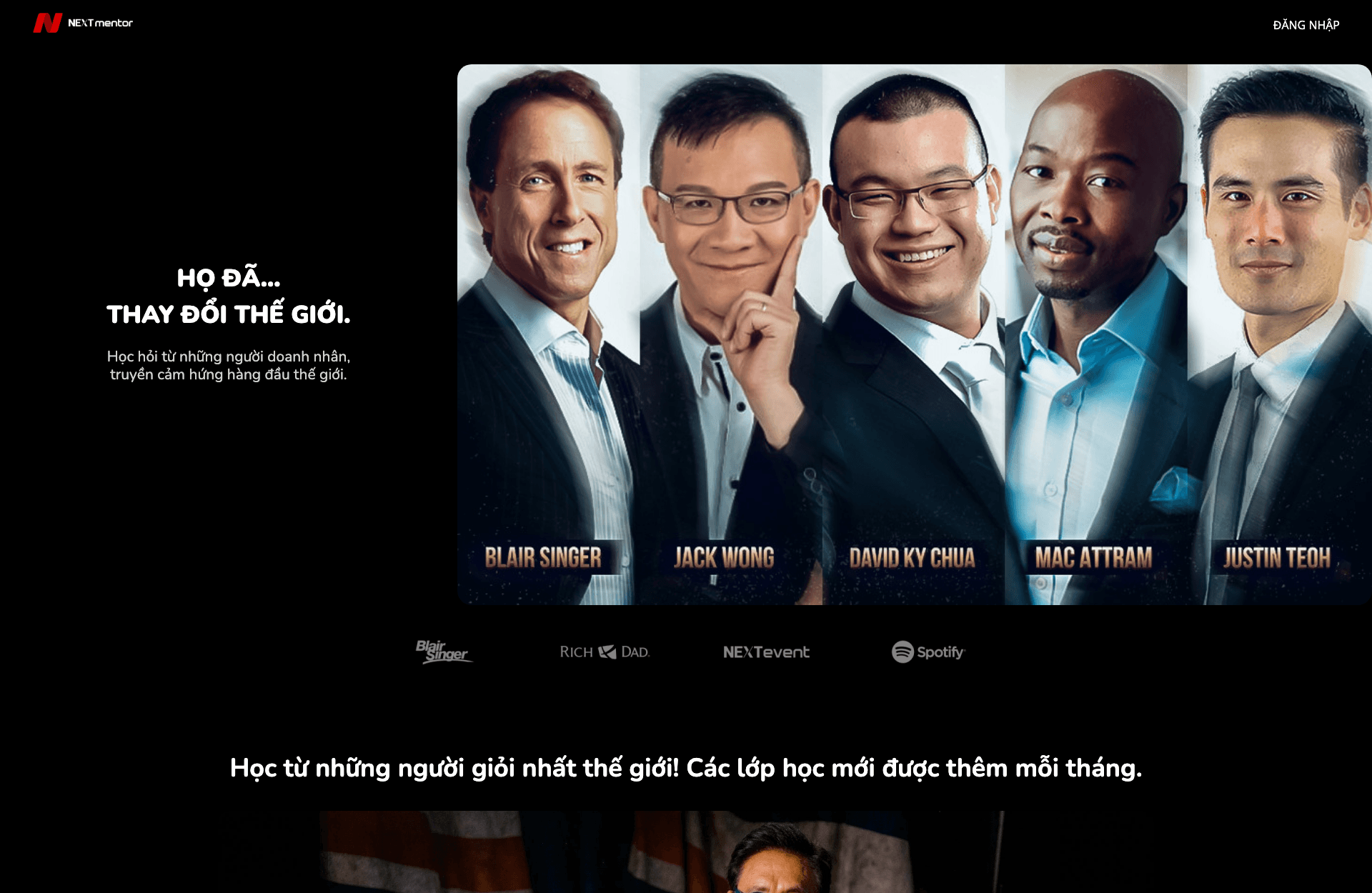
NEXTmentor, a learning platform we built, launched with a focused set of features: skill packs, verifiable certificates and a referral programme that pays learners commission. It runs on Next.js, and when we measured the live site with Lighthouse on 8 October 2026 it scored 97 for mobile performance. The case study shows what was in scope.
What founders usually ask
Should I build with no-code tools first?
For testing demand, often yes. If customers pay for a no-code version, you've learned a lot cheaply. Move to custom code when the tools limit you.
Who owns the code?
You should, in writing, with the repository and hosting accounts in your company's name.
What about ongoing costs?
Hosting, third-party services, monitoring and continued development. Ask for an estimate of monthly running costs at your expected user numbers.
Conclusion
Every founder we've worked with has had a longer feature list than their first version needed. Cut it to the one job customers will pay for, ship that, and let real users tell you what's next.
When you're ready to scope it, our software development team can give you a fixed quote on a focused MVP.
Free quote · reply within 24 hours
Want a fixed price for your project?
Describe the process you want off spreadsheets. You get one fixed price in writing within 24 hours.
Keep reading on Custom Software
- Website Accessibility Checklist for Small BusinessesA website accessibility checklist for small businesses: the six fixes that catch most barriers, the new WCAG 2.2 checks, and how to test without guesswork.
- My WordPress site got hacked: how to clean it and stop it happening againWordPress site hacked? What to do in the first hour, how to clean it properly, how to get Google's warning removed, and how to stop it happening again.
- Hiring a Web Development Team in India from GermanyHire web developers in India from Germany: the time gap in winter and summer, GDPR transfers and SCCs, who owns the code and how invoices should work.