

Who this is for
- Road transporters and fleet owners handling full-truck and part-load.
- Freight forwarders and customs-clearance agents working across ports and borders.
- Warehousing and 3PL firms offering storage, picking and dispatch.
- Courier and last-mile delivery companies, including regional and city-level operators.
What a logistics website needs
Lane and coverage pages. Buyers search by route: Lucknow to Mumbai, an industrial belt to a port, a city's same-day area. We build pages for the lanes and regions you actually serve, with transit times you can honestly state and the type of load you take. They are written with route-specific detail, not templates with two city names swapped.
Service pages by load type. Full-truck, part-load, temperature-sensitive, oversized, parcel, document and warehousing are different services with different buyers. Each gets its own page: what you carry, what you do not, how pick-up works and what paperwork you need from the sender.
A quote request that asks the right questions. Origin, destination, goods type, weight or volume, pick-up date, special handling and a contact. A shipper who receives a quote within the hour comes back; a form that asks for nothing returns a vague reply. The form feeds a spreadsheet or email your sales desk actually uses.
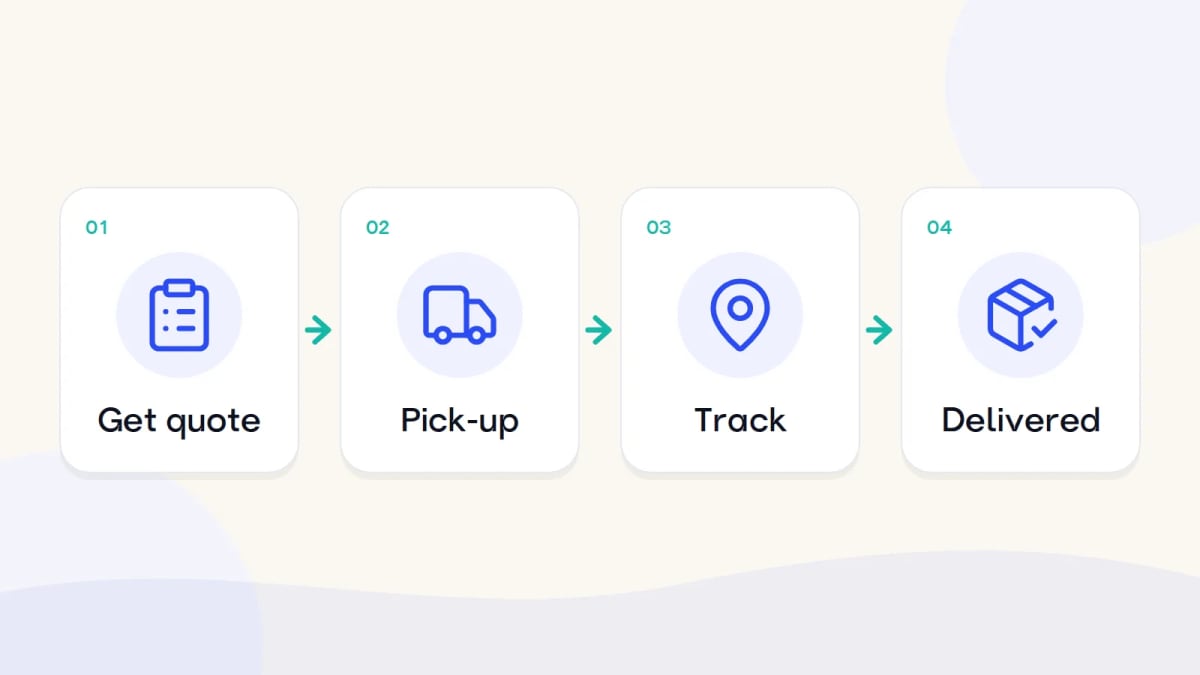
Tracking, without overpromising. If you have a tracking system, we link to it or embed a status lookup. If you do not, a simple form where a customer enters a consignment number and gets a callback is better than a fake tracker. We build a lookup page that connects to your existing system only if it exposes a safe way to do so, which we confirm in the quote.
Fleet and capability. A short, honest fleet page: vehicle types and capacities, GPS or tracking where you use it, drivers' training, and branch locations. Buyers want to see that you own what you claim.
Compliance documents. Goods in India move under GST rules and, above a value threshold, with an e-way bill. We do not explain tax law on your behalf, but we list the documents a shipper must supply on your service pages, based on what your own team tells us, and ask you to confirm them with your adviser.
Trust and references. Years in business, industries served, certifications you hold and client logos only where permitted.
Courier-specific needs
A courier site serves two audiences: the person sending a parcel and the person waiting for one. Senders need rate and service information, pick-up booking and a way to find the nearest branch. Receivers need a clear tracking lookup, delivery attempt information and a way to reschedule. We design separate paths for each so that the sender and the receiver never wade through each other's content. For businesses sending many parcels, a separate enquiry route covers bulk and account customers.
Which site fits which logistics business
| Business | Main buyer | Core pages | The one feature that matters most |
|---|---|---|---|
| Road transporter or fleet owner | Manufacturers, traders, distributors | Lanes, vehicle types, load types, branches | A quote form that captures origin, destination, weight and pick-up date |
| Freight forwarder or customs agent | Importers and exporters | Services by mode, ports and borders served, document checklists | Clear lists of the documents each shipment needs, confirmed by your team |
| Warehousing or 3PL firm | Brands, e-commerce sellers, distributors | Facilities, storage types, picking and dispatch, locations | Facility details you can document: area, racking, handling equipment |
| City or regional courier | Small businesses and households | Service area, pick-up booking, branch finder, tracking lookup | Separate routes for senders, receivers and bulk accounts |
Lane pages that rank and convert
A lane page earns its place only if it says something a shipper on that route needs. We ask your operations team for the transit time they actually achieve, the vehicle sizes they send on that lane, typical goods carried, whether return loads are available and which branch handles the booking. Two lanes that share all of that do not need two pages, so we combine them. This keeps the site honest and avoids the thin, copied location pages that search engines tend to ignore.
What decides the cost
The quote depends on the number of service and lane pages, whether a tracking lookup connects to a system you already use, how many branches need their own page and contact routing, whether bulk customers need an account area, and how many languages the site carries. A firm with five strong lanes and one quote form is a smaller build than a courier with a branch finder and a tracking integration, and we say which you are in the written quote.
How we build it
- Planning. We list your lanes, vehicles, warehouses and the questions your sales desk answers every day.
- Content. You describe each service; we structure it and write the practical sections such as how to book a pick-up and what documents are needed.
- Design. A professional, high-contrast layout that works on a phone, since transport managers often check from a yard or a vehicle.
- Build. WordPress with a custom theme for most firms, so your team can add a new lane in minutes; Next.js when a custom quoting or tracking interface is required. The stack is stated in the quote.
- Quote and tracking flows. Forms routed by service and branch, and a tracking lookup if you have one.
- Testing and launch. Every form, every phone link, speed on mobile data and the callback flow with a test enquiry.
Proof: closest real work (adjacent)
We have no road-freight or courier case study. The nearest work is for the shipping industry, labelled adjacent for land logistics.
MariBiz.ai is a global B2B marine procurement marketplace connecting 3,226+ vendors with shipowners across 121 service categories, with an RFQ system, vendor verification and real-time messaging. It is a marketplace, not a logistics carrier. Read the case study.
Cleanship is a Next.js site for a marine cleaning company with 310 service-and-port landing pages and a quote form built for vessel, port and window. It is a marine contractor, not a transporter, but it shows our handling of many location-specific pages. Read the case study.
Mistakes we see on logistics sites
- "Pan-India service" with no list of lanes or branches.
- A tracking page that opens a login screen for visitors who just want a status.
- A quote form that asks for fifteen fields, or none.
- A photograph of a single truck from a stock library.
- A phone number for the head office that nobody answers after six.
What to put on the page first
A transport manager scanning a page wants lanes, load types and a quote button in the first screen. The company story comes later.
Quote and terms
We publish no prices. Share your lanes and services and a fixed written quote follows within one working day, with milestone approvals and a 50% advance to start. Expect about 3–5 weeks from content sign-off for a typical logistics site.
Request a quote
Message us on WhatsApp at +91 73482 28167 with your lanes, services and how customers contact you today, and you get a fixed written quote within one working day.
Case studies
Adjacent work · another industry
MariBiz.ai
Global marine procurement marketplace connecting 3,226+ vendors with shipowners across 121 service categories.
Read the MariBiz.ai case studyAdjacent work · another industry
Cleanship
Marine cleaning company registered in Ajman Free Zone — a Next.js site with a landing page for every service at every port it covers across the UAE, India, the Gulf and West Africa.
Read the Cleanship case study
Frequently asked questions
Have you built a logistics or courier website?
Not for a road-freight or courier company. We built maritime sites, which we label adjacent.
Can the site track a consignment?
If your system offers a safe way to look up a status, we can connect it. Otherwise we build a callback-based lookup form.
Can customers get an instant price?
An automatic rate calculator depends on your rate rules and is a custom build. A quote request form is the standard route.
Can we show GPS tracking of vehicles?
That is a custom software project. See our custom software service.
How do you build a logistics website?
We start from your lanes, load types, branches and the questions your sales desk answers daily, then plan service and lane pages, a quote form and any tracking lookup. Most logistics sites launch 3–5 weeks after content sign-off.
Will you write the content?
We structure and edit it from your notes and do not invent fleet figures or client names.
Can it support bulk or account customers?
A separate enquiry route is part of the plan.
Do you promise rankings?
No.