
Introduction
UX design, short for user experience design, is the work of making a website or app easy and pleasant to use for the people it's meant for. In business terms, it's the difference between a visitor who finds what they need and buys, and one who gets confused and leaves. Good UX doesn't show. Bad UX shows up as abandoned carts, unanswered forms and support calls asking where things are.
If you've ever watched a customer struggle to find something on your site that seems obvious to you, you've already seen UX at work. This is a plain-English explanation of what it covers and why it shows up in your numbers.
UX vs UI: what's the difference?
You'll hear both terms, often together. They're related but not the same.
- UI (user interface) design is how things look: colours, typography, buttons, spacing, icons.
- UX (user experience) design is how things work: what's on each page, in what order, how people move from one step to the next, what happens when they make a mistake.
A site can look beautiful and be hard to use. It can also look plain and work extremely well. Revenue tends to follow the second one.
What UX design actually involves
- Understanding the users: who visits, what they're trying to do, what they already know, what worries them.
- Structuring information: deciding what goes where, what the menu contains, and what each page is for.
- Designing flows: the steps from landing on the site to buying, booking or enquiring, with as few obstacles as possible.
- Writing for clarity: headings, button labels and error messages that say exactly what they mean.
- Testing with real people: watching someone use the site and noting where they hesitate.
Why UX affects revenue
Every extra step, confusing label or moment of doubt loses a share of visitors. Small losses at each step multiply. If a third of visitors give up on a confusing product page, and a third of the rest give up at a clumsy checkout, you've lost more than half of your buyers without any of them telling you why.
Improving UX usually doesn't bring more visitors. It makes more of the visitors you already have do what you want them to do. That's why UX improvements often pay back faster than spending more on ads.
Where UX most often costs small businesses money
Unclear first screen
Visitors decide in seconds whether they're in the right place. If the top of your homepage doesn't say what you do and who it's for, many leave. We cover what that first screen must say later in this series.
Navigation built around the company, not the customer
Menus that mirror the org chart ("Divisions", "Solutions", "Verticals") make visitors guess. Menus that use customers' words ("Repairs", "New installations", "Prices") don't.
Forms that ask too much
Every extra field lowers the number of people who finish. Ask for what you need to reply, and nothing more.
Mobile treated as an afterthought
Buttons too small to tap, text too small to read, pop-ups that cover the whole screen and can't be closed. Most visitors are on phones, so this is where the biggest losses often are.
Checkout and booking friction
Forced accounts, surprise fees, unclear errors ("Invalid input") and too many steps. These are where people with their wallets already out give up.
No reassurance at the moment of decision
Next to the "Pay" or "Send" button, people want to know what happens next, whether they can cancel, and that their data is safe. A single line of reassurance in the right place helps.
Free quote · reply within 24 hours
Getting visitors but not enquiries?
Send us your site. You get what we'd change first and a fixed written quote within 24 hours.
How to spot UX problems on your own site
- Watch someone use it. Ask a friend who doesn't know your business to buy something or make an enquiry while you watch silently. Don't help. Note every pause.
- Use session recordings. Free tools such as Microsoft Clarity show anonymous recordings and heatmaps, including "rage clicks" where people click repeatedly on something that doesn't respond.
- Read your support messages. Questions like "where do I find..." or "how do I..." point directly at UX gaps.
- Look at funnel drop-offs in analytics: the step where most people leave is the step to study first.
Do you need a UX designer?
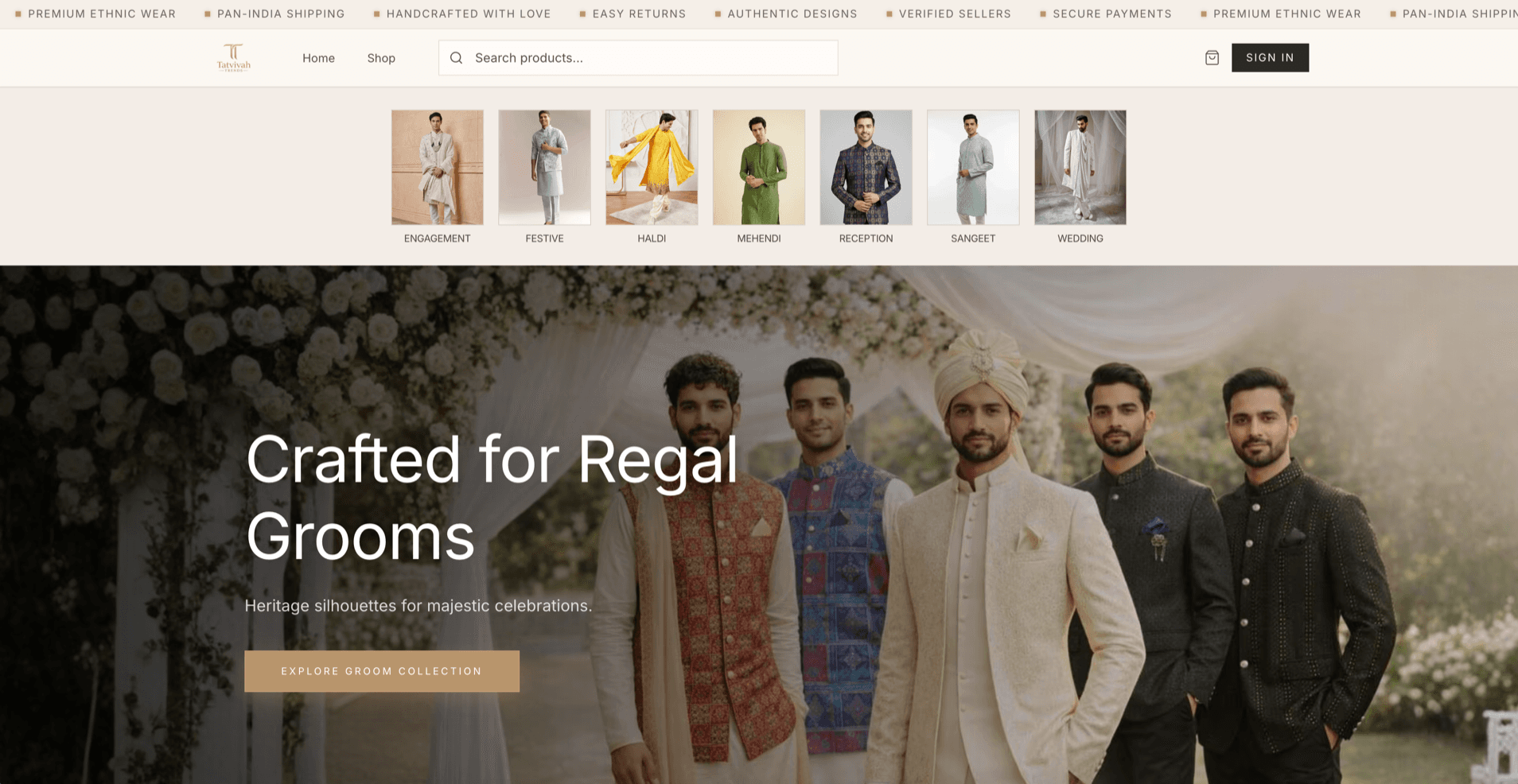
For a small brochure site, a good web designer who asks about your customers and tests on real phones covers most of it. For stores, booking systems, SaaS products and anything with multi-step flows, dedicated UX work pays for itself, because small improvements in those flows have direct revenue effects. In our own builds, UX decisions often shape the whole project: on TatVivah Trends, for example, we made browsing by occasion (haldi, mehendi, sangeet) the main way to shop, because that's how wedding buyers actually think.
What owners usually ask
Is UX only for big companies?
No. Smaller businesses often benefit most, because a handful of fixes on a few key pages can change results noticeably.
How is UX measured?
Through outcomes: conversion rate, form completion, checkout completion, time to complete a task, and the number of support questions about how to do things.
Does good UX help SEO?
Indirectly. Clear structure, fast mobile pages and content that answers questions are good for visitors and for search engines alike.
Conclusion
You don't need a UX team to start. Watch three people try to buy or enquire on your site without helping them, and write down every pause. That list is your first round of fixes. When you want a designer to take it further, see our web design services.
Free quote · reply within 24 hours
Want a fixed price for your project?
Send us your site. You get what we'd change first and a fixed written quote within 24 hours.